A better way: BYU research highlights cultural barriers to mental health care in Pacific Islander communities
Kawika Allen
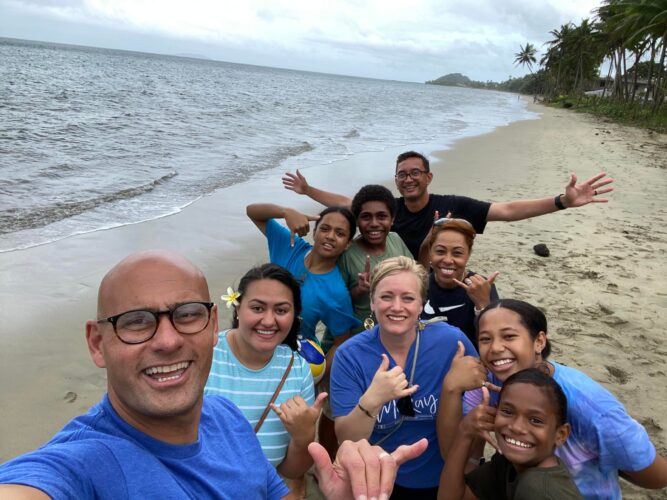
BYU’s Poly Psi research team meets with Pacific Islander communities across the South Pacific, building trust, listening deeply, and working to better understand culturally rooted approaches to mental health better.BYU graduate students are playing a key role in research aimed at closing a mental health gap for Pacific Islanders — a group long overlooked in traditional services, due to the topic possibly not being well addressed.
From 2018 to 2025, Kawika Allen, BYU professor of Counseling Psychology, has led several groups of students in his research lab called The Poly Psi Team (Polynesian Psychology and Education Research) aimed to better understand mental health and help-seeking behaviors among Pacific Islanders. As part of the project, Allen selected various teams of students during this timeframe to travel across numerous islands of the South Pacific to engage directly with local communities. In the months leading up to the trips, the team consulted cultural experts to ensure they approached the research with humility and respect.
Allen had a particular interest in this topic because of his own Native Hawaiian and Tongan heritage.
“Given that I’m part of the culture, I somewhat have ethnic connections to them, and I have students who also come from these islands. That, alongside their knowledge of BYU, creates a bit of credibility. I made sure that they knew we’re there to serve, help, and learn from them,” Allen said.
Pacific Islander culture is tight-knit and celebrated for its strong sense of community support. However, the research found that when addressing mental health needs, participants at times experienced some strain with family members and were sometimes dismissed or had their struggles viewed as a weakness.
Their research findings were published following their trips in 2024 in the Journal of Counseling Psychology, a top journal in the field. The study identified several reasons some Pacific Islanders hesitate to seek mental health support, including strong family values, a history of minimizing mental health concerns, beliefs that mental health struggles could be seen as a personal fault rather than influenced by outside factors, and a desire for culturally matched care alongside concerns about confidentiality.
“We tried to decrease the stigma by normalizing and validating their concerns, as well as treating mental health like any sort of physical health checkup. You go to the doctor or dentist to get a checkup. So, we tried to establish that this is sort of the same thing,” Allen said. “We’re trying to promote healthy living — not just physically, but for our minds too.”
Students were actively involved in preparing for these visits, refining interview questions by Dr. Beth Cutrer-Parraga, BYU professor of Special Education and fellow member of The Poly Psi Team, and learning more about cultural protocols before entering these communities. Establishing strong relationships with Pacific Islander communities enabled more in-depth work and collaboration with island committees to apply their findings in culturally appropriate ways.
Devon Beatson, a Counseling Psychology PhD student, is using the data collected during the island visits for her dissertation. While she didn’t participate in a trip, the research has allowed her to continue exploring culturally influential approaches to mental health.
“Growing up in New Zealand and coming from a small population that is predominantly Polynesian gave me a strong connection. Mental health is difficult and quite stigmatized among this population. Not only is it important to do research, but also to examine how therapy is delivered for non-Western groups and find ways to integrate my upbringing to create a more positive experience for Polynesians,” Beatson said.
Many members of the research team have personal or cultural ties to the communities they studied, which shaped their approach to the work. From the beginning, they strived to learn from these celebrated cultures to bring insight to an area that has lacked greater attention.
Students who went on the trips were not just observers in the process — they conducted interviews, led community discussions, and presented findings directly to local leaders and faith groups. Meilani Roan, a Counseling Psychology PhD student, has worked on this project for several years and participated in two trips. Roan first traveled to Fiji and later served as a trip leader, helping coordinate outreach and community presentations in American Samoa.
“It was neat that the project had a few phases, from interviewing therapists and college students to meeting with local leaders and doing outreach in the community,” Roan said. “We were even able to present at a stake meeting for members of The Church of Jesus Christ of Latter-day Saints, where they announced someone from Australia who would be the first person doing LDS Family Services work in Fiji, which was a big milestone to be a part of.”
Local News
A better way: BYU research highlights cultural barriers to mental health care in Pacific Islander communities
‘A labor of love:’ Inside Steve Sarowitz’s vision for Payson’s Wayfarer Theaters