Beehive Archive: Sundance: How Hollywood changed rural Utah
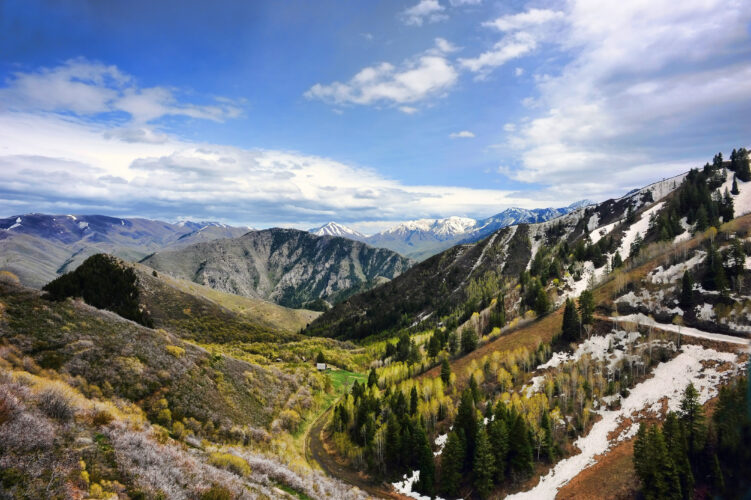
A view of Sundance, Utah.
Welcome to the Beehive Archive — your weekly bite-sized look at some of the most pivotal — and peculiar — events in Utah history. With all of the history and none of the dust, the Beehive Archive is a fun way to catch up on Utah’s past. Beehive Archive is a production of Utah Humanities, provided to local papers as a weekly feature article focusing on Utah history topics drawn from our award-winning radio series, which can be heard each week on Utah Public Radio.
The natural beauty and recreational opportunities offered by the Wasatch Range have long brought people seeking an enhanced quality of life. But how did the arrival of Hollywood change the culture and economy of this corner of Utah?
Tucked in the Wasatch Range just 13 miles east of Provo, the “Timp Haven” ski resort was a family business. Started in 1944 by Ray, Ava, and Paul Stewart, this local family getaway had a lodge and a rope tow that used a Chevrolet truck engine to haul eager skiers to the top of the mountain. Today, Timp Haven has been transformed into the 2600-acre Sundance Mountain Resort, now owned by out-of-state investors. So, how did this local family-run business become a resort destination interconnected with the national economy?
It started during the 1960s when the Stewart family expanded their resort with a housing subdivision called Timp Haven Homes. One buyer who purchased a lot for $500 was acclaimed actor Robert Redford. As the story goes, Redford was driving between California and Colorado and passed through Provo Canyon by accident. After falling in love with the vistas of Mount Timpanogos, he built a family cabin at the Stewart’s resort. By 1968, Redford would own the whole thing.
Following his success in the 1969 film “Butch Cassidy and the Sundance Kid,” Redford renamed Timp Haven to Sundance. He began to develop the resort with an eye to preserving its rustic, Western atmosphere and protecting the surrounding habitat with wilderness reserves. Redford offset his development restraint by building a different kind of business. By the mid-1970s, he began hosting a three-day conference to foster independent filmmakers.
These gatherings morphed into the Sundance Institute, which eventually integrated Utah into the film industry and exploded into what is today the largest independent film festival in the US, held in nearby Park City.
Because of the Sundance Film Festival, the rural town of Park City has become a top destination for America’s most famous celebrities. For some, this kind of big business is a welcome stimulation to the local economy and community. For others, who feel the pressures on housing or cost of living, the increasing influence of the outside world is met with uncertainty. Either way, Sundance now links rural Utah spaces to a national economy and culture, transforming them forever.
Beehive Archive is a production of Utah Humanities and its partners. Sources consulted in the creation of the Beehive Archive and past episodes may be found at www.utahhumanities.org/stories. © Utah Humanities 2023