Skyline Drive avalanche season begins in December
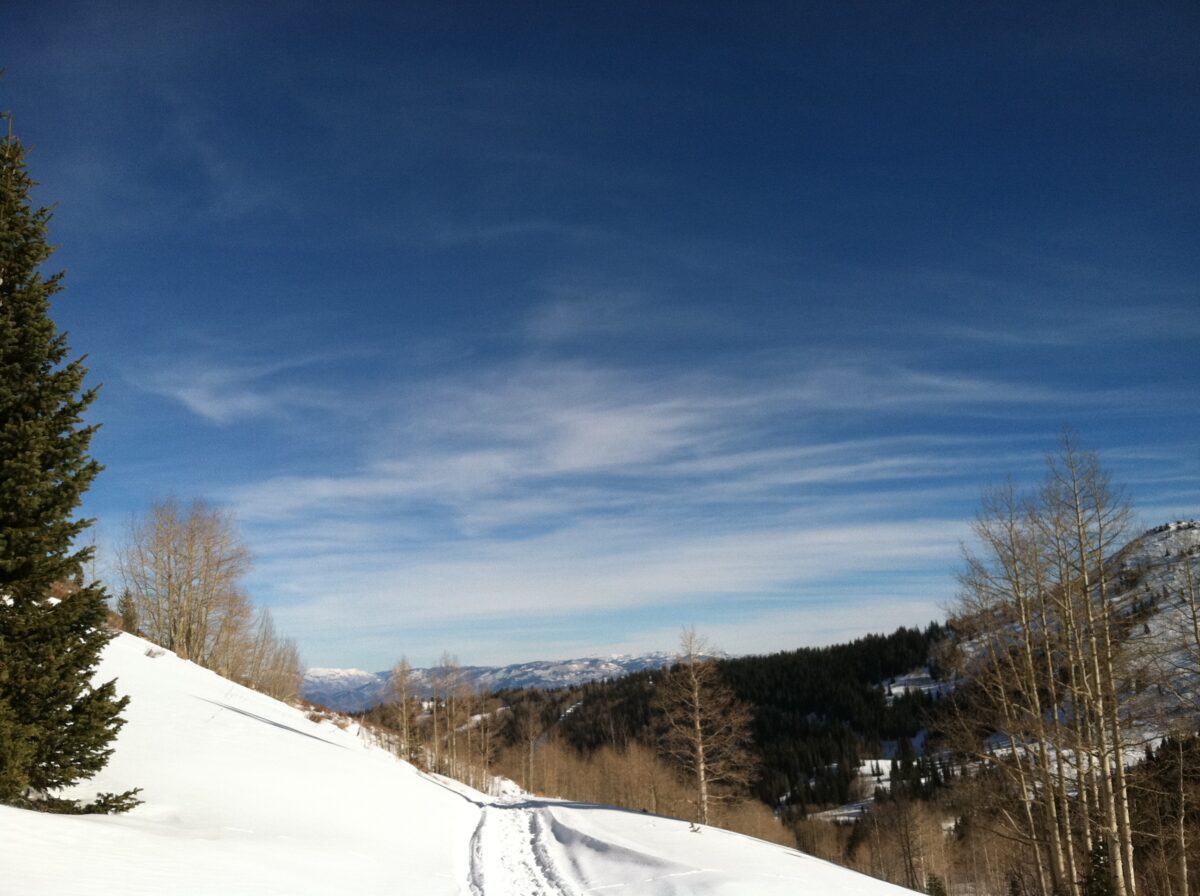
Know the terrain and conditions likely to trigger an avalanche and practice using a beacon for snow safety on Skyline Drive.
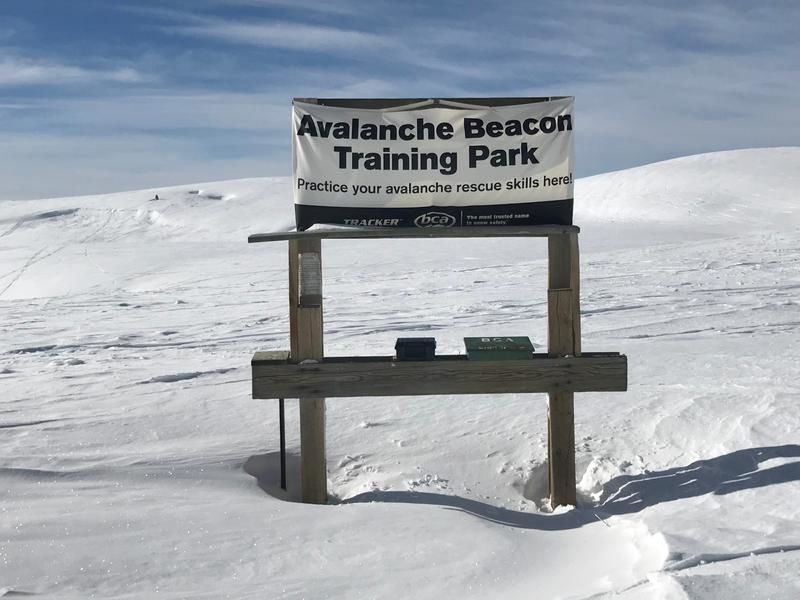
In Sanpete County the snowpack on Skyline Drive is off to a slow start this season. Warm temperatures have punctuated the season’s first few snow events in Sanpete County, and as a result the snowpack is not very impressive. But make no mistake — the snow will come, and with it avalanche danger, which peaks in January and February in Utah.
When a big snowstorm dumps lots of snow on top of conditions such as those that exist now on Skyline Drive the perfect set up for avalanches may exist. “Wind is the most common cause of avalanches since wind can deposit snow 10 times faster than snow falling from storms… If the weight of new snow is added faster than the buried weak layer can adjust to its load, then it fractures and forms an avalanche. But wind, snow or rapid warming do not always produce avalanches. It depends on the condition of the preexisting snow and the conditions during the storm. With very stable preexisting snow, even heavy, new snow with wind can bond well and be perfectly safe in the right conditions” according to the Utah Avalanche Center.
Utah ranks fourth highest of the 50 states for avalanche deaths, with an average of four fatalities annually for the past twenty years. Avalanche victims are backcountry recreationists — snowmobilers, snowboarders, snowshoers, and skiers. Snowmobilers lead the list with twice the number of fatalities as any other snow activity. Fatalities aside, avalanches are also responsible for numerous injuries and significant damage to recreational property like snowmobiles or ski equipment.
In the 2019/2020 winter season there were six fatal avalanche occurrences in Utah, five of them were snowmobilers.
Backcountry recreationists can, and should, become more familiar with the snow conditions that create high avalanche danger. The Utah Avalanche Center states “what we normally call avalanches are “slabs” or cohesive plates of snow that shatter like a pane of glass and slide as a unit off the mountainside. Natural avalanches occur because of new or windblown snow overloading weak layers or because of rapid warming, but there are almost always obvious signs of instability by the time avalanches come down on their own.”
However, “in 90 percent of avalanche incidents, the VICTIM or someone in the victim’s party triggers the avalanche. Statistics show that 93 percent of avalanche victims can be recovered alive if they are dug out within the first 15 minutes.” After 45 minutes, only 20 to 30 percent are still alive and after two hours there are rarely survivors. Being buried in an avalanche is like being buried in concrete. You can rarely dig yourself out; your friends must dig you out.
The Utah Avalanche Center states that “an average-sized avalanche travels around 80 mph and it is nearly impossible for someone to outrun an avalanche. A fast snowmobile has some chance but everyone else has a slim chance at best. If you are on a snowmobile you have the advantage of power. Grab some throttle and use your power and momentum to your advantage. If you are headed uphill, continue uphill. If you are headed across the slope, continue to the side to safe snow. If you are headed downhill, your only hope is to try and outrun the avalanche. Remember that large avalanches travel 60-80 miles per hour, and they are difficult to outrun. Also, remember that a disproportionate number of avalanche fatalities occur when one snowmobiler gets stuck on a slope and another person rides up to help them. Never go up to help a stuck buddy unless there are several other people in a safe place who can dig you out. This, of course, requires that everyone be wearing beacons and shovels and has practiced regularly with them.”
All serious backcountry snow sports enthusiasts should own a beacon as well as a probe and collapsible shovel, carry them and know how to use them. The Sanpete Ranger District operates a beacon park about 15 miles east of Fairview on Hwy 31 where beacons can be tested, and recreationists can practice using them. Getting everyone in the group involved in this exercise is both fun and useful. And it can save a life.
“Recognizing avalanche terrain is key to staying alive and having fun in the backcountry,” says Dale Atkins, an internationally known avalanche professional and mountain rescue expert. “Dry snow avalanches are most common on slopes of 30-45 degrees. Slab avalanches tend to be less frequent on slopes steeper than 45 degrees, as the snow tends not to build up into thick, deep slabs. The steeper the slope the more gravity is trying to pull it downhill, and in terms of avalanches, any slope steeper than 25 degrees is considered steep.”
For those interested in classes to learn everything from basic avalanche awareness, avalanche rescue, rescue fundamentals and companion rescue there are a multitude of courses available for the public, special classes for women and even special classes for youth. The Utah Avalanche Center hosts these courses all over the state of Utah throughout the winter season. Visit their web site at utahavalanchecenter.org/education and click on “UAC and KBYG Classes” for dates, times, and locations.
Dozens of classes are also available from Weber State University, Utah Mountain Adventures, Utah State University, Backcountry Pros, Snowbird Mountain Guides, White Pine Touring and The American Avalanche Institute. Any combination of field excursions, classroom learning, Zoom sessions and meetings will be used, depending on the course. There may be a fee for participation. For more information go to the Utah Avalanche Center’s web page and click on the “other classes” tab on the left side of the page.
Locally, Snow College offers a course in Winter Technical Leadership (OLE 2550). This course “provides a combination of theoretical background and technical aspects of leading and managing groups in winter environments, highlighting avalanche awareness, while utilizing specialized hands-on skill development such as snowshoeing, skiing, and ice climbing. It will emphasize specialized clothing/equipment selection, care, and maintenance, equipment nomenclature, technical aspects of avalanche awareness and assessment, backcountry travel and route finding, risk management, and related beacon search and rescue procedures.”
“Know before you go!” Avalanche conditions can be found at Utah’s Forecast Hotline (888) 999-4019. For more information on avalanche safety, preparedness and statistics visit the Utah Avalanche Center’s web page at https://www.utahavalanchecenter.org
News
Spring City Canyon Road to Temporarily Close for Forest Work
Public Hearing Set for Sanpete County Rural Healthcare Sales Tax Proposition
MANTI — Sanpete County residents will have an opportunity next month to learn more about and comment on a ...