Garden Help Desk: Harvesting garlic and controlling wasps in the garden
-
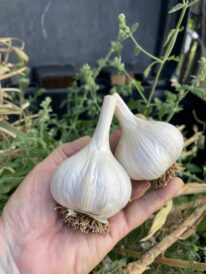
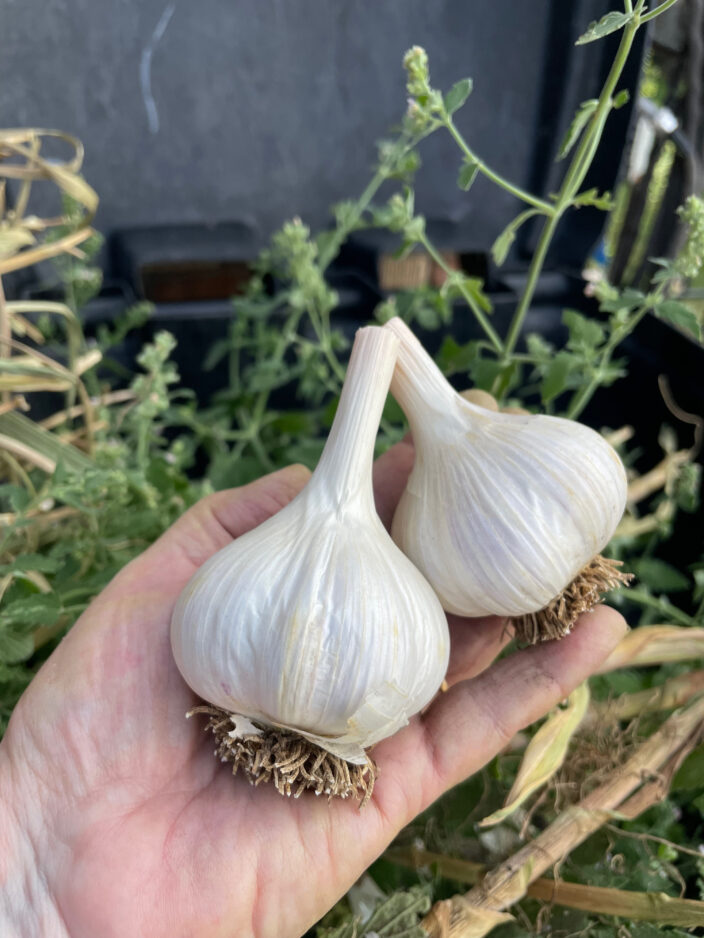
- Once garlic bulbs are trimmed at both ends and clean, they are ready for storage in a cool, dry place. (Courtesy Meredith Seaver)
-
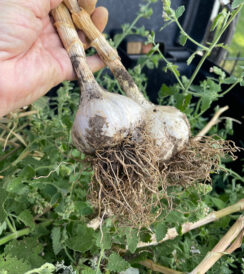
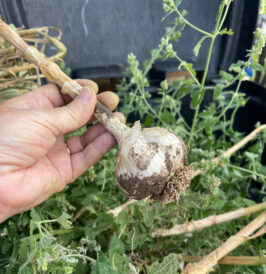
- The dried tops of the garlic plant make a convenient handle while cleaning and trimming the roots. (Courtesy Meredith Seaver)
-
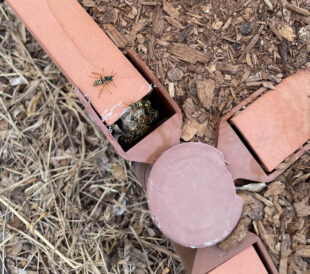
- Paper wasps will build nests under fence rails and eaves and in gaps or crevasses of fences or outbuildings. (Courtesy Meredith Seaver)
-
- It’s not necessary to cut flush against the base of the garlic bulb when cutting back the roots. Leaving 1/4 inch of root helps avoid accidental damage to the cloves. (Courtesy Meredith Seaver)
Courtesy Meredith Seaver
Once garlic bulbs are trimmed at both ends and clean, they are ready for storage in a cool, dry place. (Courtesy Meredith Seaver)
USU/Utah County Extension Service provides some answers to more common garden questions:
I think my garlic is almost ready to trim and bring into my pantry, and I have a lot more than I expected! The tops are completely dry, but there is a lot of dirt sticking to the bulbs. I have a lot of them. Can I rinse off the dirt to make it faster?
Don’t wash off the bulbs. You’ve spent a few weeks curing them in a place where they were protected from rain and sprinklers and, finally, they’re nice and dry. Getting them wet would leave moisture in between the papery layers, leaving the perfect conditions for mold to grow during storage.
I like to use my gloved hands to gently rub or brush away the soil that’s clinging to the dried roots. After that, I trim away the dried top and cut back the roots using an old hand pruner (I leave about ¼” of root attached). If the outer papery layer has a bit of soil clinging to the bulb, I gently rub off that layer, taking care to leave most of the papery layers intact.
Extra time out in our hot summer weather can shorten the storage life of your garlic. As soon as the bulbs are dried, trimmed and clean, bring them inside out of the summer heat. You say you have more garlic bulbs than you expected. Don’t put off working on your garlic until you have time to tackle the entire job all at once. Even doing a few at a time whenever you have the chance will speed up getting all your garlic into cool, dry storage.
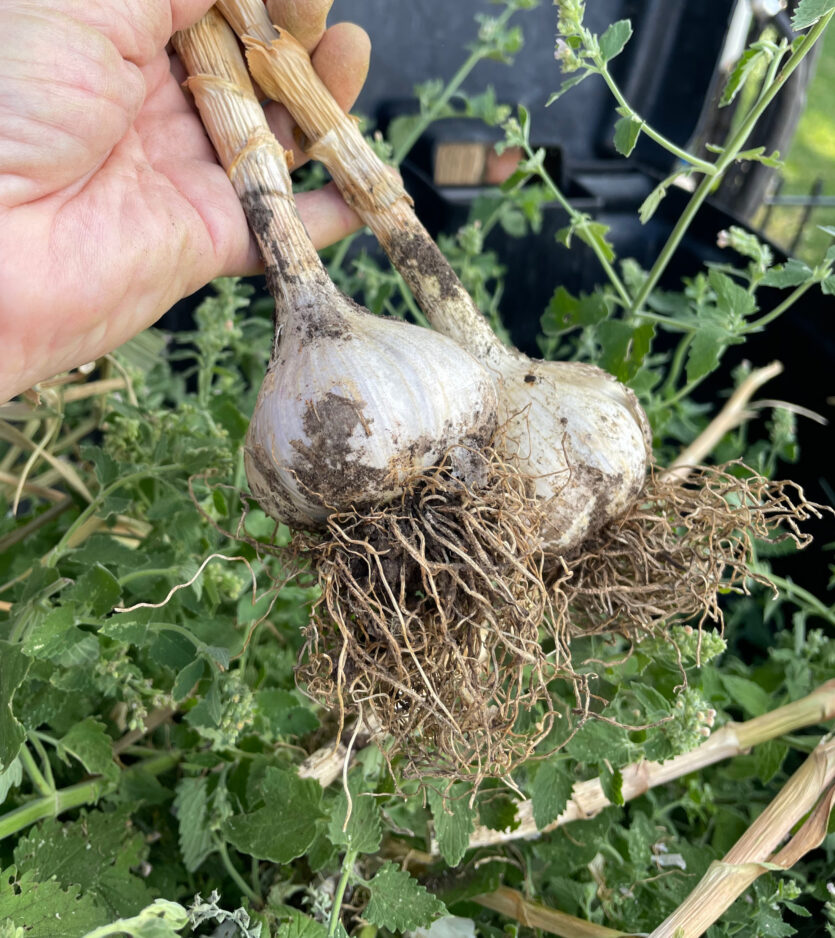
Photo by Meredith Seaver
The dried tops of the garlic plant make a convenient handle while cleaning and trimming the roots. (Courtesy Meredith Seaver)
And FYI: it’s tempting to enjoy your largest garlic bulbs first, but resist the urge and set them aside to use when it’s time to plant your new garlic patch in a couple of months.
This week I found a wasp nest in a gap between two boards of a raised bed in my vegetable garden. What can I do?
Wasps are beneficial insects. They’re pollinators, spreading pollen from flower to flower while feeding on the pollen and nectar. Wasps are also beneficial predators. They help to keep pest populations in balance by gathering spiders and insects like caterpillars, grubs, flies, grasshoppers, aphids and other soft-bodied insects to feed to their larvae.
The wasps in your photo look like they could be European paper wasps, a species that is more docile than some other wasps. They tend to mind their own business (foraging and nest building) unless they’re threatened or their nest is disturbed. Unfortunately, your wasps are building their nest right in the edge of a raised bed where you almost can’t avoid disturbing them when you work in your garden. I’m afraid you’ll need to eliminate the risk to you, your family and any pets.
The simplest and surest way to manage these wasps is to use a wasp and hornet spray. You’ll find a few products to choose from at any big box store or nursery/garden center.
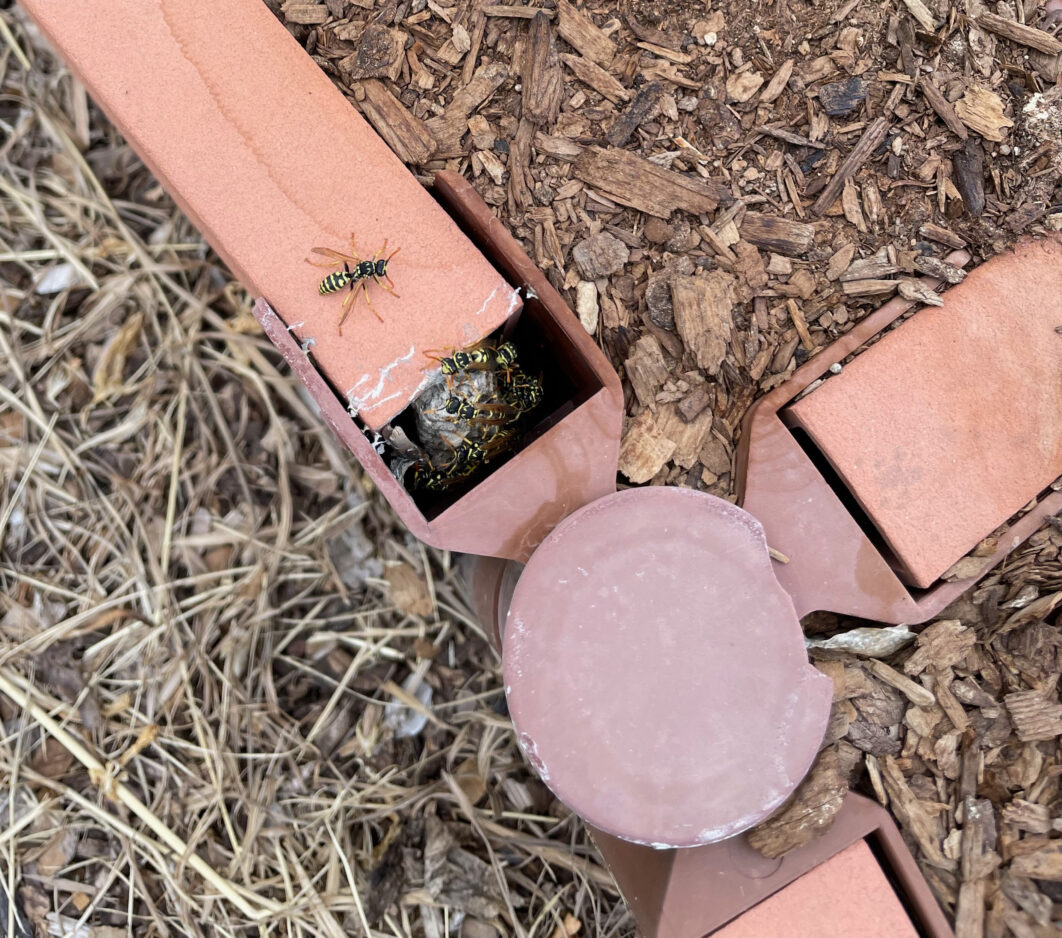
Photo by Meredith Seaver
Paper wasps will build nests under fence rails and eaves and in gaps or crevasses of fences or outbuildings. (Courtesy Meredith Seaver)
Even though European paper wasps are not very aggressive, you’ll want to wait until evening to do any spraying. Do it well after sunset but before dark; at that time, all the wasps should be in the nest for the night. Following the directions on the product label, completely cover the opening to the nest with the insecticide spray. Also, direct some spray down into the nest opening if you can. It’s a good idea to keep an eye on the nest area for a few days afterward to make sure there aren’t any stragglers trying to start a new nest nearby.
Today we’ve only talked about how to eliminate more docile wasps if it’s necessary. Managing aggressive yellow jackets and hornets requires extra steps and safety precautions that we won’t cover today.
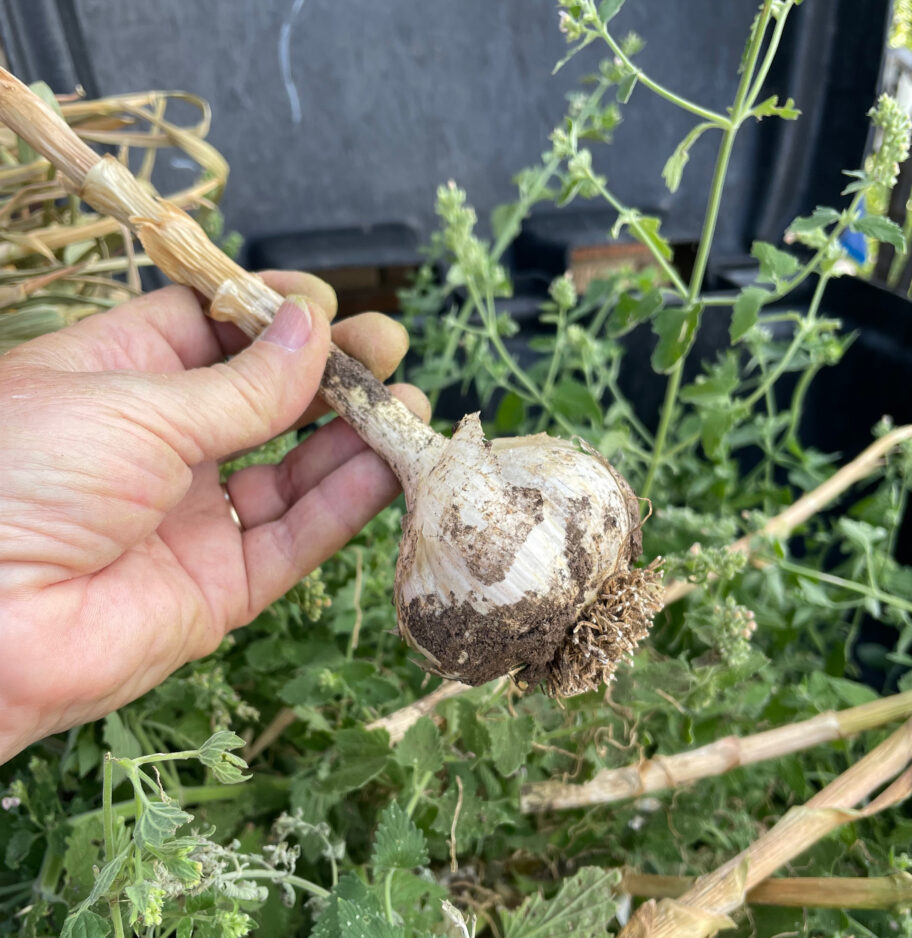
It’s not necessary to cut flush against the base of the garlic bulb when cutting back the roots. Leaving 1/4 inch of root helps avoid accidental damage to the cloves. (Courtesy Meredith Seaver)