Garden Help Desk: Hardy pansies provide fall and spring color
-
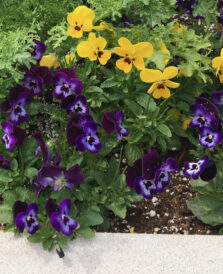
- Purple and yellow pansies contrast nicely with each other and provide bold color in the landscape.
-
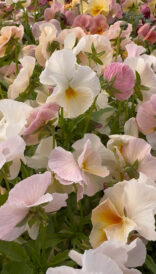
- There are many pastel varieties of pansies that provide a soft contrast to the bright pansy varieties that are popular in flowerbeds.
-
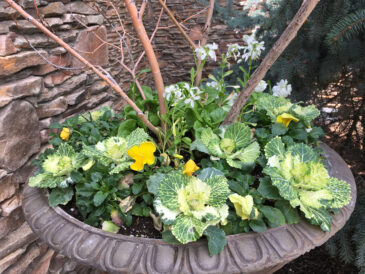
- Pansies do well in containers. This planting of pansies and ornamental kale looks great in the fall and will overwinter in a protected spot, then burst back to life in the spring.
-
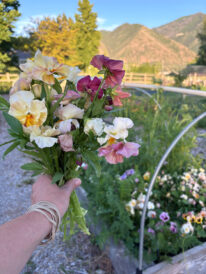
- Pansies make excellent cut flowers when spaced closely in the flower garden to encourage longer stems.
-
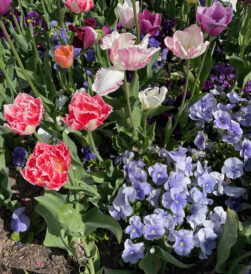
- Pansies will overwinter nicely when planted over spring-blooming bulbs in the fall. They will surge back to life in the spring and provide a colorful background for tulips, daffodils and other spring blooms.
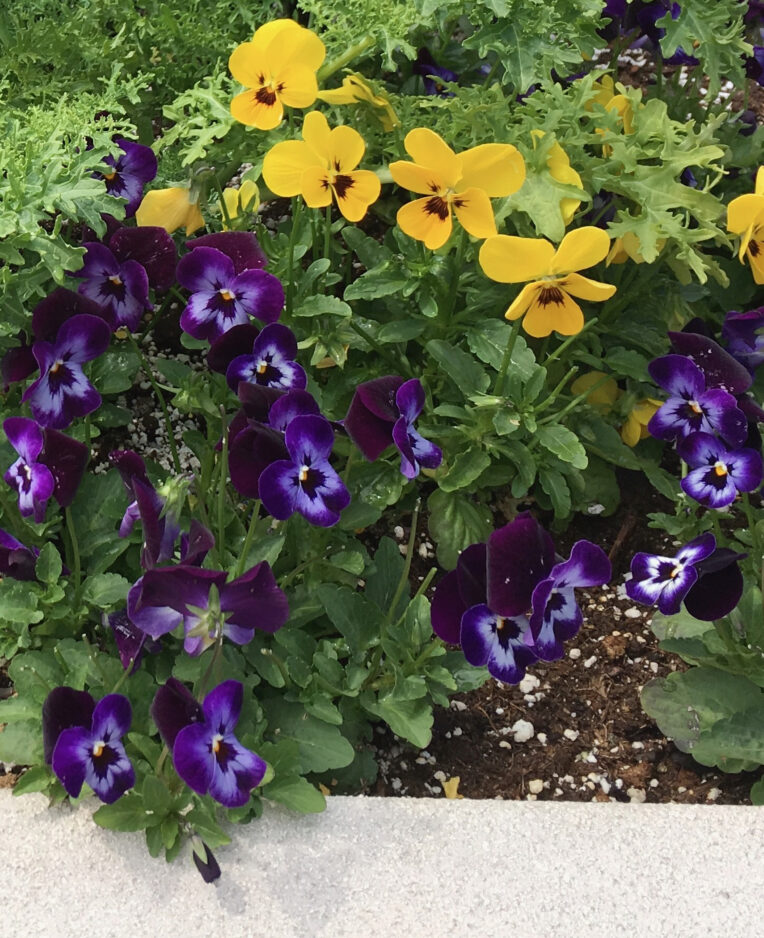
Photo by Meredith Seaver
Purple and yellow pansies contrast nicely with each other and provide bold color in the landscape.
I have a great relationship with pansies. They are one of my favorite cool-season flowers. They bloom in the fall and even more abundantly in the spring. And, frankly, I’ve never understood the negative epithet of calling someone a “pansy” to denote weakness. They are tough flowers – in the cold, that is. They peter out in the heat. But wow, when they are planted in the fall and allowed to overwinter under the right conditions, they come roaring into spring with their colors blazing! They provide a beautiful understory of color in spring beds.
I like to plant them in late September or early October. This gives them enough time to develop a strong root system before winter. For several years, I bought a flat or two at a local nursery and planted them in a few fall pots as well as in landscape beds where I had also planted fall bulbs.
If you want access to more unusual colors and varieties, starting pansies from seed is surprisingly easy. Six weeks before you want to plant them outside, sow them in a 72- or 128-cell flat on the surface of damp germination mix. Leave uncovered or sprinkle a light layer of vermiculite on top of the soil. Add a humidity dome and a heat mat if needed to maintain an optimal germination temperature around 65°. They will germinate quickly and can be hardened off and planted outside when they have developed at least six true leaves. Plant in full or partial shade in rich, well-draining soil.
Pansies come in a large array of colors, even pale blue. Now that I’m getting more involved in cut flowers, I’ve gone searching for pansy color palettes that are more suited to weddings and other floral events. I love the pale pinks, peaches and creams. But wait – cut-flower pansies, you say? That’s right. In order to get them long enough for cutting, I plant them 3 inches apart, keep them in a low tunnel over the winter (venting on sunny days) and then provide 30% shade cloth when it warms up in the spring. The close spacing encourages the stems to stretch and compete with each other until they reach about 18 inches long — plenty of length for a cut flower! More hospitable climates than ours can push them to well over 2 feet. I pinch off the first flowers to encourage branching and then harvest in May. They have a great vase life of well over a week. I’ve even noticed immature flowers continue to develop and open in the vase.
As a cool-season landscape bedding flower, pansies take the cake. As mentioned above, they really shine in the spring after overwintering from a fall planting. To help them weather the winter, keep in mind that cold temperatures themselves are not usually what do them in; the real danger is cold wind and desiccation. Keep the soil moist during winter dry spells. A little mulch around the plants can help protect them from drying winds. And keep potted pansies in a protected area. Snow won’t harm them; in fact, they often bounce right back after a thaw.
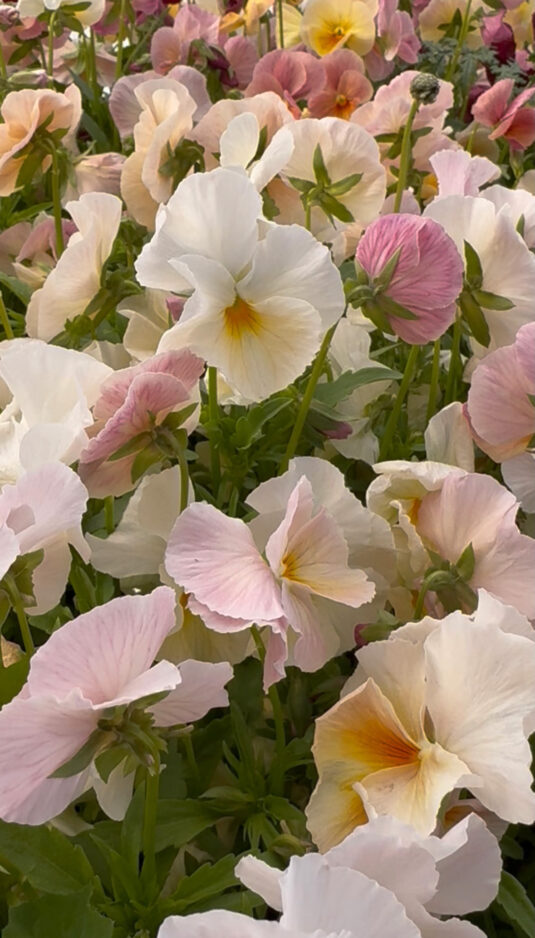
Photo by Elizabeth Binks
There are many pastel varieties of pansies that provide a soft contrast to the bright pansy varieties that are popular in flowerbeds.
Whether you plant them in a landscape bed, tuck them among your tulips or grow them for the cutting garden, pansies deserve a place in the fall garden. They may have a reputation for being delicate, but anyone who has watched them emerge from beneath the snow knows better. They are tough little flowers — and beautiful ones at that.
Elizabeth Binks is a horticulture assistant at the USU/Utah County Extension Service.
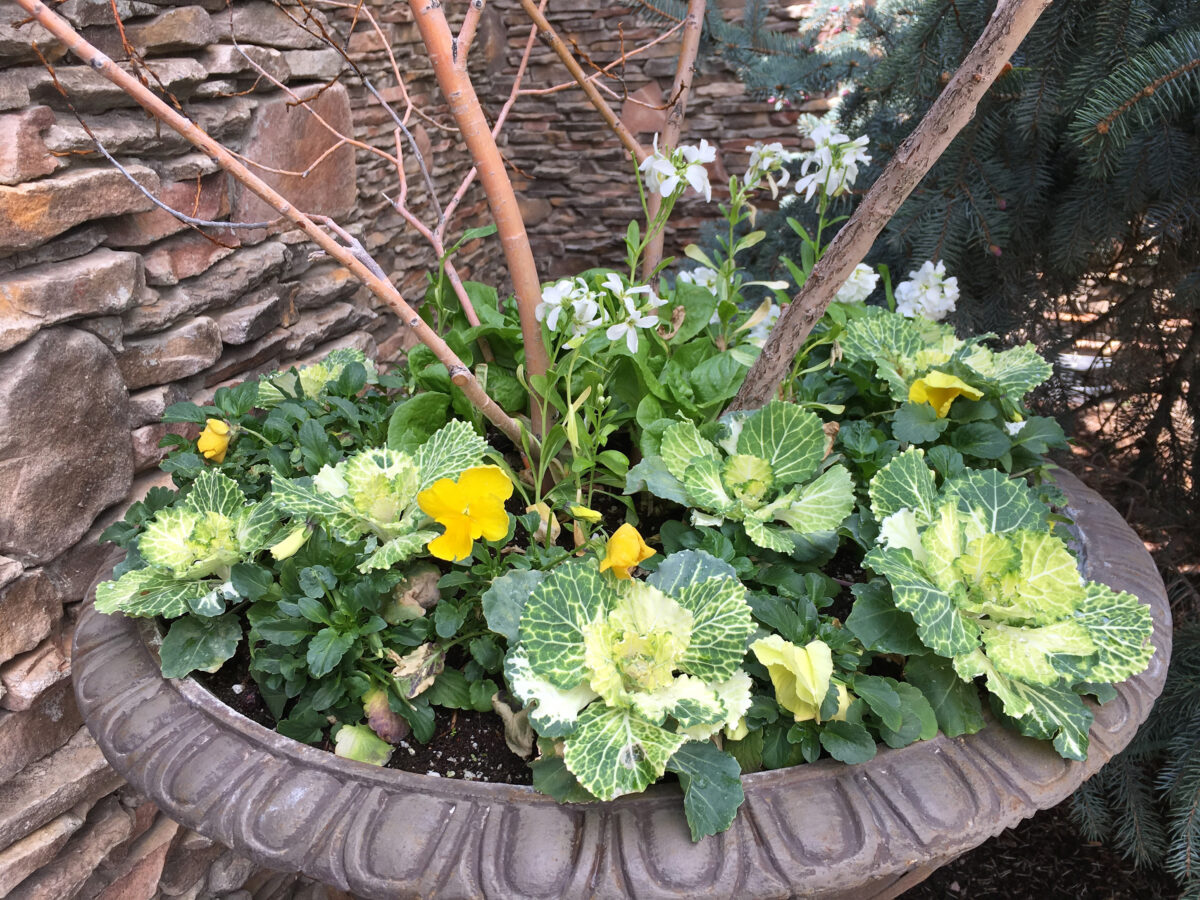
Pansies do well in containers. This planting of pansies and ornamental kale looks great in the fall and will overwinter in a protected spot, then burst back to life in the spring.
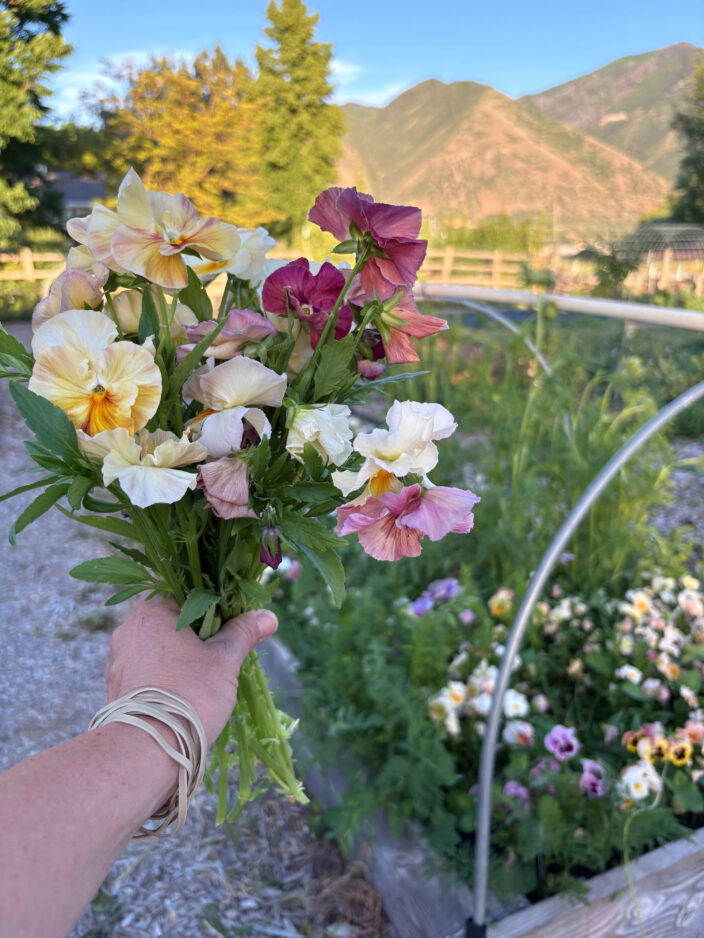
Pansies make excellent cut flowers when spaced closely in the flower garden to encourage longer stems.
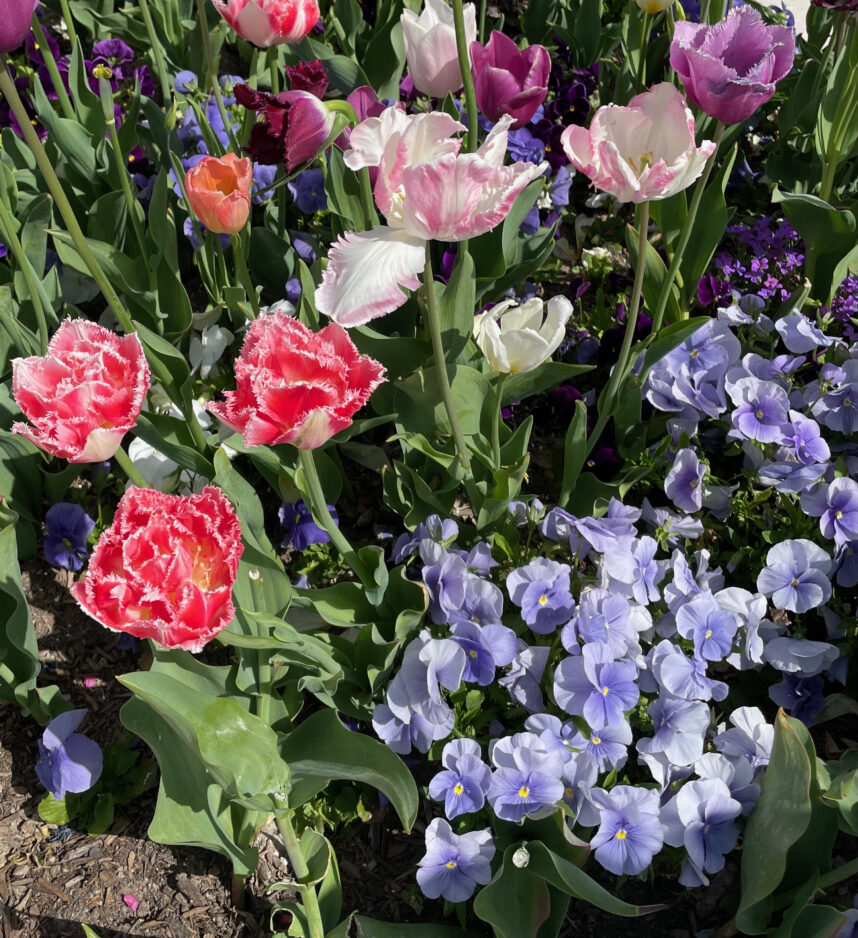
Pansies will overwinter nicely when planted over spring-blooming bulbs in the fall. They will surge back to life in the spring and provide a colorful background for tulips, daffodils and other spring blooms.