UVU Capitol Reef Field Stations engaging learners in outdoor classroom
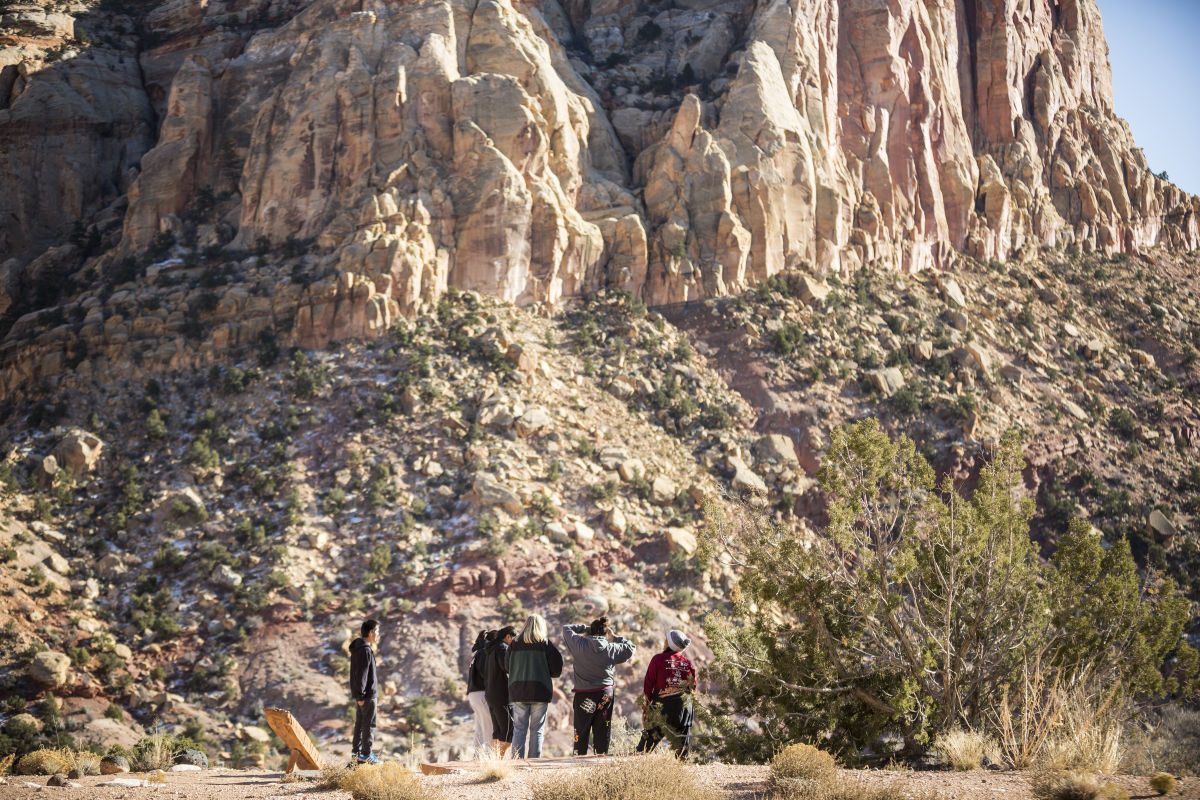
Photos of faculty and students from UVU and high school students from the Mountain Ute Tribe for the ENGAGE campaign and the Native American Initiative at Capitol Reef Field Station.
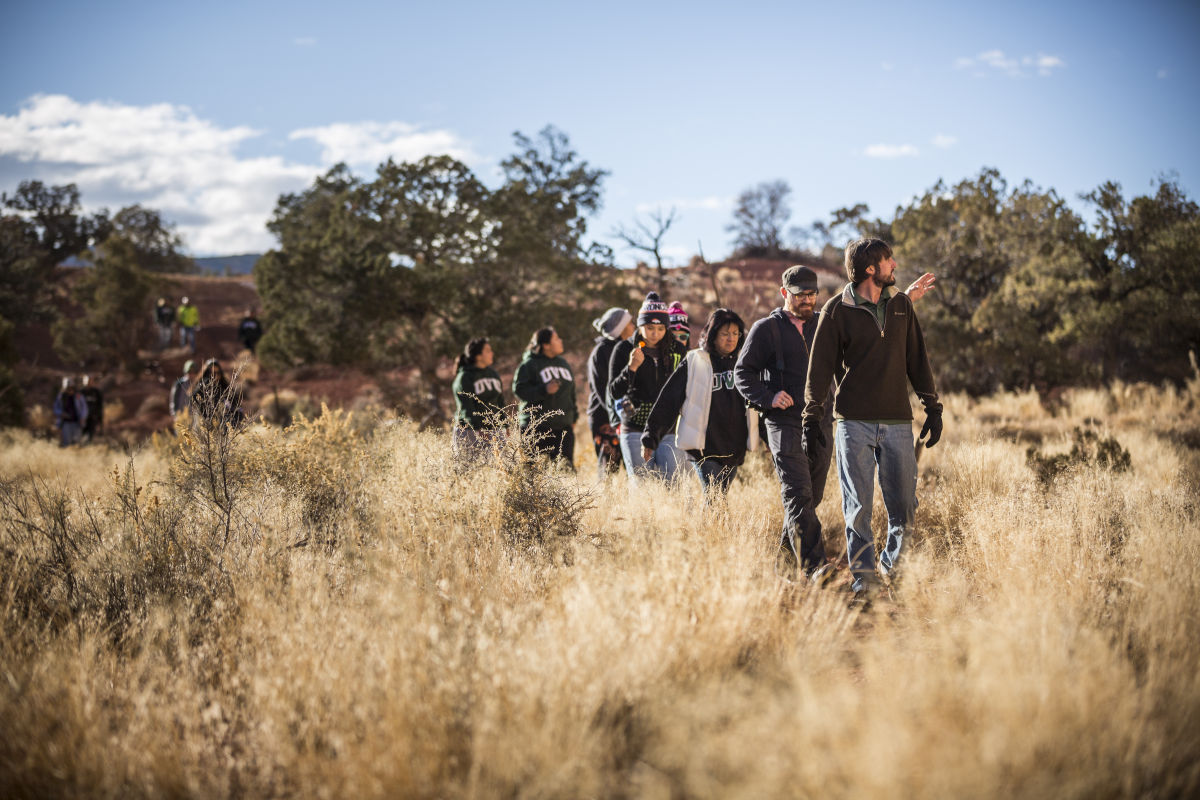
Photos of faculty and students from UVU and high school students from the Mountain Ute Tribe for the ENGAGE campaign and the Native American Initiative at Capitol Reef Field Station.
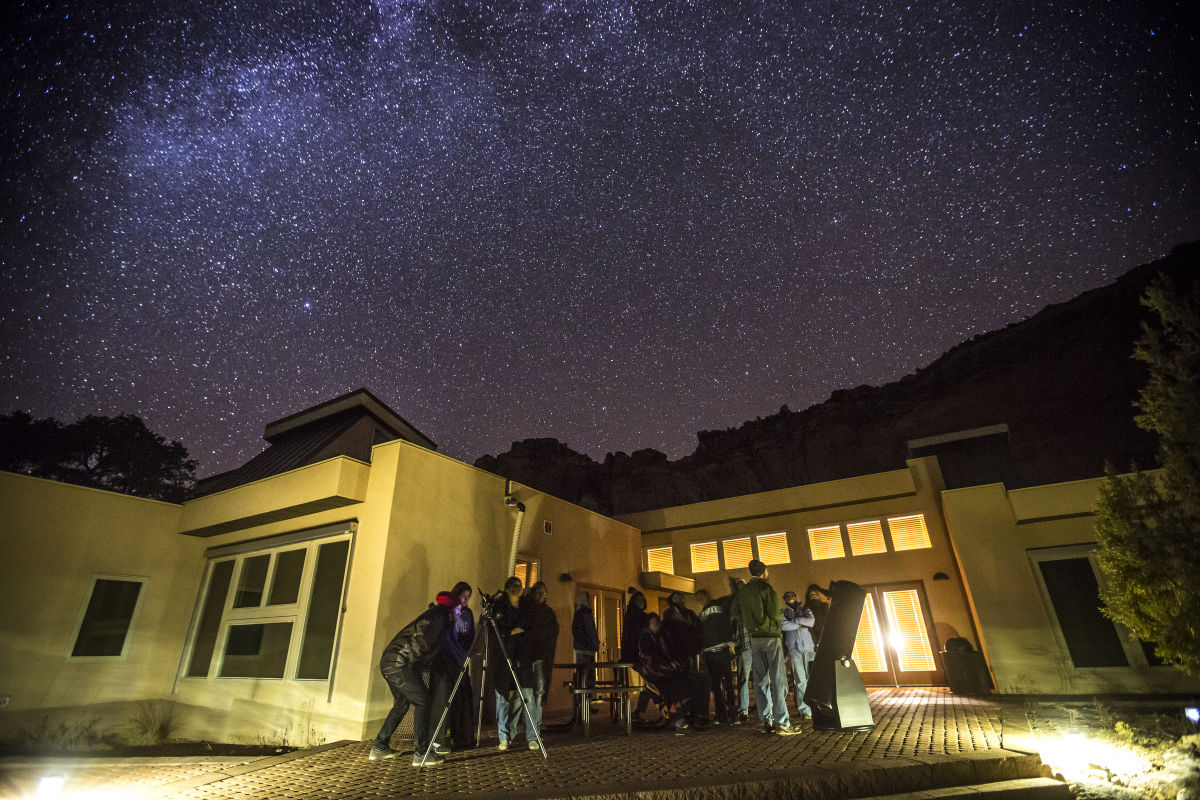
Photos of faculty and students from UVU and high school students from the Mountain Ute Tribe for the ENGAGE campaign and the Native American Initiative at Capitol Reef Field Station.
On Monday, Gina Gilson, site manager for Utah Valley University’s Capitol Reef Field Station, welcomed a group of students and faculty from the University’s English department. Her welcome included orientation information that every group who visits the field station receives, including an introduction to the field station, an explanation of the “house rules,” and a crash course on conservation — as part of their many conservation measures, the field station measures the water usage and garbage production of every group that stays onsite.
“Teaching our visitors environmental ethics is an important part of our mission,” Gilson said. “It’s also important to our partner, the National Park Service, that visitors leave with an enhanced understanding of the environment and how to protect it.”
Working closely with the NPS is vital, because the field station is actually owned by the NPS and located inside Capitol Reef National Park, one of fewer than a dozen university field station situated within a national park. “This unique partnership allows us to provide our visitors with educational and engaged learning experiences that are as remarkable as the landscape in which they occur,” said Michael T. Stevens, CRFS director and associate professor of biology. “These experiences lie at the heart of our mission and represent a significant portion of our visitation.”
In addition to engaged learning and environmental ethics, the field station offers outstanding research opportunities. This year has been a particularly active year for the station. “While fostering our perennial research programs, we’ve added new lines of research on fluvial geomorphology, lichens, the ionosphere and macroinvertebrates,” said Stevens, who noted that the station supports relevant projects through a competitive grant program funded by the Bill J. and Margaret M. Pope Colorado Plateau Field Institute Fund.
It was the Pope’s generous endowment, along with tireless efforts by Elaine Englehardt, UVU distinguished professor of ethics and professor of philosophy, and other university officials and government advocates, that helped make the field station a reality. The field station began operations in October 2008 on the site of a guest ranch that had closed in 1974 and subsequently had been donated to the NPS. UVU earth science professor Paul Taylor discovered the ranch site and began working closely with university officials and park representatives to turn the property into a field station that was harmonious with the environment in physical aesthetics, off-grid energy and water consumption, and leave-no-trace operations.
The current facility, designed by Mark Chalom, is a model in energy-wise construction. Powered by 72 200-watt solar panels backed up by a propane generator, the station also makes extensive use of passive heating and cooling and boasts an onsite water treatment system. While the station has adequate electricity and water to support activities, staff and guests practice conservation at all times. The station accommodates up to 40 day-use visitors and 24 overnight visitors.
In the past year, the field station has hosted a broad range of groups. Guests have included geology field study excursions by the University of Kansas, Mount San Antonio College in California, and Snow College; the Utah Science Teachers Association, and multiple UVU groups, including developmental math, the botany and wildlife clubs, community and continuing education classes, and multiple science groups.
“It’s amazing to watch the groups who come here,” said Gilson, who said she initially expected mostly science groups at the station. “But this field station affects everyone who comes, regardless of why they’re here and what they’re studying. We offer visitors the opportunity to enjoy the peaceful surroundings and learn about the environment and how to take care of it, while still focusing on their main purpose for being here. I watched this English group prepare for a new semester and go through training, but at the same time they were outside reading and writing, and you could see they were getting a lot of inspiration from their environment. You wouldn’t be able to do that in very many places. The Capitol Reef Field Station is definitely a unique situation.”