Provo teacher finds passion in dragonfly research
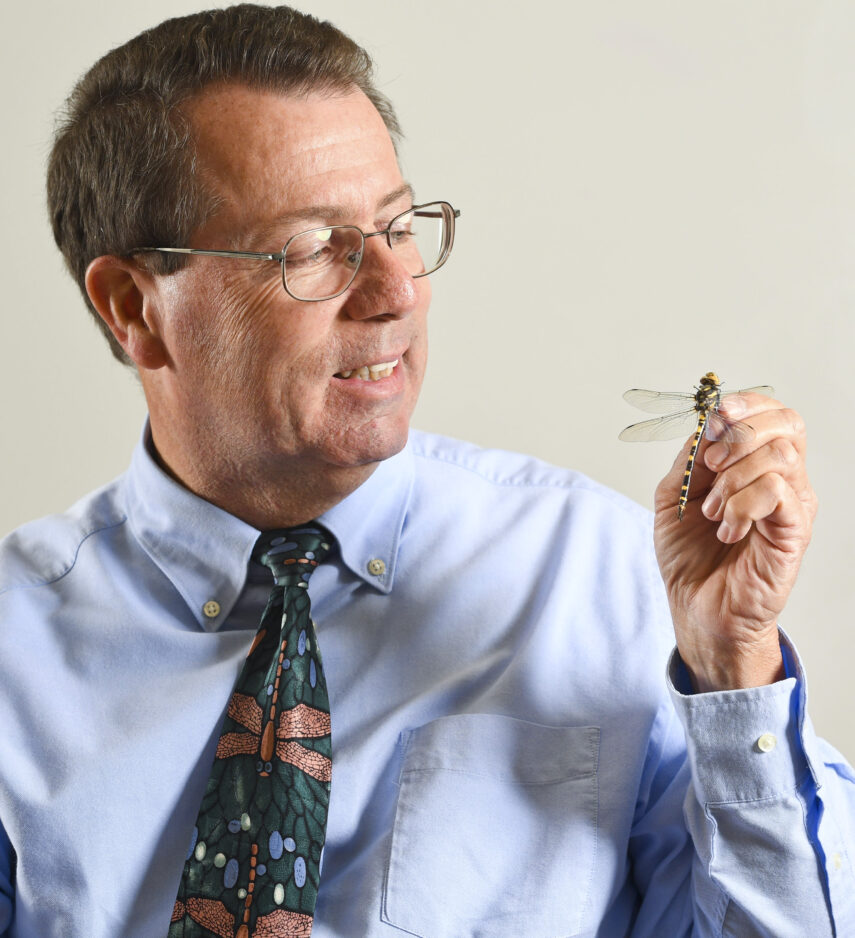
Timpview biology teacher Alan Myrup holds a Pacific Spiketail dragonfly as he poses for a portrait Thursday, Oct. 6, 2016 in his classroom at Timpview High School. Myrup is currently in his 30th year of teaching at Timpview High School. ISAAC HALE, Daily Herald
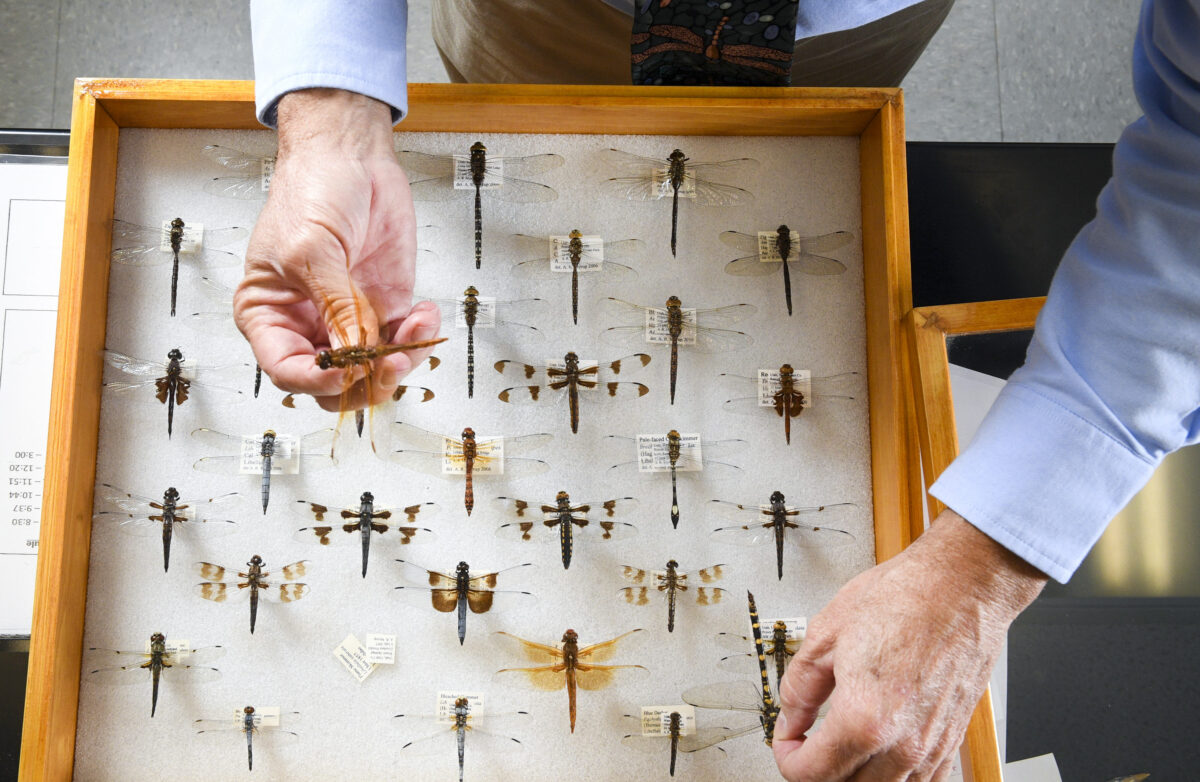
Timpview biology teacher Alan Myrup takes out dragonflies from his personal collection Thursday, Oct. 6, 2016 in his classroom at Timpview High School. His personal collection he keeps at school is what he uses for educational presentations. ISAAC HALE, Daily Herald
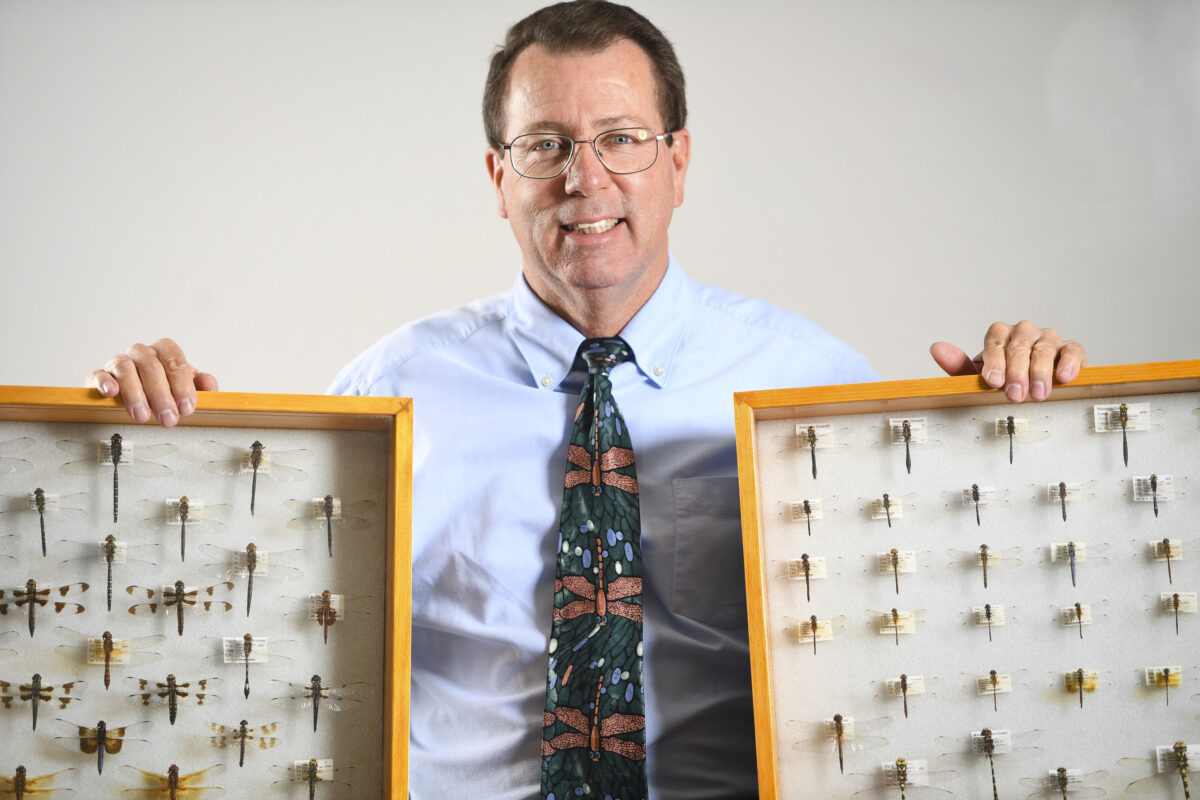
Timpview biology teacher Alan Myrup poses for a portrait with dragonflies from his personal collection Thursday, Oct. 6, 2016 in his classroom at Timpview High School. ISAAC HALE, Daily Herald
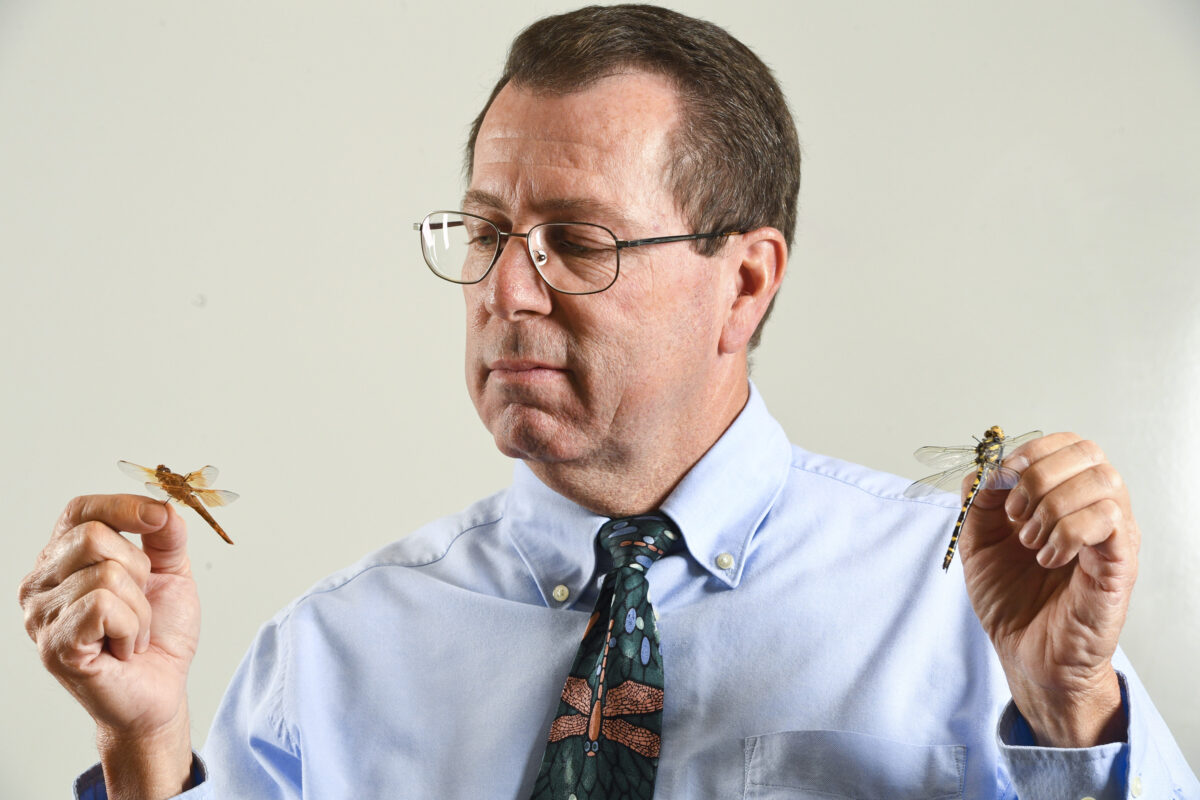
Timpview biology teacher Alan Myrup poses for a portrait with a Flame Skimmer dragonfly, left, and a Pacific Spiketail dragonfly Thursday, Oct. 6, 2016 in his classroom at Timpview High School. ISAAC HALE, Daily Herald
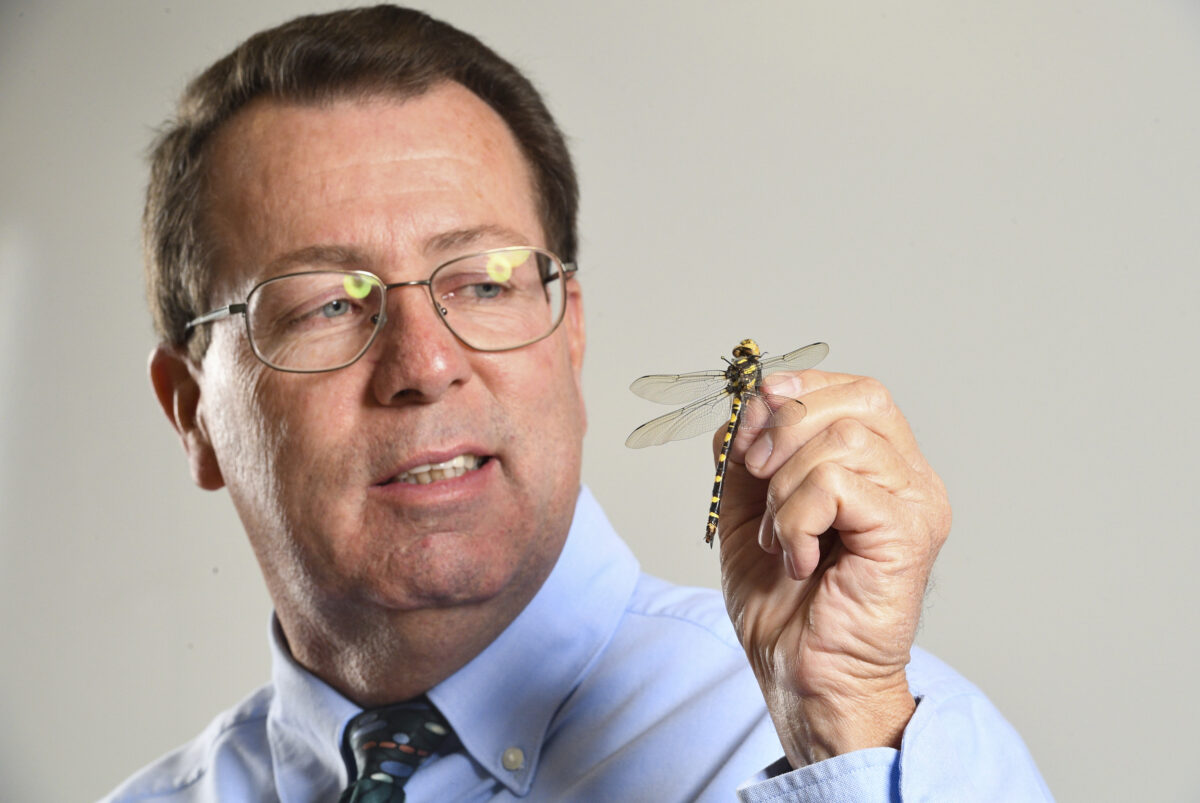
Timpview biology teacher Alan Myrup holds a Pacific Spiketail dragonfly as he poses for a portrait Thursday, Oct. 6, 2016 in his classroom at Timpview High School. ISAAC HALE, Daily Herald
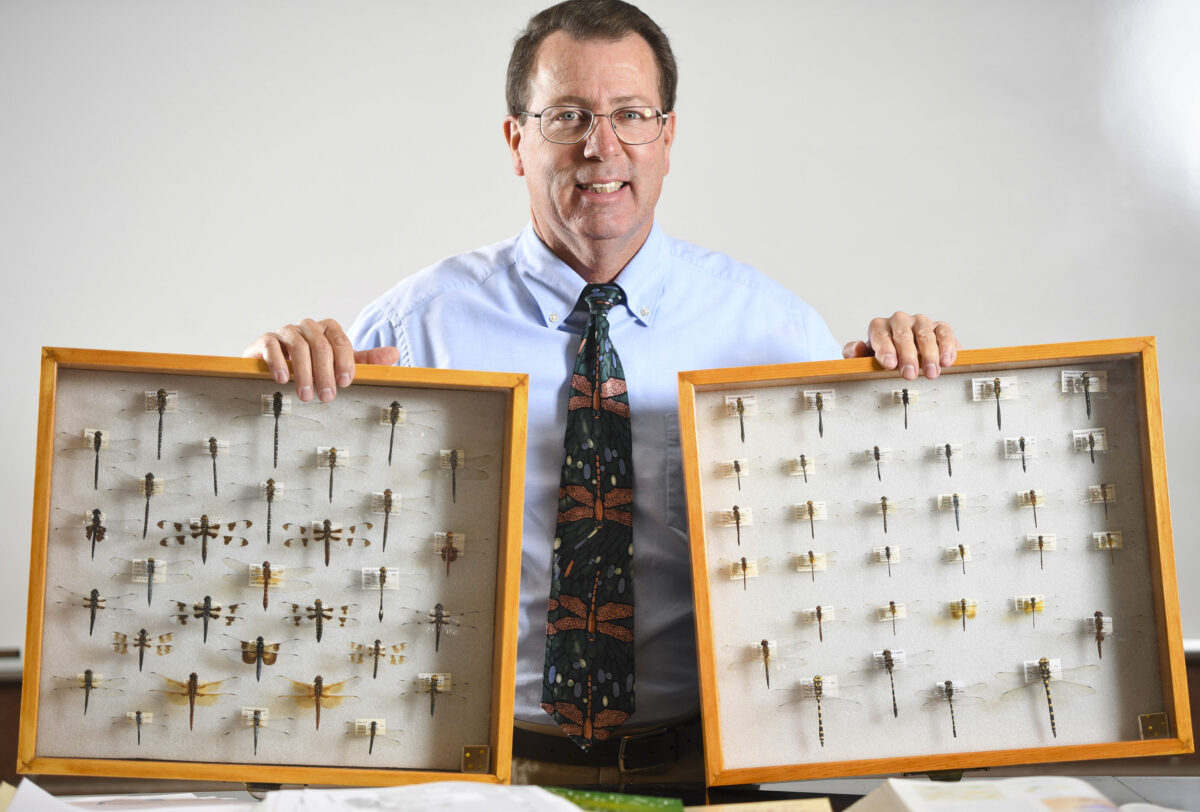
Timpview biology teacher Alan Myrup poses for a portrait with dragonflies from his personal collection Thursday, Oct. 6, 2016 in his classroom at Timpview High School. ISAAC HALE, Daily Herald
While most people may not give more than a fleeting glance to dragonflies, Alan Myrup has spent the past 11 years researching the insect.
Myrup, who teaches biology at Timpview High School in Provo, published “The Dragonflies and Damselflies (Odonata) of Utah” earlier this year. The monograph maps out the distribution of the insect and provides a much needed update on dragonflies in Utah.
“Doing this gathered a lot of information that was unknown,” he said. “We cannot preserve what we don’t know or understand.”
While Myrup has always been interested in butterflies, he said he decided to research dragonflies after several internships.
For one internship, Myrup spent a summer collecting insects for DNA testing and one researcher asked them to specifically collect dragonflies. That’s what he was doing when he saw the Mountain Emerald dragonfly and was surprised by its stunning green eyes.
“I saw this dragonfly and it just puzzled me,” he said. “How did I miss this thing through all my years of collecting and studying insects and butterflies?”
The available reference material had mentioned that this dragonfly was extremely rare and maybe even extirpated, or gone, from the state, something that Myrup disproved with his research.
With that spark of initial interest, Myrup said he went back to the Monte L. Bean Life Sciences Museum, where he had done an internship and helped curate butterflies, for some guidance on dragonflies and potential research.
Dr. Richard Baumann, emeritus curator at the Bean Museum, is the coauthor on Myrup’s monograph and was influential and encouraging in his research.
Baumann said the available information about dragonflies in Utah was very lacking and made Myrup’s work even more important.
“They did what they could, but they just didn’t have it,” Baumann said.
Baumann said the work Myrup did has made up for that lack of information.
“Alan did it. He got into it. He’s a real pro,” he said. “The thing he has published has been really surprising (because of the response to it).”
Myrup said the research, which took 11 years, was a bit tricky at first, especially with the damselflies because of the similarities between the different types. But over time each aspect became easier.
“I sat right here at this very desk with the very first one of those I collected and it took me three hours to get that first damselfly figured out and make sure I have the right one,” he said. “I got better at it.”
Baumann said since the monograph’s release, it has caught the eye of many researchers who now want to put together similar research for publication.
“He’s sent them out and I’ve sent them out,” he said. “I have colleagues in the Pacific Northwest, Oregon and Washington, and they say, ‘Oh, we want to do something for Oregon’ or, ‘We want to do something for the Pacific Northwest.'”
Myrup, who has been teaching for 35 years, said the research he has done prompted him to reevaluate the way he was teaching. He said he tries to give students more opportunities and help designing projects to answer questions.
“We can teach them all the details and content, but to design experiments takes a lot of thought,” he said.”Then they know how it’s done and how to learn and how to research.”
While Myrup was out collecting dragonflies, he said he asked a fellow odonatologist the most important thing he could teach his students.
“Teach them to ask questions,” the man responded.
Myrup said the response has stuck with him and has been something he’s tried to help his students learn. Myrup said he hadn’t been interested in teaching when he initially started college at BYU where he was studying zoology.
But after going on a mission for The Church of Jesus Christ of Latter-day Saints, he changed his emphasis to teaching.
“I went on an LDS mission and realized teaching others was really fun,” he said. “Teaching others about something I like is even more fun.”
Myrup said the goal of monograph and his research was to give people an understanding of where dragonflies and damselflies are located when they think about land use, conservation and ecosystem management.
While all of the types of dragonflies found in Utah can be found elsewhere, it’s important to realize the effect people can have on the insect.
“I don’t think people understand that when you lose a habitat it’s gone forever,” he said. “They can’t just go somewhere else.”