South Utah County residents tour West Mountain petroglyph sites, raise awareness
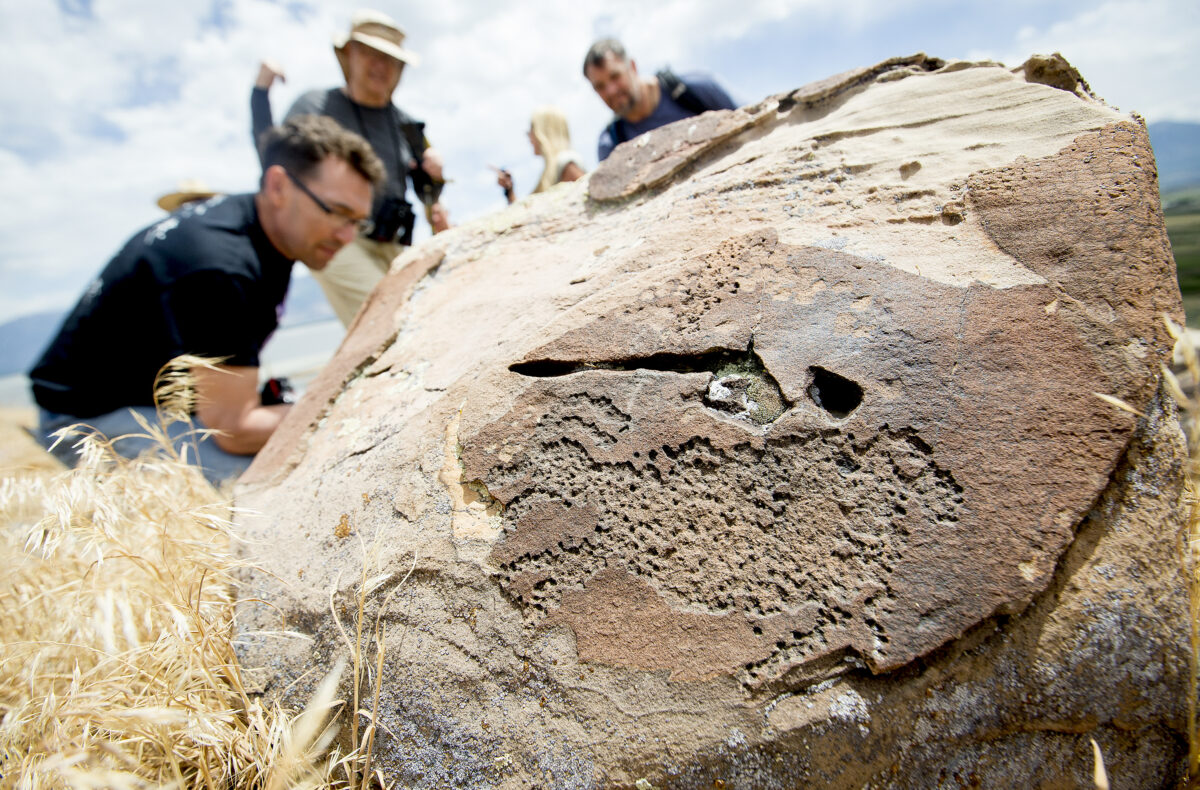
Community members check out several petroglyphs on a rock during a tour of the northeastern area of West Mountain on Tuesday, June 16, 2020. Isaac Hale, Daily Herald
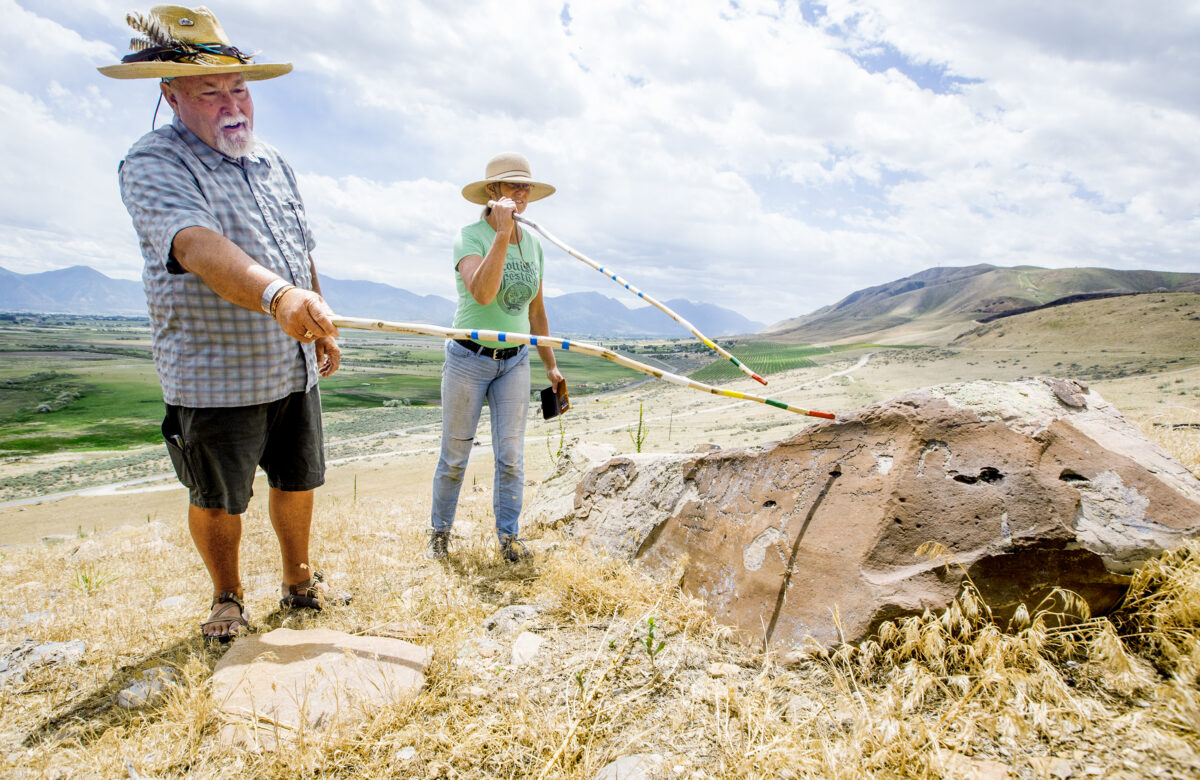
Steven Acerson, a representative from the Utah Rock Art Research Association, and Shauna Phelps, of West Mountain, point out several petroglyphs during a tour of the northeastern area of West Mountain on Tuesday, June 16, 2020. Isaac Hale, Daily Herald
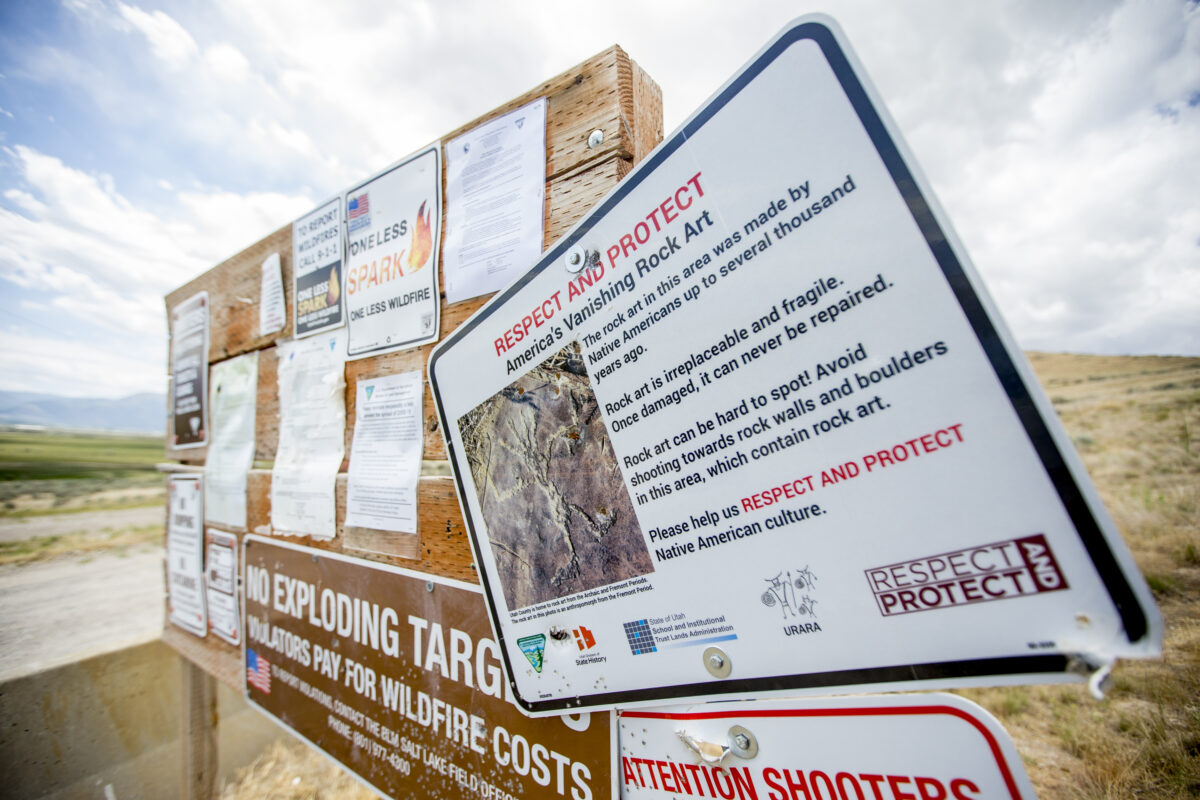
A sign concerning rock art is posted at an area used for shooting firearms in the northeastern area of West Mountain on Tuesday, June 16, 2020. Isaac Hale, Daily Herald
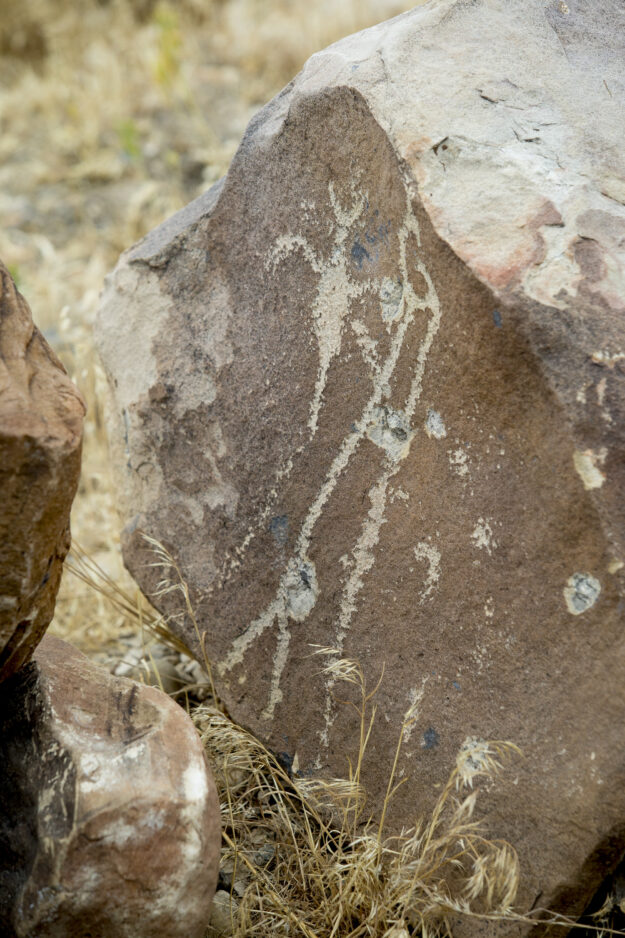
A petroglyph remains on a rock despite damage from firearms in the northeastern area of West Mountain on Tuesday, June 16, 2020. Isaac Hale, Daily Herald
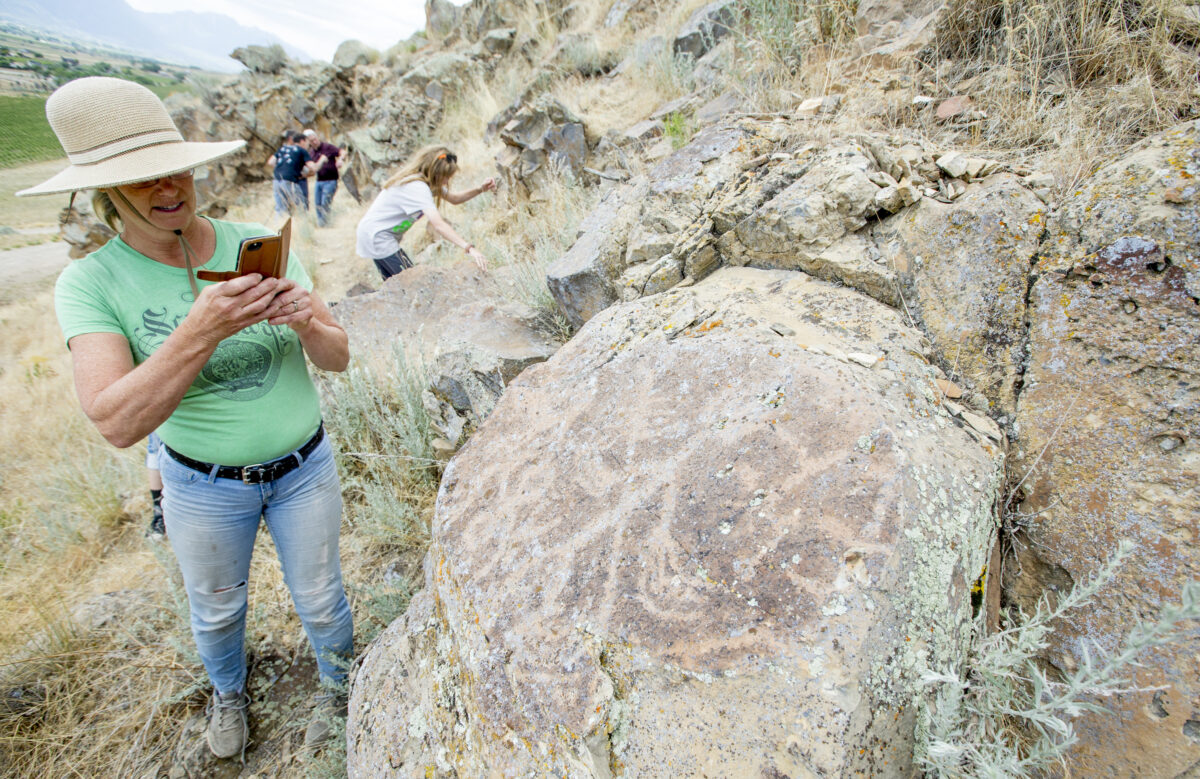
Shauna Phelps, of West Mountain, takes a photo of a petroglyph during a community tour of the northeastern area of West Mountain on Tuesday, June 16, 2020. Isaac Hale, Daily Herald
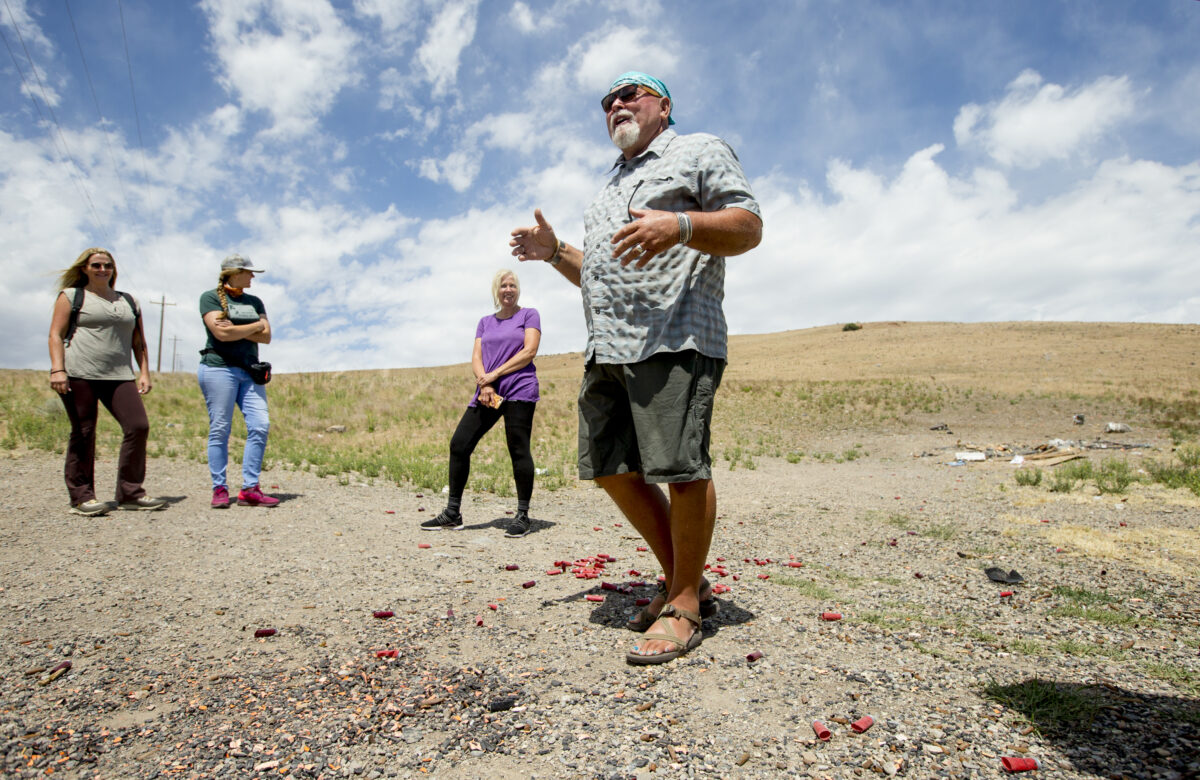
Steven Acerson, a representative from the Utah Rock Art Research Association, speaks to community members as they stand in an area used for shooting firearms in the northeastern area of West Mountain on Tuesday, June 16, 2020. Isaac Hale, Daily Herald
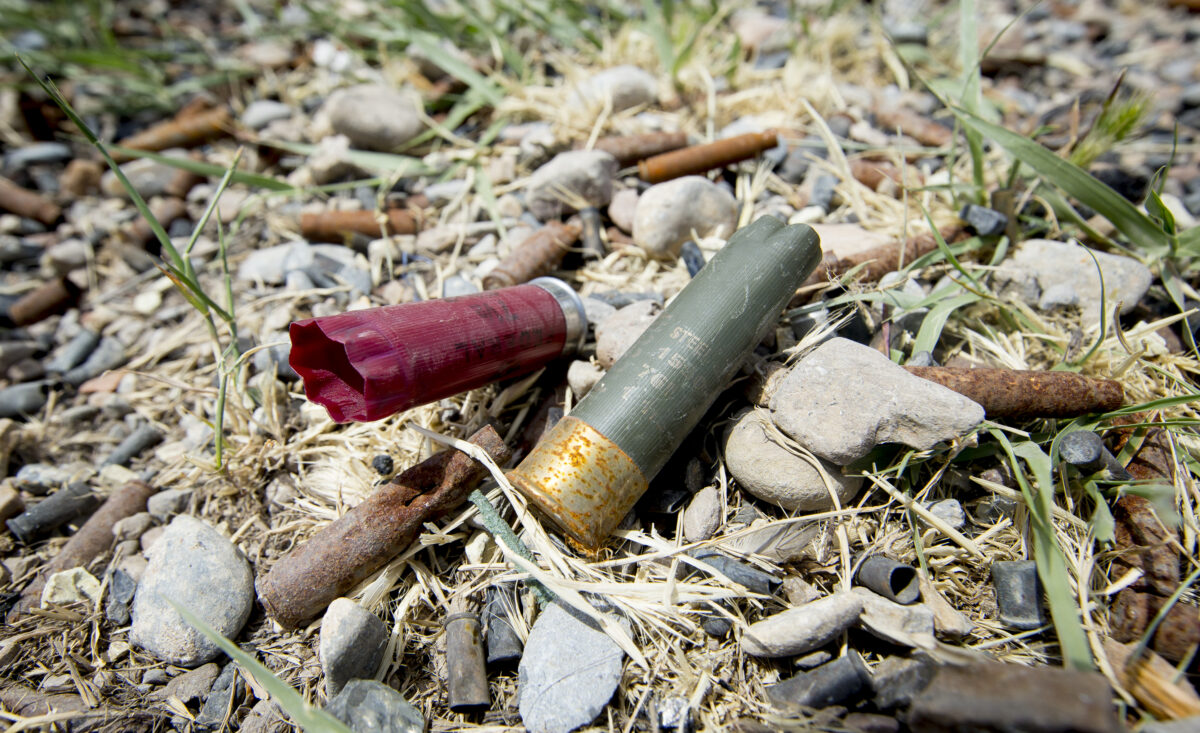
Used ammunition litters an area used for shooting firearms in the northeastern area of West Mountain on Tuesday, June 16, 2020. Isaac Hale, Daily Herald
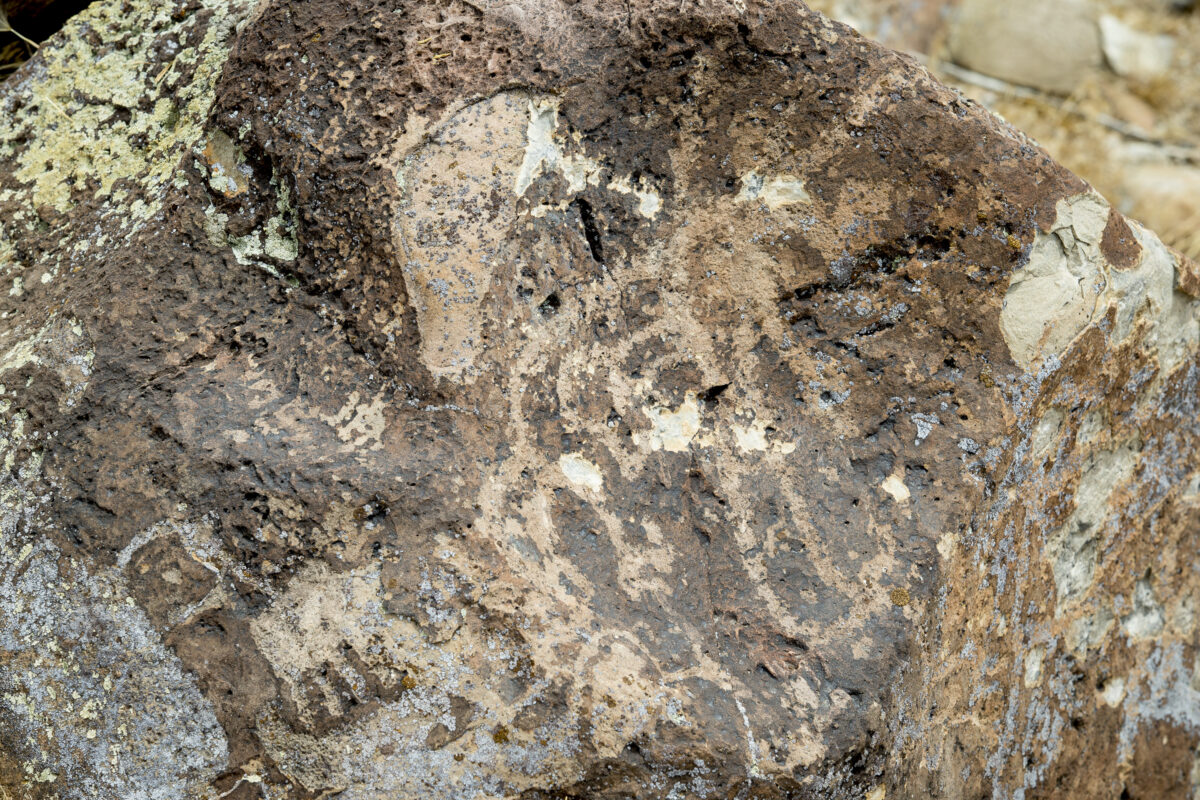
Petroglyphs remain on a rock in the northeastern area of West Mountain on Tuesday, June 16, 2020. Isaac Hale, Daily Herald
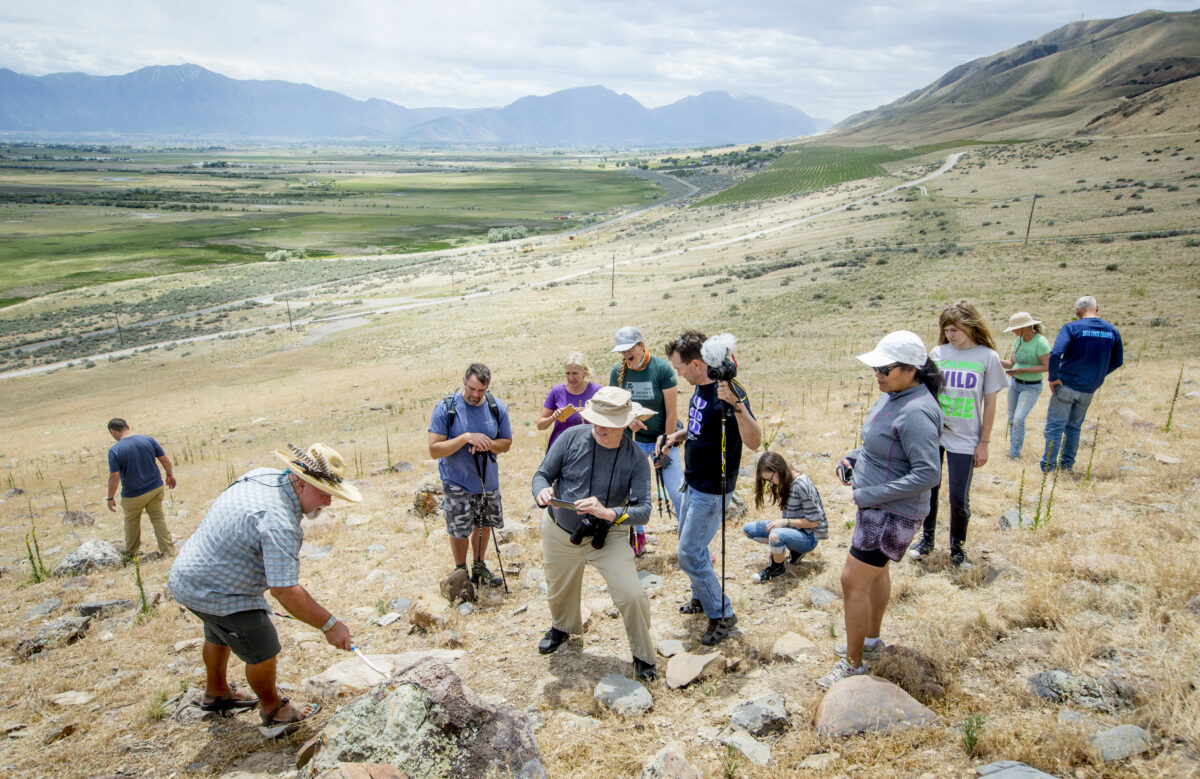
Steven Acerson, a representative from the Utah Rock Art Research Association, points out petroglyphs to community members during a tour of the northeastern area of West Mountain on Tuesday, June 16, 2020. Isaac Hale, Daily Herald
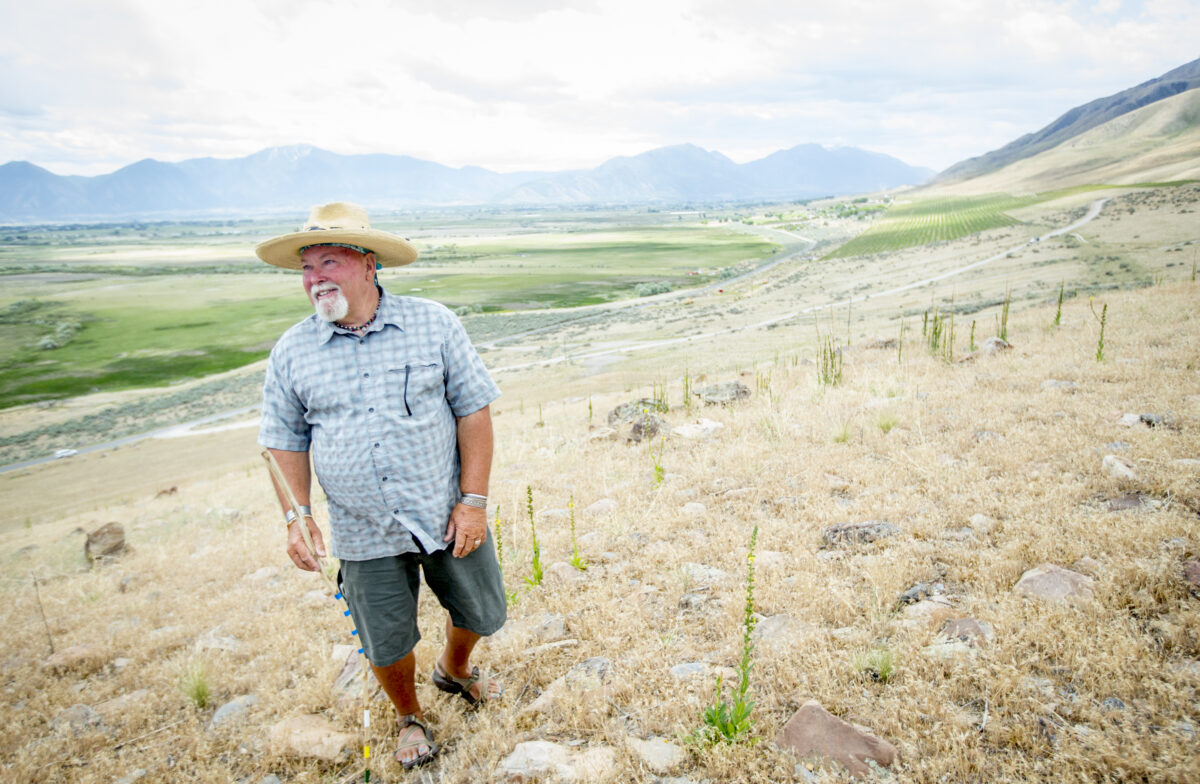
Steven Acerson, a representative from the Utah Rock Art Research Association, leads community members during a tour of the northeastern area of West Mountain on Tuesday, June 16, 2020. Isaac Hale, Daily Herald
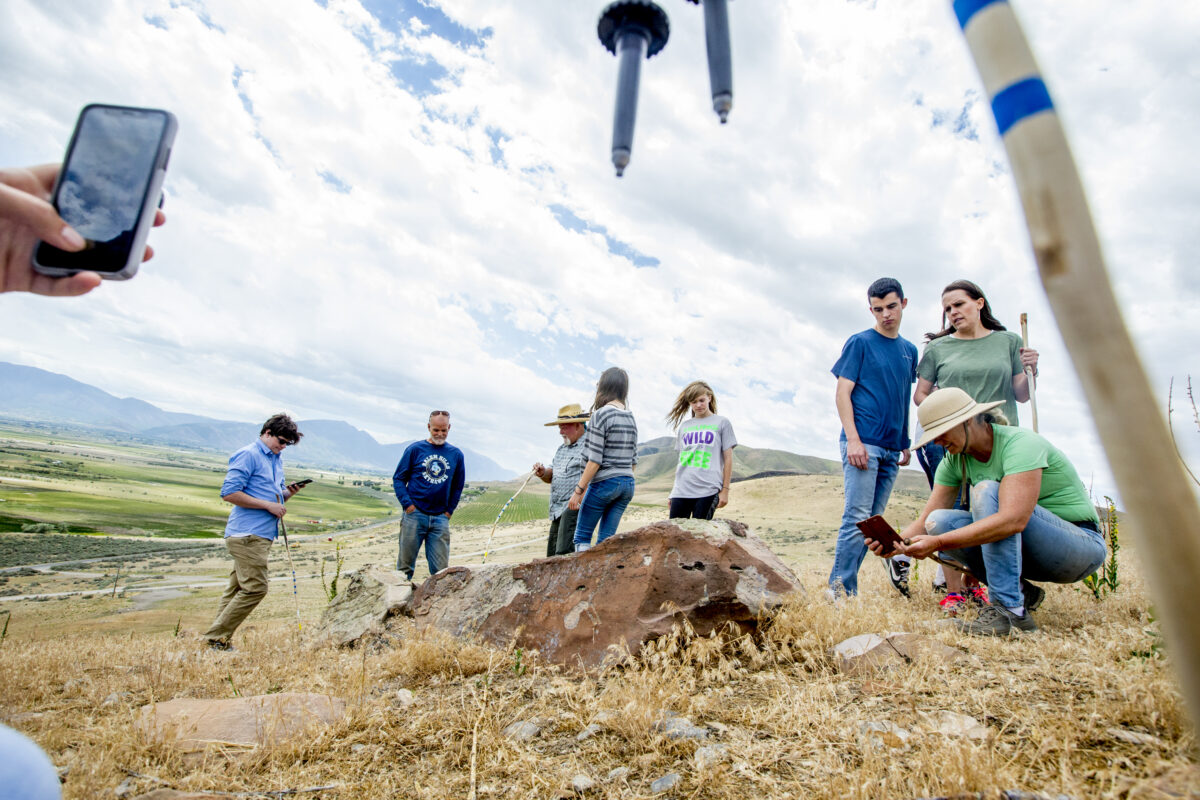
Community members check out petroglyphs on a rock during a tour of the northeastern area of West Mountain on Tuesday, June 16, 2020. Isaac Hale, Daily Herald
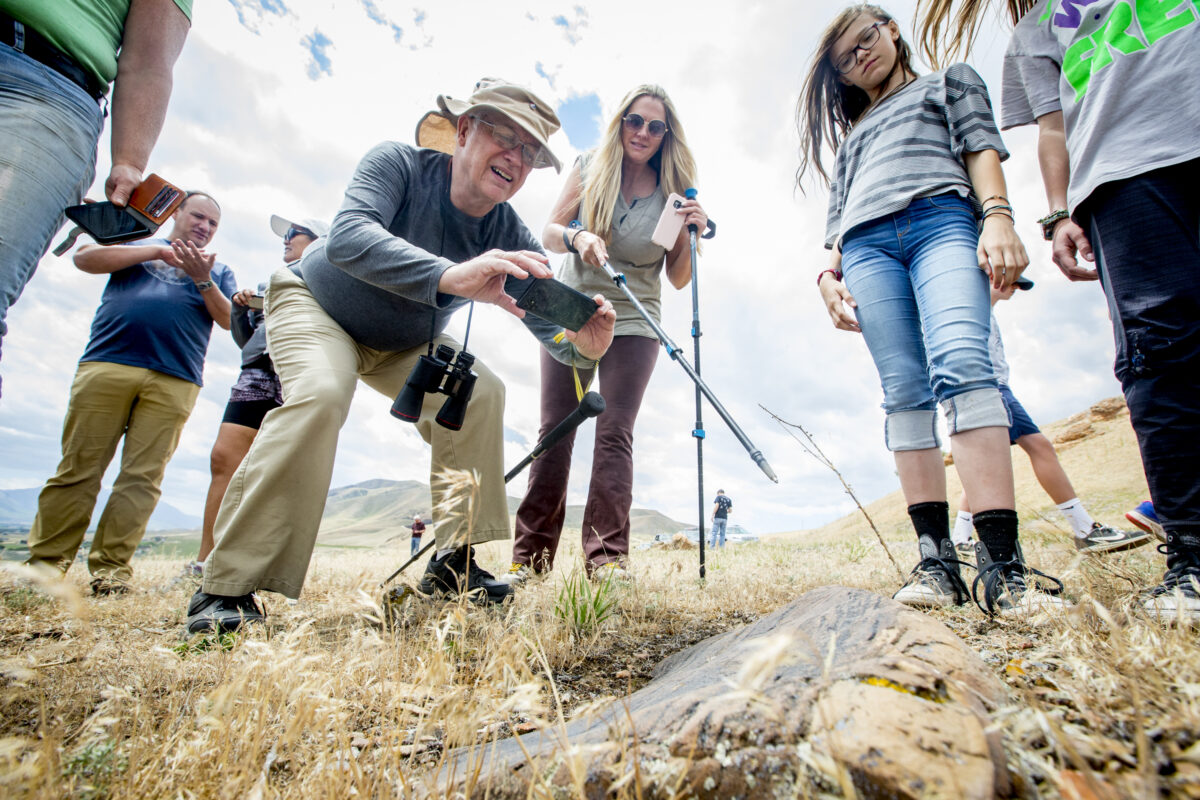
Jack Graham, of Springville, takes a photo of a petroglyph during a community tour of the northeastern area of West Mountain on Tuesday, June 16, 2020. Isaac Hale, Daily Herald
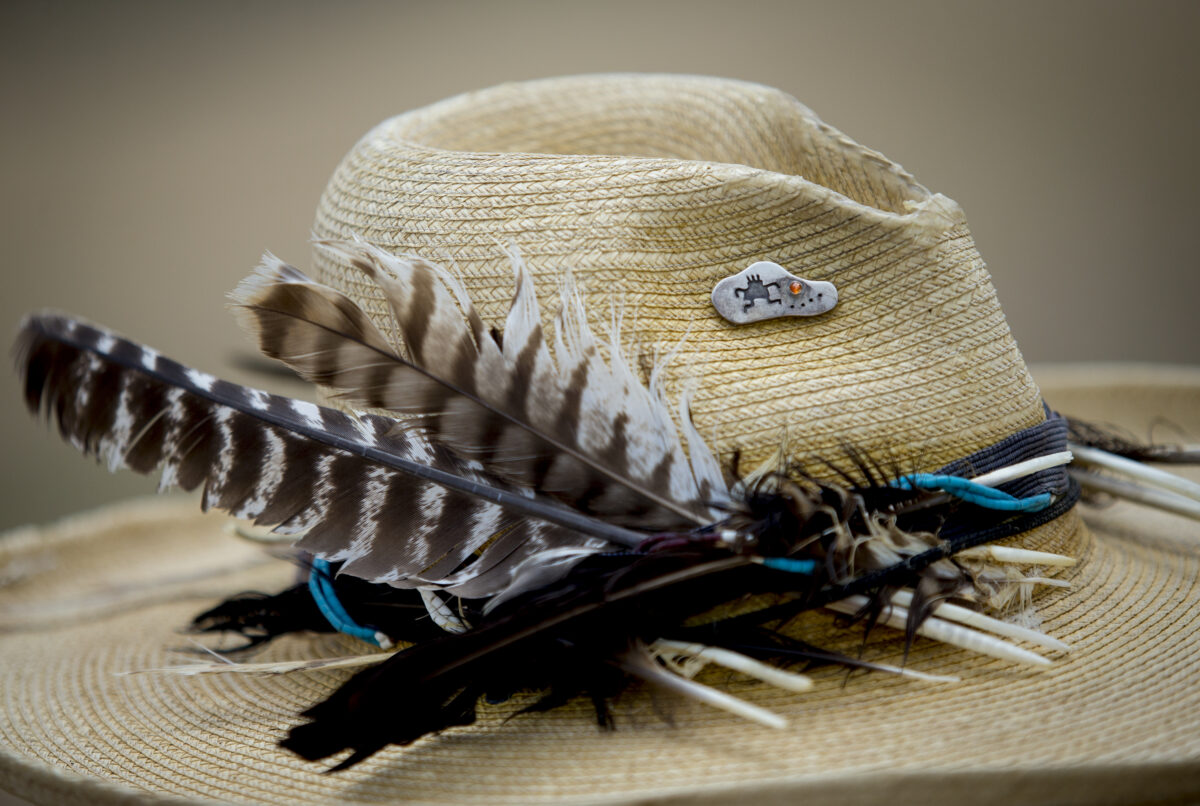
Steven Acerson, a representative from the Utah Rock Art Research Association, sports a petroglyph pin during a community tour of the northeastern area of West Mountain on Tuesday, June 16, 2020. Isaac Hale, Daily Herald
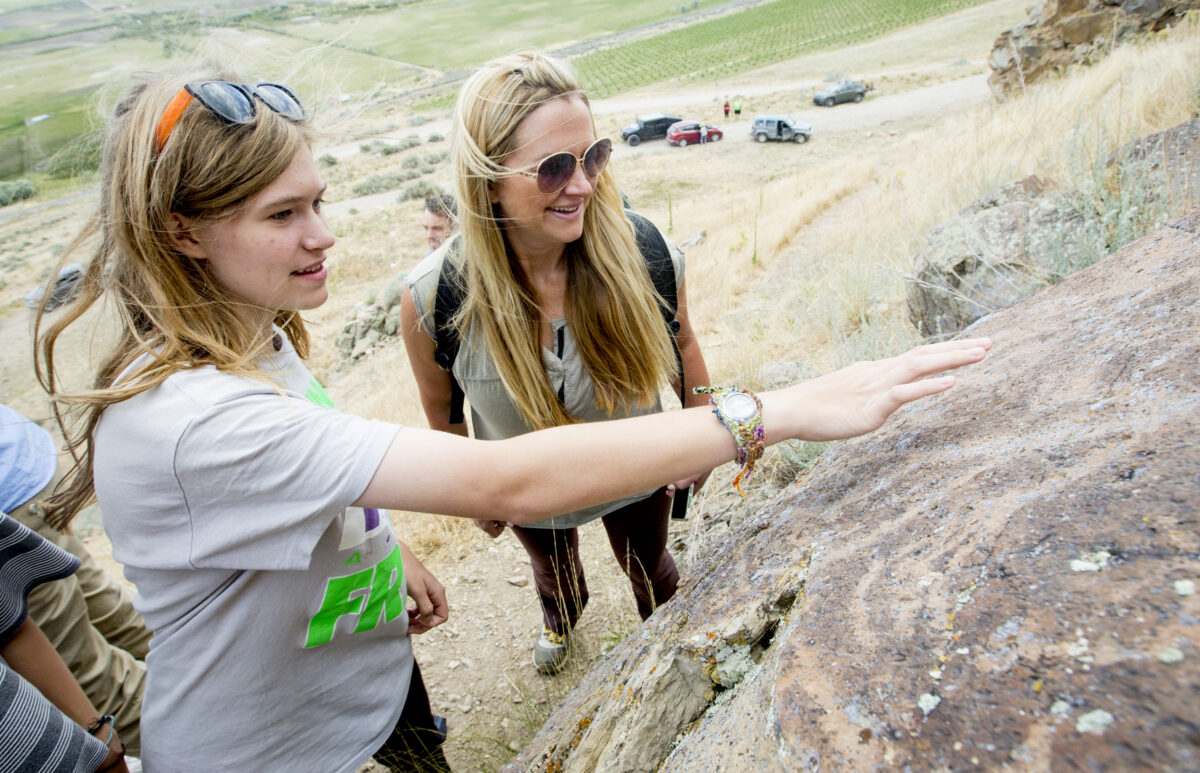
Riley Hyde, 15, of Provo, and Julianna Westberg, of Payson, check out a petroglyph during a community tour of the northeastern area of West Mountain on Tuesday, June 16, 2020. Isaac Hale, Daily Herald
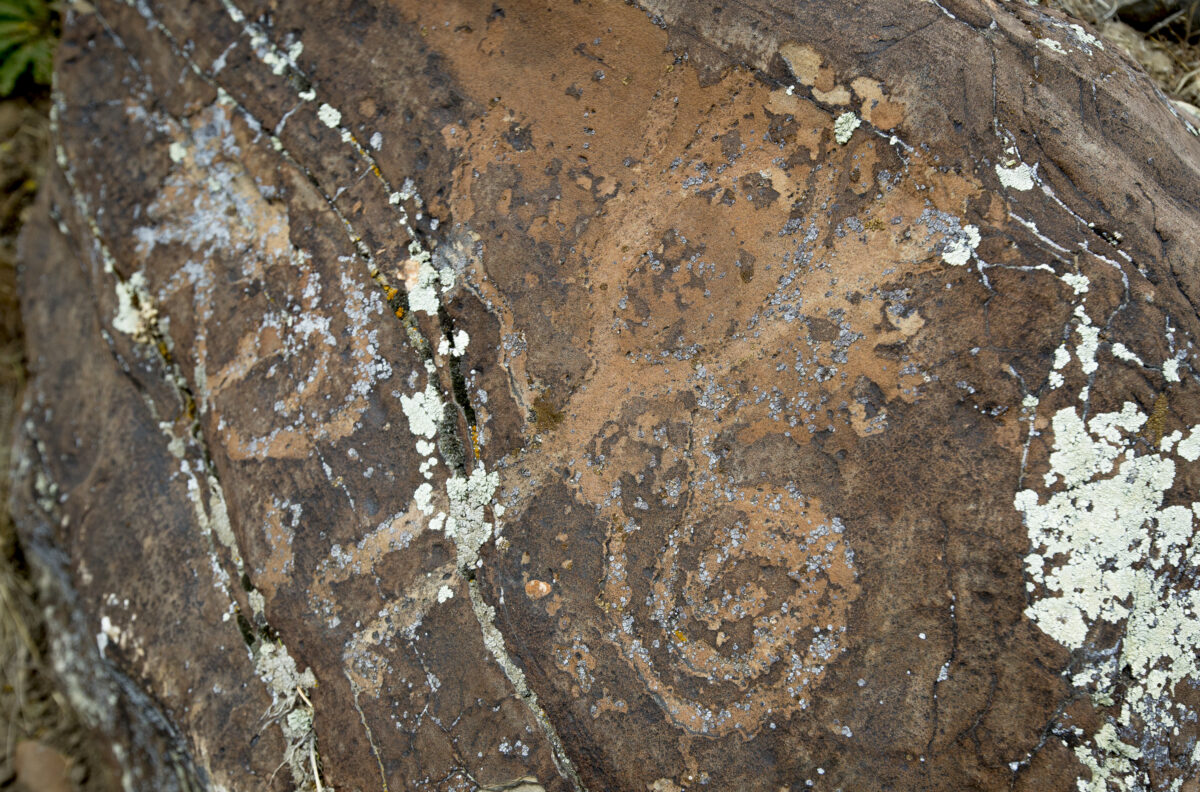
Petroglyphs remain on a rock in the northeastern area of West Mountain on Tuesday, June 16, 2020. Isaac Hale, Daily Herald
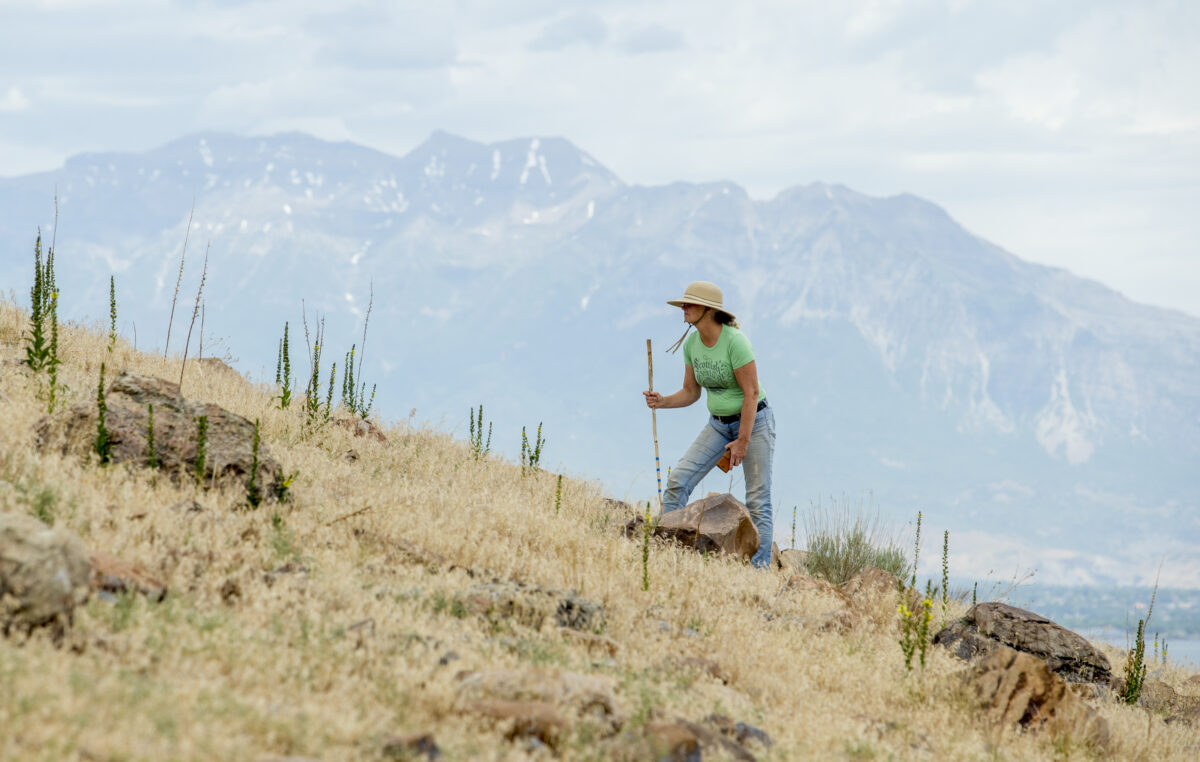
Shauna Phelps, of West Mountain, looks for petroglyphs during a community tour of the northeastern area of West Mountain on Tuesday, June 16, 2020. Isaac Hale, Daily Herald
Go for a hike along West Mountain in south Utah County and you may stumble upon an anthropomorphic figure faded into a rust-colored boulder. Keep hiking and you may find another rock, this one decorated with spiral shapes or horned and clawed figures.
But you’ll have to step through thousands of empty bullet casings to see these drawings. That’s because West Mountain, home to approximately 100 Native American petroglyphs dating back hundreds or even thousands of years, is also a popular shooting location for gun and outdoor enthusiasts in Utah County.
“Historical/Cultural history is a big part of this mountain,” Steve Acerson, the representative of the Utah Rock Art Research Association’s Salt Lake field office, said in an email. “But the needs (expansion, extraction, etc.) of the current population growth have not been kind to those who exist currently (landowners, farmers, natural environmentalists, etc.) and their way of life.”
Acerson, who lives in Elk Ridge, led several Utah County residents on a tour Tuesday of cultural sites located on West Mountain, sites that are a quick drive away from gravel pits whose owners are considering expanding.
Acerson believes a combination of factors — population growth, mining expansion and gun-shooting — threaten the Desert Archaic, Paiute and Ute Indian Tribe drawings that have gone untouched for centuries.
On the tour, Acerson points to a boulder on the mountain just a few hundred feet beyond a shooting site riddled with shotgun shells and bullet casings, some of which are fresh and others that are corroded nearly beyond recognition. The boulder has petroglyphs drawn on it, Acerson tells the group, pausing as shots ring out in the distance.
Closer examination of the boulder, which has two ancient figures drawn on it, reveals a number of chips and discolorations caused by ricocheting bullets.
Multiple signs posted by the Bureau of Land Management urge shooters to “respect and protect America’s vanishing rock art,” but most of the signs themselves are decorated with bullet holes.
Acerson believes making residents aware of the archaic rock art, and letting them see the rocks for themselves, will make people more cautious about where — and what — they shoot in south Utah County.
“That’s what I hope,” said Acerson. “That’s why I try to show people rock art, because once they see it, then it’s like, ‘Oh, yeah, I can see (why) it (should be preserved).’ “
The rock art activist added that these sites should be treated with the same respect that is given to churches, temples and other places of worship.
“Spiritually, these sites are important to the Native cultures today,” Acerson said. “Just like (the churches and temples of) our Anglo religions.”
In addition to making residents aware of the sites, Acerson said building amenities, such as bike trails, on the mountain would help Utahns appreciate and enjoy the rock art in a respectful way.
The group of residents who hiked West Mountain on Tuesday, which included a few teenagers, were fascinated by the glimpse into the past they got by looking at the ancient drawings, debating among one another what the faded figures symbolized.
“Are there any theories about what these spirals mean?” one person asks.
“Only about 10,000,” Acerson laughs.
Aaron and Julianna Westberg, who live along West Mountain, said they were shocked a few years ago when they learned that there were petroglyphs located virtually in their backyard.
“I had no idea (there were petroglyphs) on our mountain,” Aaron Westberg said.
After touring the historic sites for the first time, Aaron Westberg said he gained greater respect for the area’s rich history.
“I like to shoot,” he said. “But I also feel like I’m not one that’s going to leave garbage behind when we’re done. But I think a lot of those shooters, they have no idea what these (drawings) mean. I didn’t know. I had no idea. And I think most people that come up here and shoot, if they knew what these rocks meant to people 1,500 years ago, I really think they’d pause and think, ‘You know, let’s shoot over this way, or let’s not shoot there.'”
Aaron Westberg added, “I think there’s always going to be somebody that’s going to say, ‘I don’t care. It doesn’t matter.’ There’s always people that disrespect the environment. But most people do care.”