Republican primary candidates for Utah County Commission discuss taxes, growth during debate
-
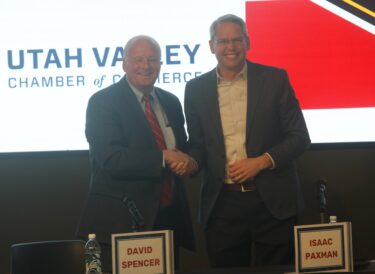
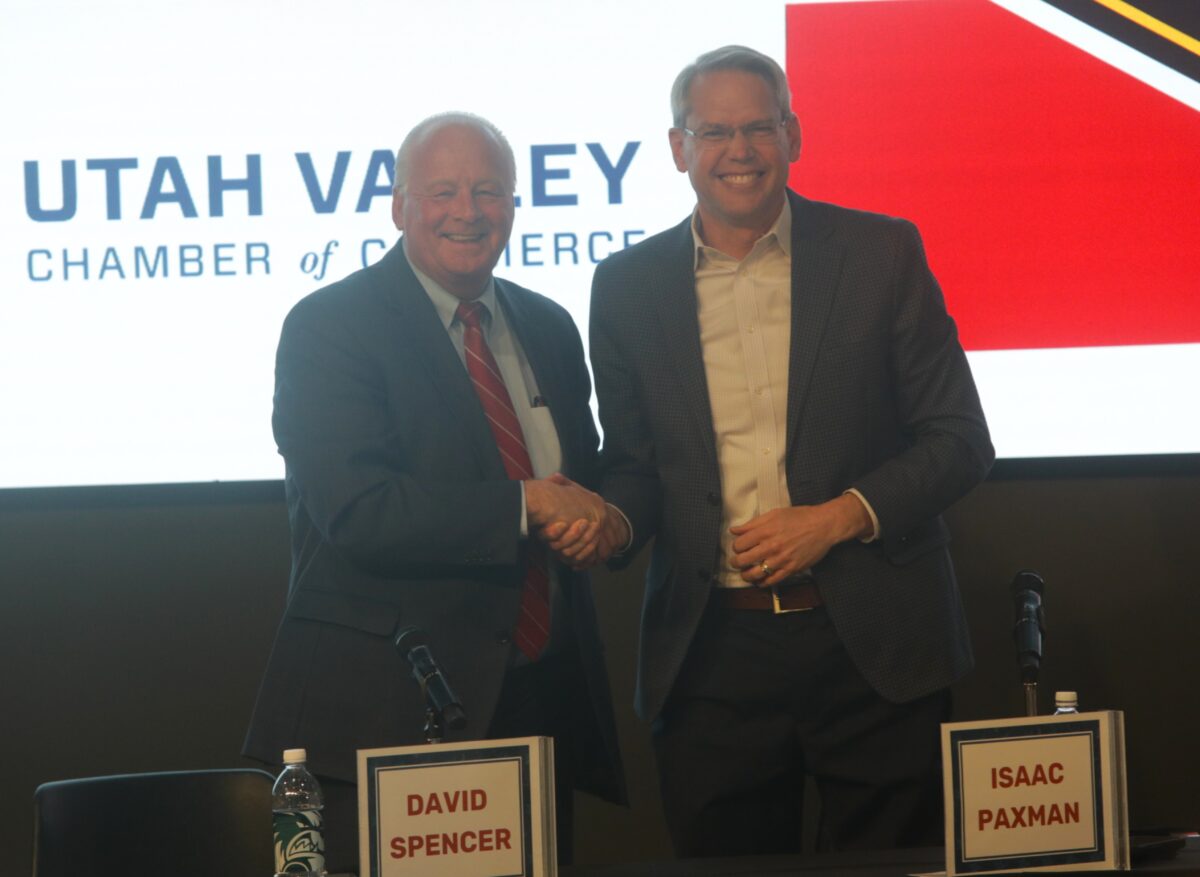
- David Spencer, left, and Isaac Paxman shake hands following their debate Wednesday, May 6, 2026, at Utah Valley University in Orem.
-
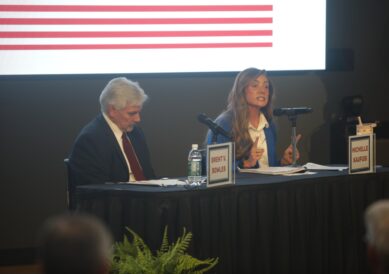
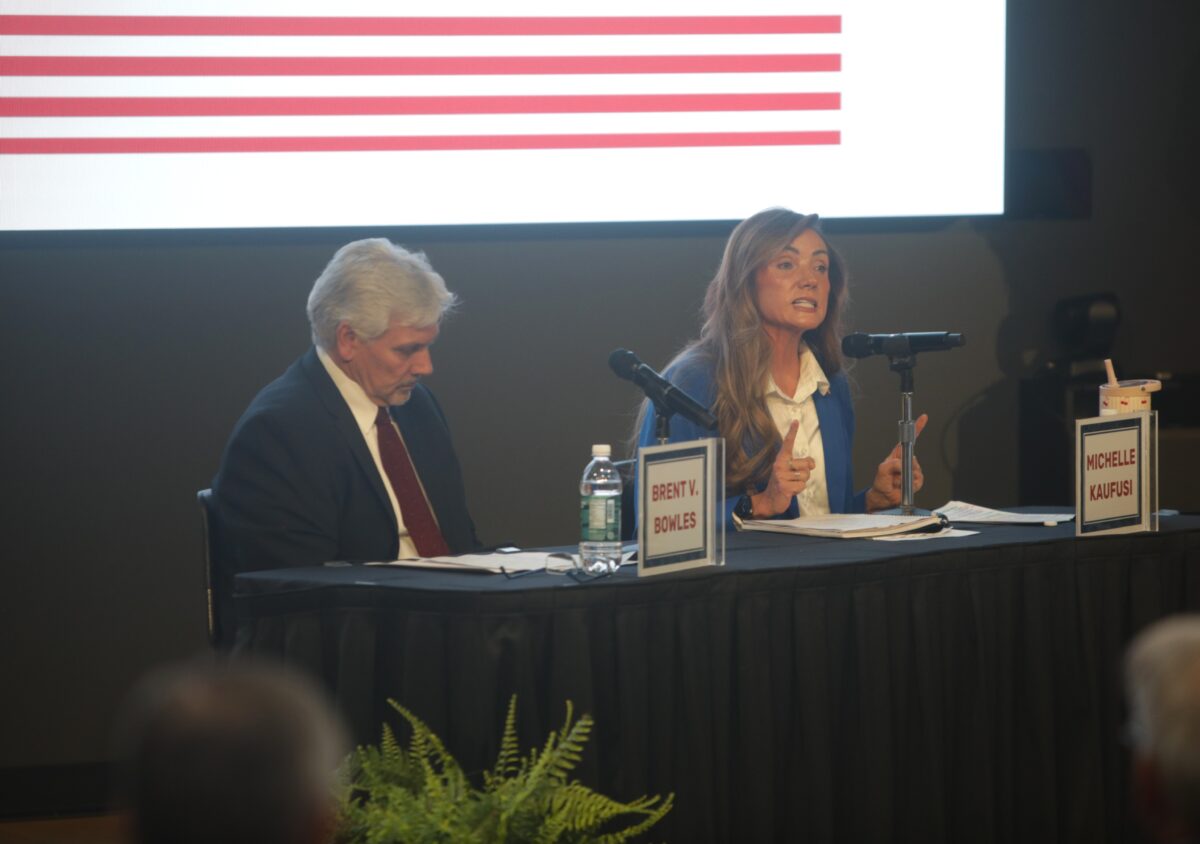
- Brent Bowles, left, and Michelle Kaufusi participate in a debate Wednesday, May 6, 2026, at Utah Valley University in Orem.
-
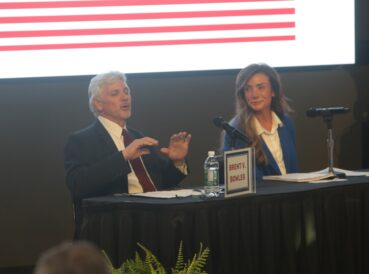
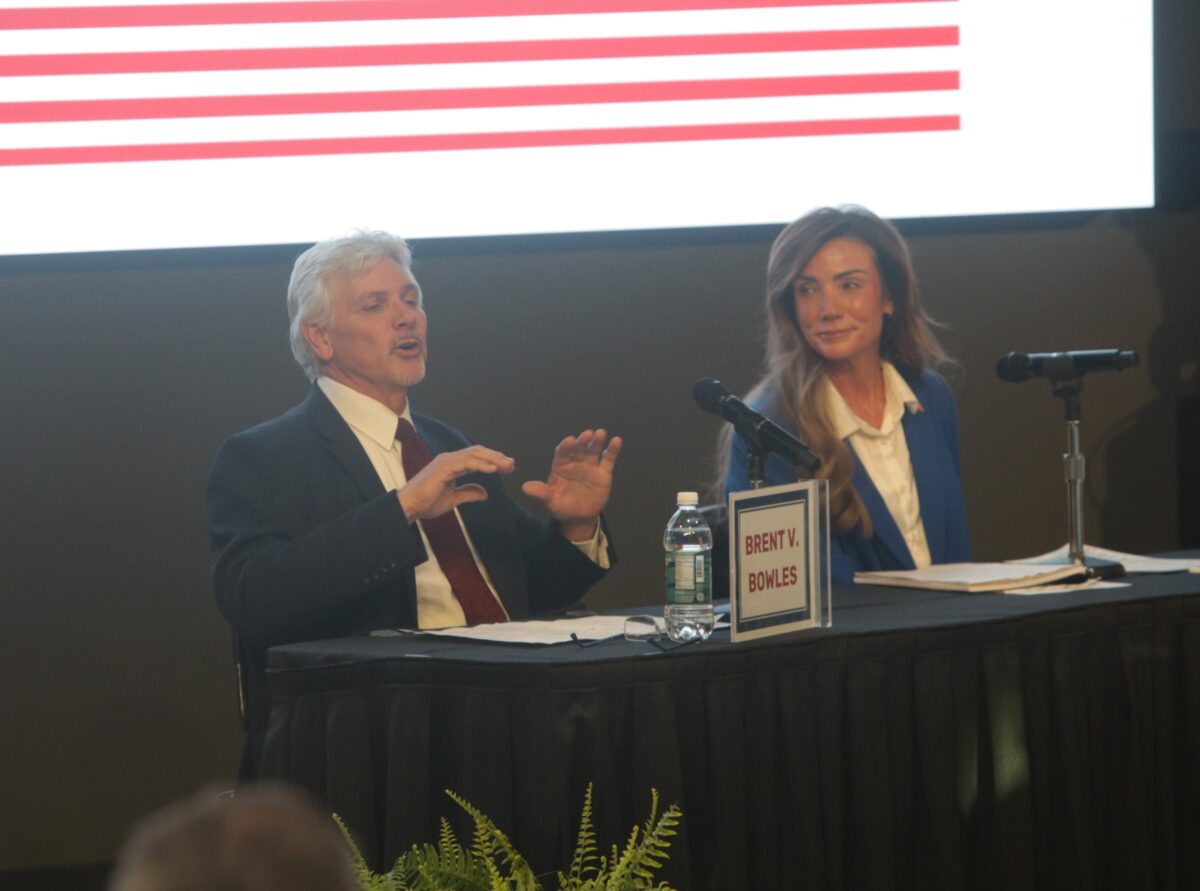
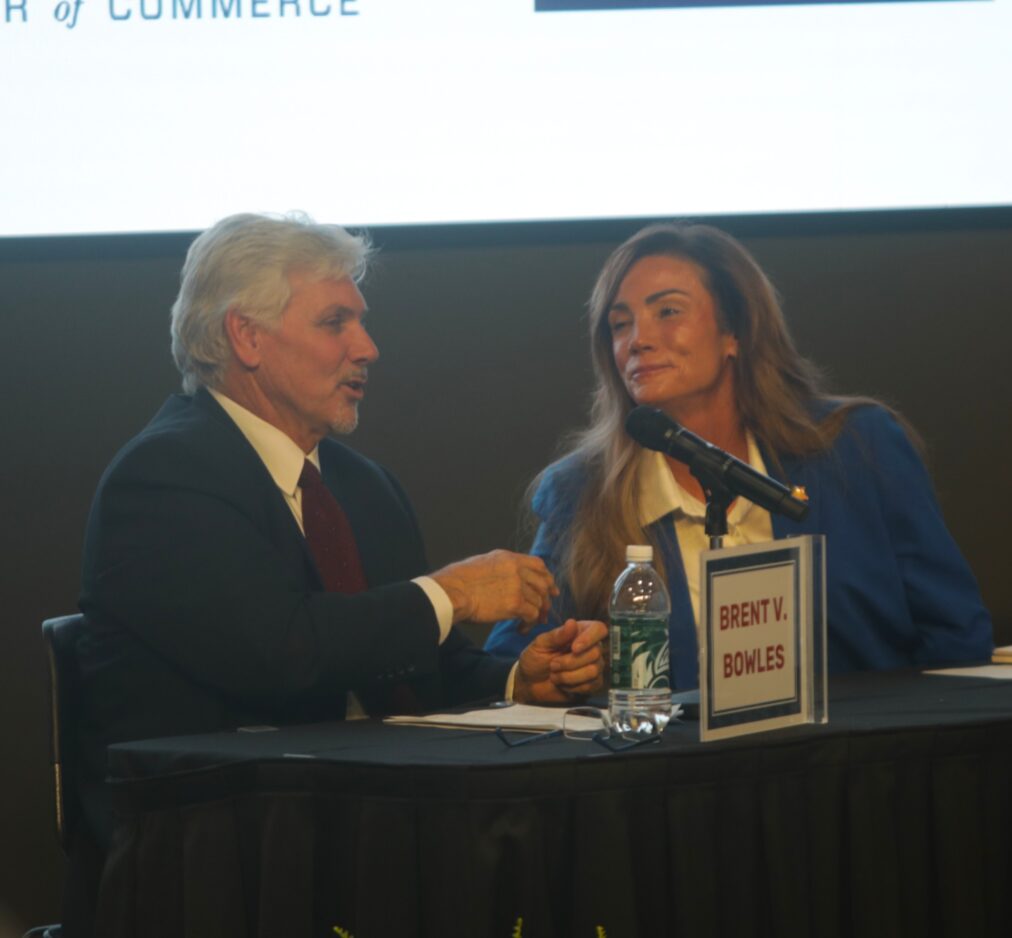
- Brent Bowles, left, and Michelle Kaufusi participate in a debate Wednesday, May 6, 2026, at Utah Valley University in Orem.
-
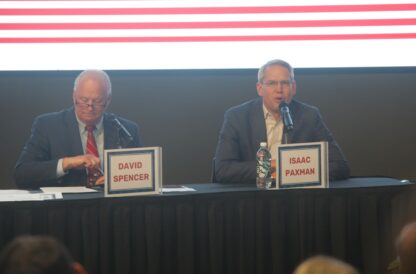
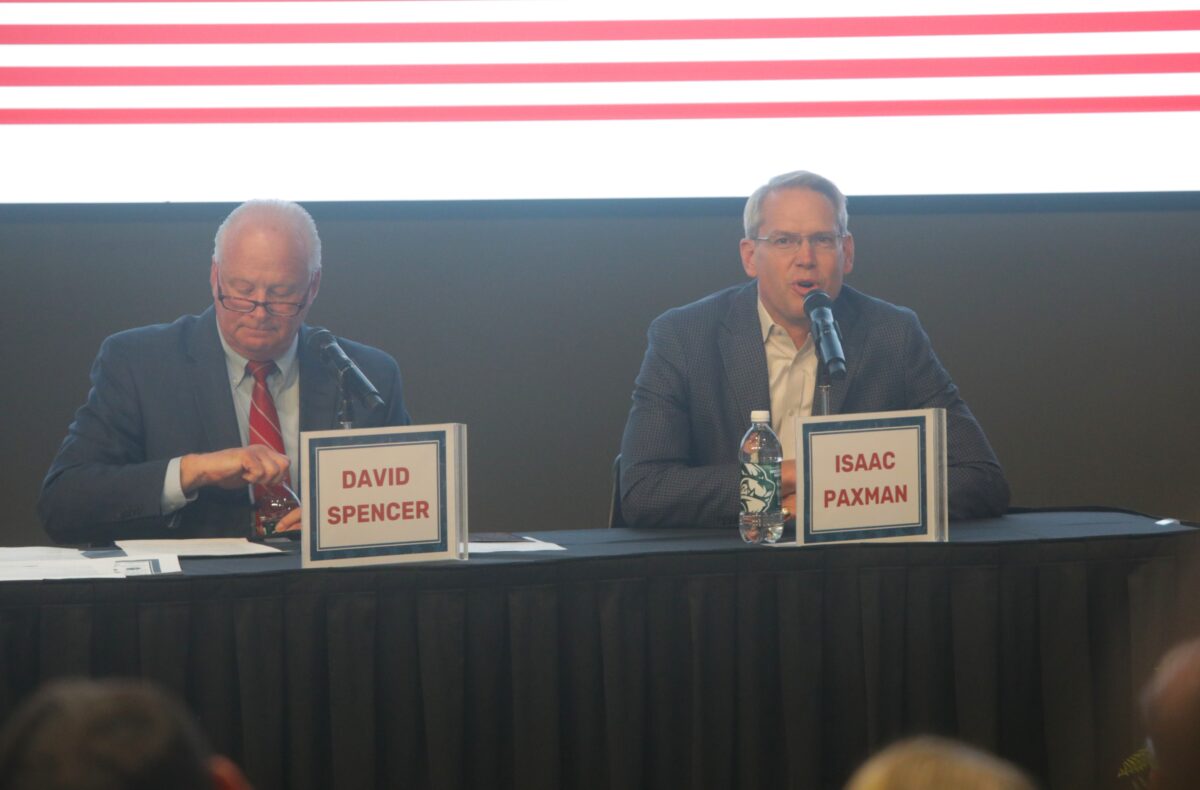
- David Spencer, left, and Isaac Paxman debate on Wednesday, May 6, 2026, at Utah Valley University in Orem.
-
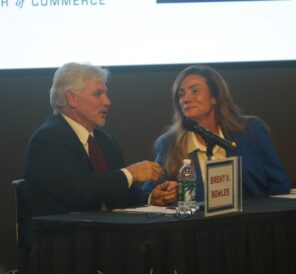
- Brent Bowles, left, and Michelle Kaufusi participate in a debate Wednesday, May 6, 2026, at Utah Valley University in Orem.
-
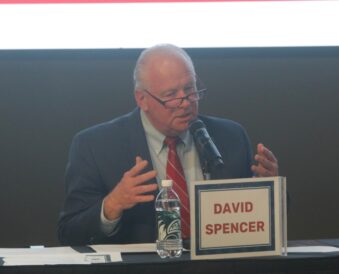
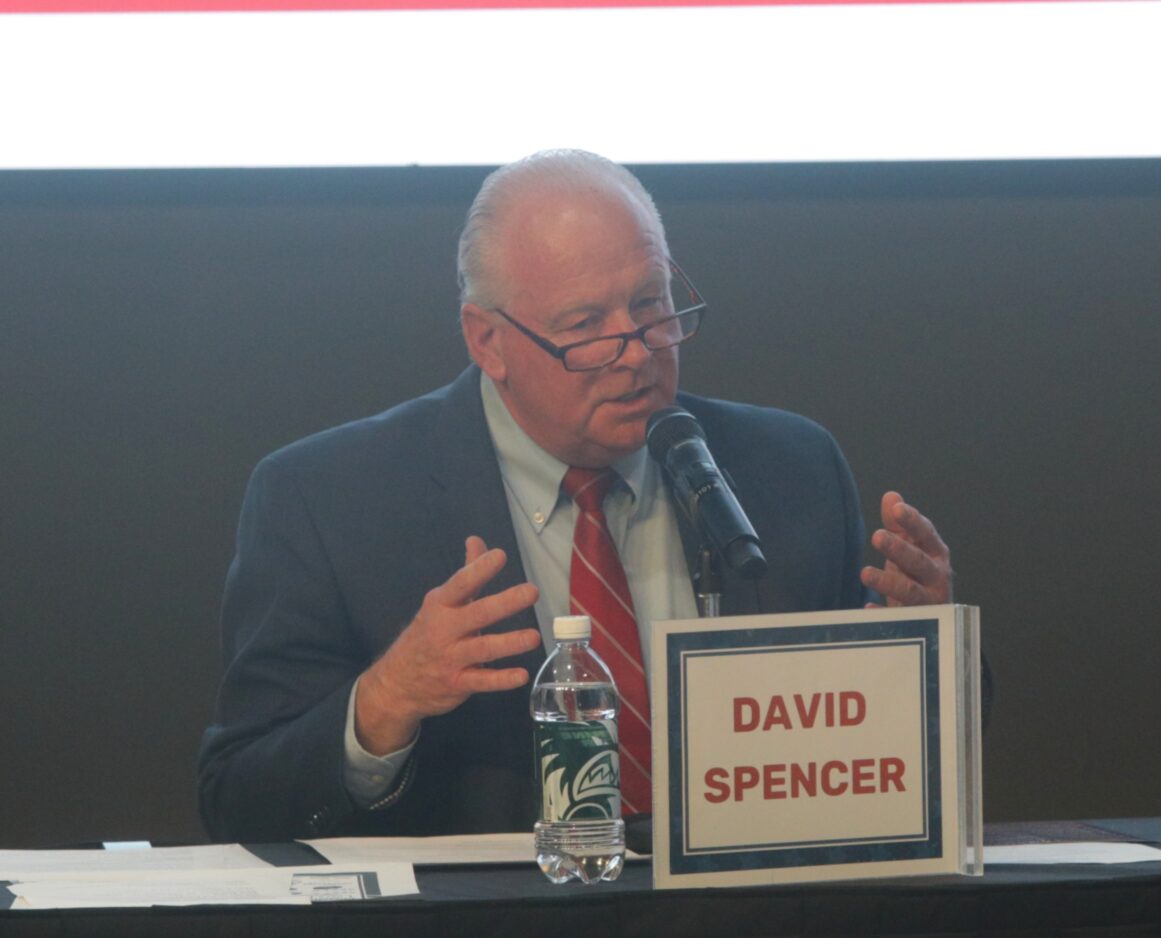
- David Spencer is pictured Wednesday, May 6, 2026, at Utah Valley University in Orem.
Republican candidates for the two open Utah County Commission seats took center stage for a debate Wednesday night at Utah Valley University.
Hosted by the Utah Valley Chamber of Commerce, the event featured two debates: one between Seat A Republican Primary candidates Brent Bowles and Michelle Kaufusi, and the other between Seat B candidates David Spencer and Isaac Paxman. Carolina Herrin, a third candidate in Seat B, was not in attendance due to a previously scheduled trip.
The debates pitted convention winners, Bowles and Spencer, against candidates who qualified via signature gathering, Kaufusi and Paxman. Each candidate spoke on their vision for the county and addressed policy concerns.
Seat A debate
The Seat A race pits an experienced politician, Kaufusi, who served as Provo’s mayor for eight years, against a first-time candidate for political office in Bowles.
Bowles, an anesthesia nurse, described himself as an outsider who would not be beholden to political loyalties. He was critical of recent county property tax hikes and said he would find inefficiencies in county government.
“I can retire at this point, and I can give full service to the community, and I want to right the things that are wrong in our county commissioner’s office, and that’s why I’m running,” he said.
Kaufusi said she has the experience to do the job and that she would leverage her relationships to find outside funding to invest in the county without hurting the taxpayers.
“You deserve leadership that delivers and not just talks,” she said. “If you want someone who will step in, work hard and make it happen, I’m asking for your vote.”
The candidates appeared aligned on several issues — such as the need to sustain a business-friendly environment and have a transparent government. But their differing backgrounds and approaches to improving the existing county government stood out.
When asked what the previous administration did not accomplish that she would like to do, Kaufusi said she did not want to “bad mouth” any elected official but that she would improve transparency and be more engaged in the county.
“We have got to be out there in the community asking questions, and not just to the elected officials. … We want to hear from the citizens and communities about what we can do better to support, serve and lift you,” she said.
Bowles said he would reform the commissioners’ office, reduce the commissioners’ salaries and remove bureaucracy.
“I want to look at each department, and instead of rubber stamping a department by saying, ‘What’s your budget and what do you need?’ I want to say, ‘What are the essentials in your budget and what can we cut out?” he said.
Candidates were asked what their signature initiative would be. Bowles said he wanted to look at alternative energy sources and suggested bringing nuclear energy to the county.
“If we want to grow as a county with businesses, we have to have the energy. We have to have the resources,” he said. “So I think a nuclear energy portion should be observed and looked at.”
Kaufusi said her priority was tackling the water challenges in the county.
“If you read the history of Provo, the first battle was over water,” she said. “We are still in that fight. We are still worried about our water, and without water, we can’t thrive.”
The candidates laid out their plans to handle growth in the county. Kaufusi said growth is coming whether people like it or not and said the county needs to prepare for it and embrace it by planning out infrastructure.
“Those communities that have built out too fast are miserable,” she said. “You’re in line for hours to get out of your own little community to get to your work. Infrastructure is the key — getting ahead of it, being proactive and not reactive.”
Bowles said he wants to see the county grow because he wants children to stay in Utah County and for business to thrive. He echoed Kaufusi’s point that the infrastructure needs to be ready for that growth.
“We need to have our infrastructure in place as if we were already in the 2040s and 2050s,” he said.
They had differing ideas to tackle homelessness. Kaufusi said Utah County had services available to help people but said individuals breaking the law needed to be held accountable. Bowles called on private programs and support to aid homeless individuals.
Seat B debate
Paxman, who served as deputy mayor of Provo under Kaufusi, and Spencer, who was a city councilman for Orem, each pointed toward their past public service experiences as to why they would be good fits for the county commission.
Paxman, who currently serves as assistant attorney general, highlighted his executive accomplishments in Provo, such as working with the state Legislature to secure funding and running city departments.
“You have the chance to hire someone who’s done essentially this job and has a lot of good references,” Paxman said. “Mayors from Saratoga Springs to Santaquin say this is a solid guy who acts honestly and with integrity and has done a great job.”
Spencer was particularly critical of the county’s recent property tax and commissioner salary raises and said he would follow a formula he did in Orem to cut government waste.
“When I served on the Orem City Council along with Mayor (Dave) Young, we inherited the same kind of establishment-driven, closed door frustration,” Spencer said. “We made a decision — we’re going to open it up, clean it up and give it back to the people. And we delivered.
“I am not in the inner circle. I am running to break it. This is your moment to send a message that the good old boys’ network is over. The taxpayers are back in charge. Utah County belongs to the people, not the insiders.”
Fiscal responsibility was a key topic of the debate. Solutions Spencer offered were to implement a transparency portal that shows how the county government is spending its money. He said he would launch a strategy innovation team to go into each department and “turn everything upside down” to keep costs low.
“The problem with taxes is you’re killing businesses because businesses don’t get a discount, so you’re going to be almost two times the rate of a normal homeowner,” he said. “So we need to make sure that we’re very careful to make sure that we are doing what’s right for Utah County.”
Paxman said he had years of experience balancing budgets without increasing taxes. He said in Provo they found ways to increase efficiency without firing people while also finding collaborative solutions to support large projects.
“I’ve been able to take a visionary idea, or see a big problem, and actually run it through as a full-time local government official. And through that, I have connections,” he said. “I (know) lots of people who have already had to work through these kinds of issues, regional issues, getting the support and going and getting big things done.”
The candidates were also asked about managing growth in the county. Paxman said growth needs to be considered on a case-by-case basis and that the county needs to work with each city to see what meets their needs.
“We need all types of land use in our county,” he said. “We need mansions. We do. We need to have places for those people to live so that they want to have their businesses here, and we need some places with smaller lots and that type of thing. And we need agriculture, and we need open space for recreation.”
Spencer said the state needs to take a more hands-off approach with its development policies and said he would do what is best for each city. He said the county needs to stop supporting high-density housing and catch up on infrastructure to support growth.
“Big government, they’re telling us how to do things,” Spencer said. “We need to keep our orchards and our agriculture, but we need to do what’s best for the citizens of Utah County.”
When asked what initiatives they want to champion, Paxman said he wants to be the leader in the push to clean up Utah Lake. Spencer said he wanted to unite the county as one and fight to receive money from the state Legislature.
Local News

How Utah County’s school districts did on the ACT compared to the state in 2026
A century of Lehi Power: Municipal power provider values independence as it navigates growth, rising costs