
Launching toward the future: Provo man starts communications program to keep youth updated on air and space advancements
-
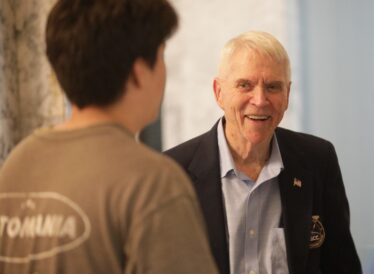
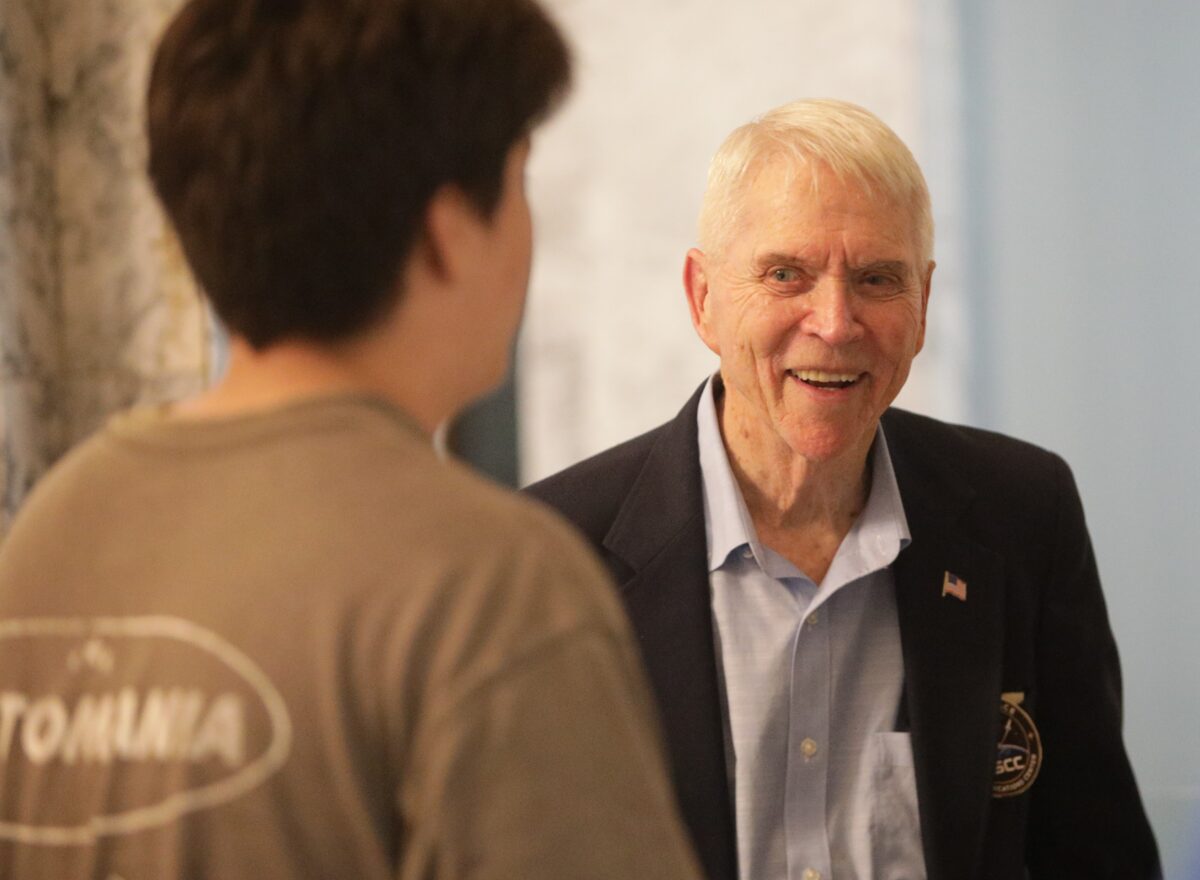
- William Barnson speaks to a young man after launching the Air and Space Communications Center on Thursday, Sept. 17, 2026, in Provo.
-
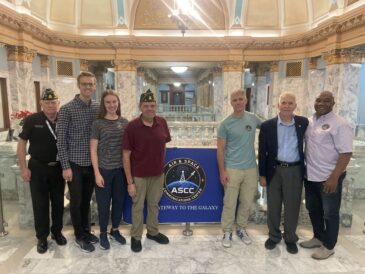
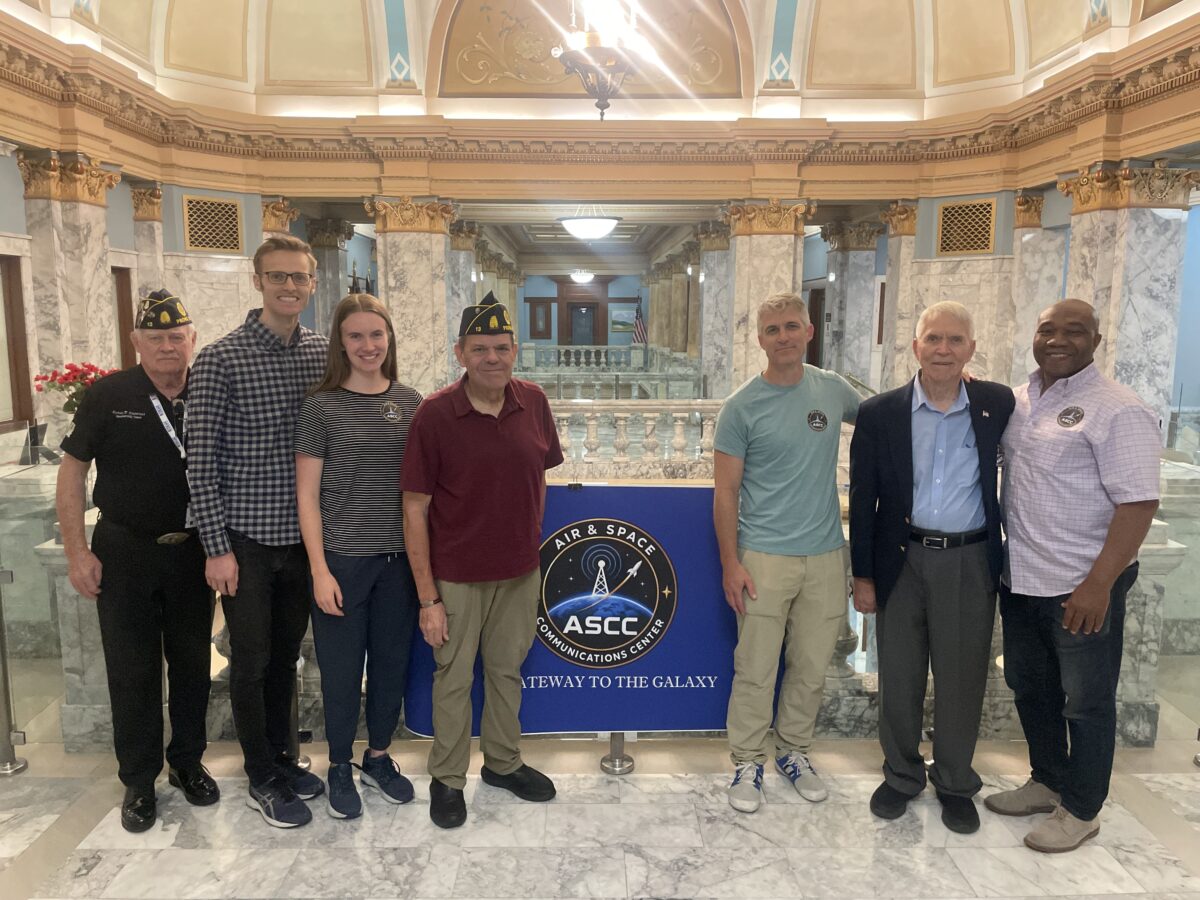
- William Barnson is pictured with friends and supporters of the Air and Space Communications Center on Thursday, Sept. 17, 2026, in Provo.
-
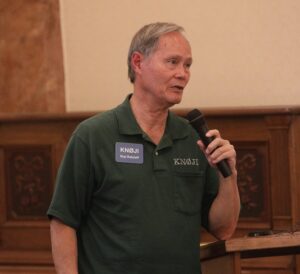
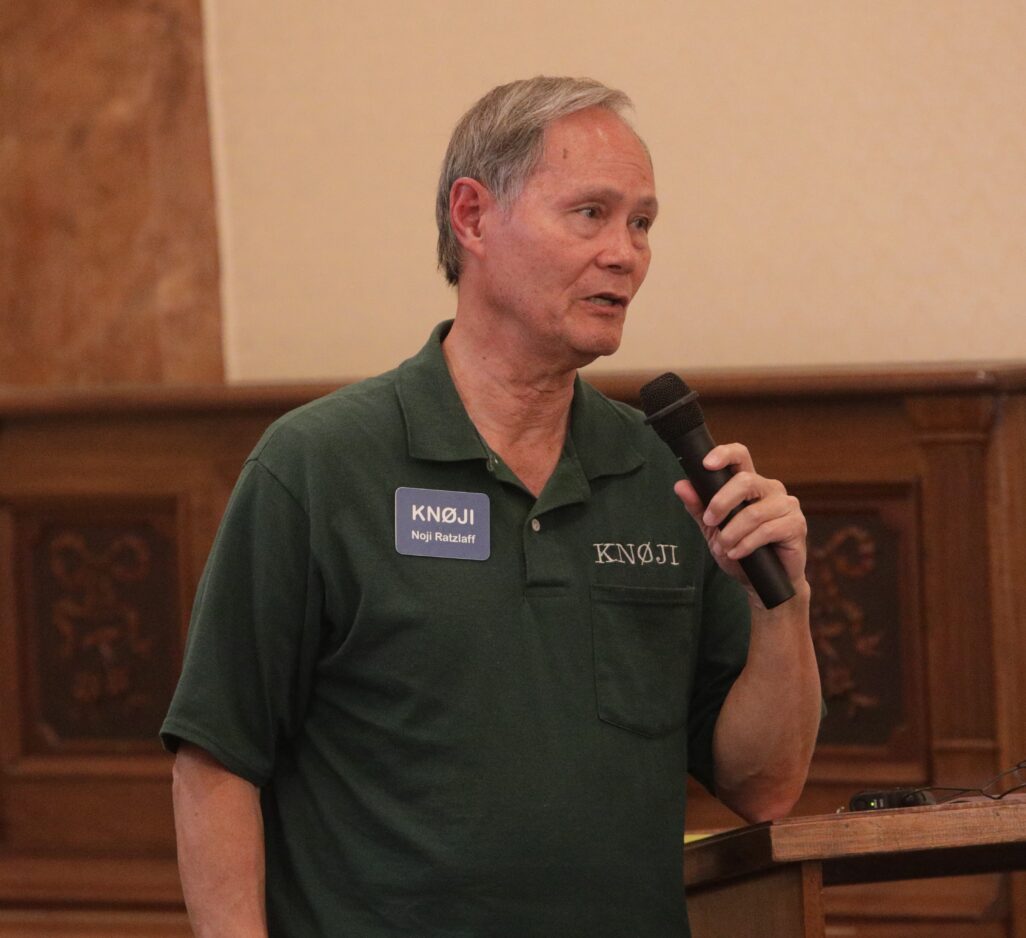
- Noji Ratzlaff, president of the Utah Valley Amateur Radio Club, speaks at the launch of the Air and Space Communications Center on Thursday, Sept. 17, 2026, in Provo.
-
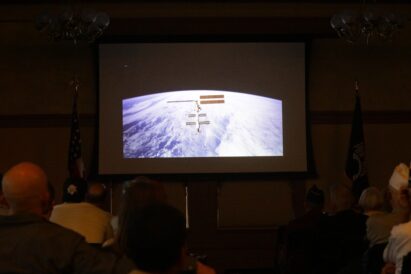
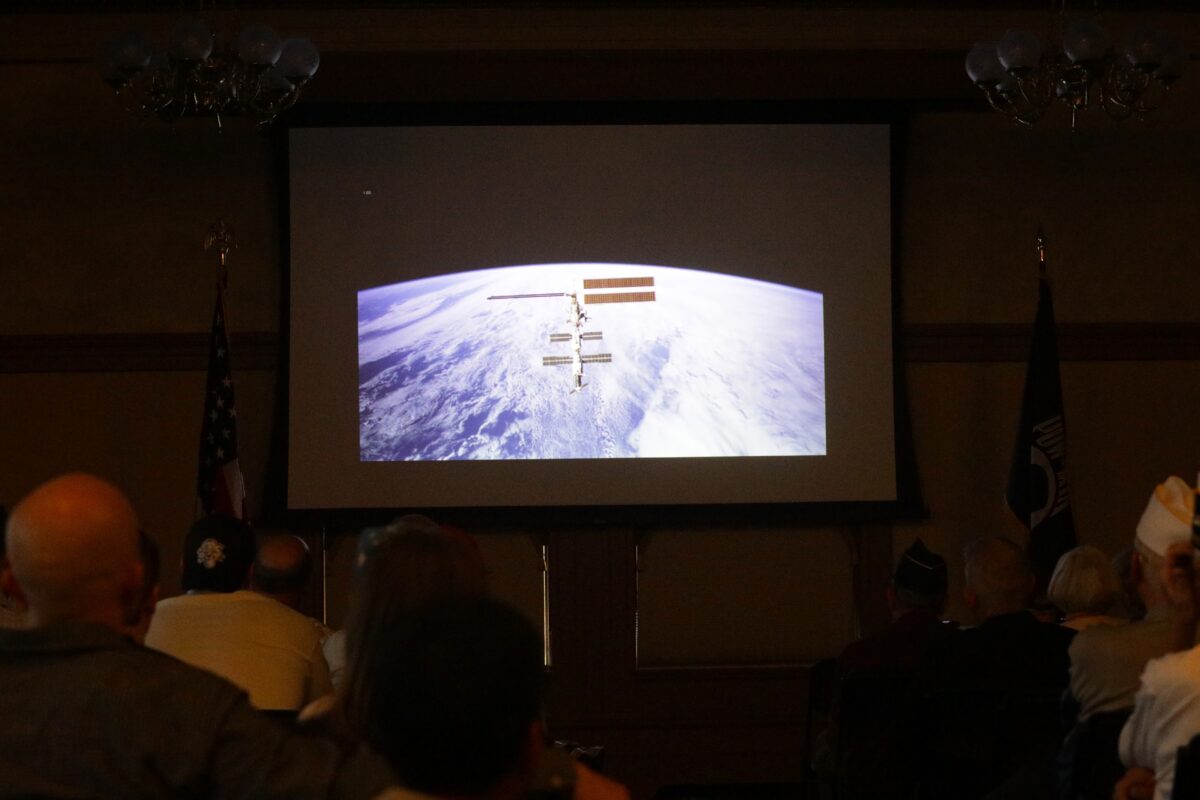
- People watch a move during the launch of the Air and Space Communications Center on Thursday, Sept. 17, 2026, in Provo.
-
- The Air and Space Communications Center logo is shown Thursday, Sept. 17, 2026, in Provo.
The United States is undergoing a space exploration renewal with the establishment of the U.S. Space Force, the rise of private space enterprises and a race with China to get back to the moon.
Taking it all in is William Barnson, a retired Air Force officer and Provo resident. Something stirred up inside Barnson, 87, when he watched four astronauts on Artemis II perform a 10-day voyage around the moon last April, and he decided to do something locally to contribute to the movement.
On Thursday night, he launched the Air and Space Communications Center, a Provo-based organization intended to keep young people informed about the latest advancements in space exploration.
“What I’m looking for is an opportunity to tell young people to, rather than just drift in life and sit home and play computer games or something like that, look to the future, because space is going to be our future,” Barnson said.
An assembly of Boy Scouts and other youth, American Legion members and space enthusiasts attended the launch ceremony inside the Utah County Historic Courthouse.
Remarks were offered by Barnson and keynote speaker Noji Ratzlaff, president of the Utah Valley Amateur Radio Club. The group watched the documentary about NASA’s achievements and future ambitions, “Journey to Space.”
Anyone is invited to participate in the Air and Space Communications Center, or ASCC, which is officially a nonprofit public organization that provides information about the new space and global communications technologies. Barnson said the organization has already received support from the U.S. Space Force, the Air and Space Forces Association and the Smithsonian National Air and Space Museum.
He is in touch with representatives from each organization who are sending him their latest information and literature.
“We’re going to be tuned in to all this information being provided, and we’ll present that,” Barnson said.
Barnson considers it a critical time for people to have their eyes steered toward the sky, from an adventure and national security standpoint. You could call it an expert opinion, considering his background.
Born in 1939, six months before Germany invaded Poland, Barnson has been around for many significant world events. A year before D-Day, Barnson said his father, who spoke French, was assigned to be a spy in France, tasked with identifying the infrastructure the Germans had set up to prevent a British-American invasion. Out of 16 spies, he was just one of two who survived, and he snuck out of France and went to London, where he helped create D-Day invasion maps and briefed commanders.
Barnson himself joined the Air Force and worked out of the Pentagon prior to his retirement in 1991. He later served in the Transition Assistance Program for 20 years, where he helped soldiers move from military service to civilian life. He was also a post commander for the American Legion.
Referencing a General Douglas MacArthur quote that says “Old soldiers never die, they just fade away,” Barnson said he doesn’t want to just fade away, but to stay busy and then be remembered when he finally passes.
So he’s sinking his teeth into a new endeavor to prepare the young generation for the future.
“A lot’s going to be happening in space, not just travel distance and so forth,” he said. They’re going to have military capability to conduct warfare in space. You know, one satellite against another, or space to Earth, or whatever. I mean, it’s kind of scary when you think about their capability. So when you combine that with artificial intelligence and what that can do, the future is kind of you know good and bad. So I thought, well, we need to start educating young people.”
In the upcoming months, Barnson is planning a pair of detailed presentations, one about the Artemis program and the other about the electric plane race. Artimis III is planned for 2027 and has the objective of demonstrating critical systems for lunar landing, according to NASA. The goal of Artemis IV is to land on the moon in 2028.
Part of an electric plane race is the emergence of air taxis. In Utah, the goal is to get air taxis operational by 2034. In April, Joby Aviation completed New York City’s first point-to-point electric air taxi trip.
“A lot of changes are happening in our society,” Barnson said. “So amazing!”
Barnson is working to connect with young people about these technologies and advancements. He said he went to three local elementary schools and a middle school to talk about ASCC and the latest space and air news.
In the future, he wants ASCC to go to different high schools and hold assemblies where they give presentations on the space race.
“We want to educate young people about what’s happening in this era,” Barnson said. “Space is the new frontier.”
Local News
Launching toward the future: Provo man starts communications program to keep youth updated on air and space advancements

Staying vigilant: Harmful algal blooms remain in Utah Lake, Deer Creek as summer turns to fall
