Making a Difference: Bringing healthcare to the poor in Chad
-
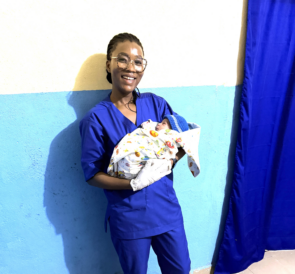
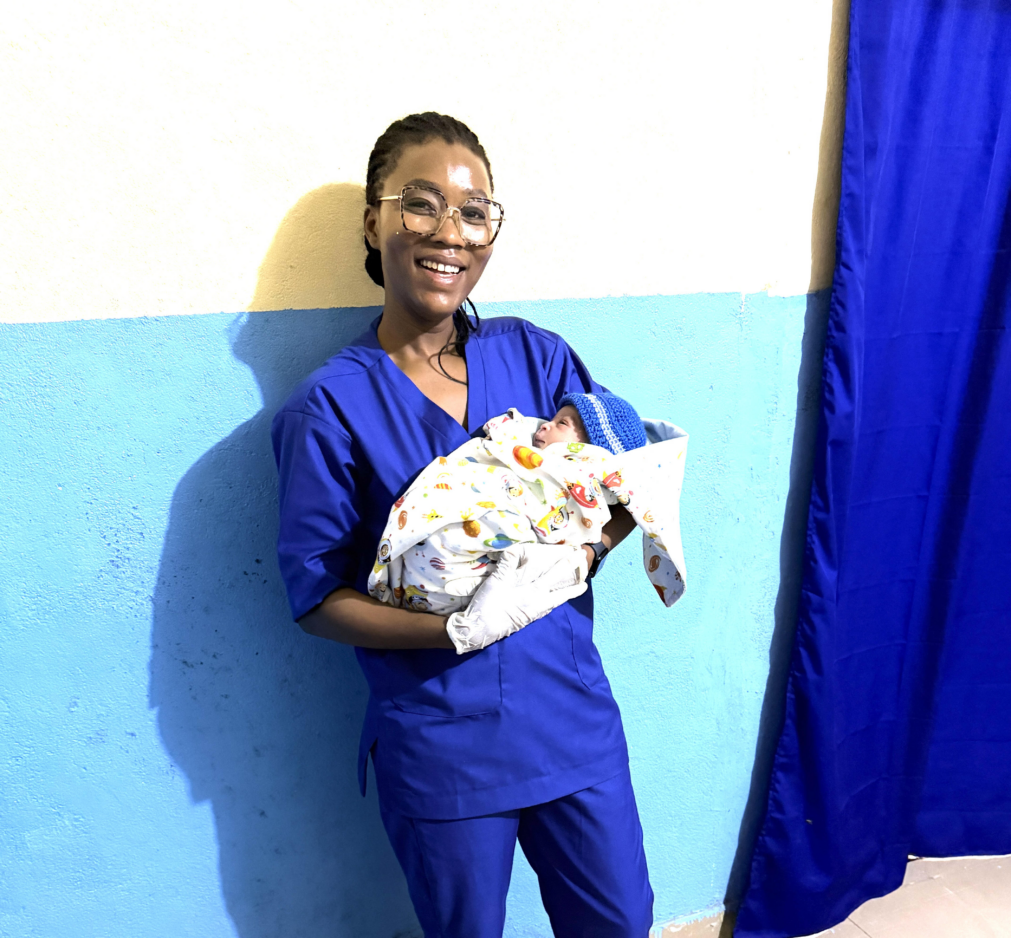
- Emelie Menodji is shown after safely helping deliver the first baby at the Cabinet Solmem clinic in Chad.
-
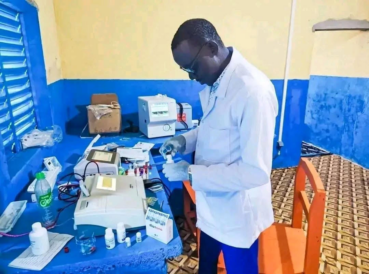
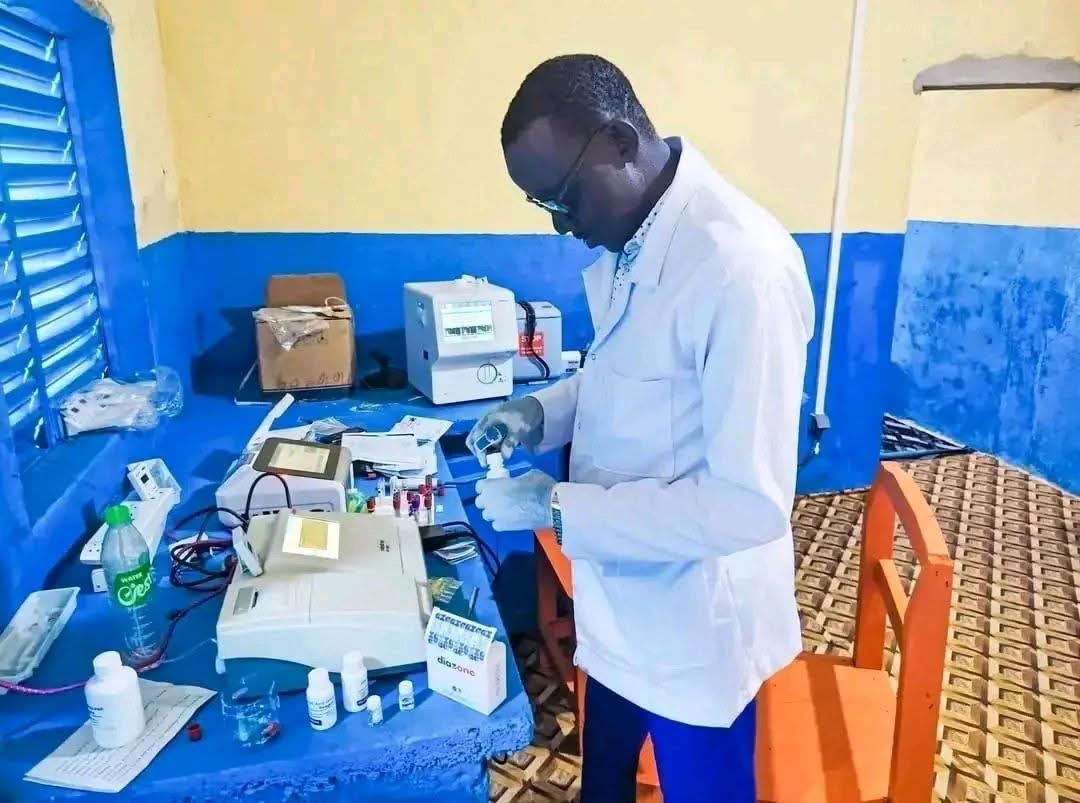
- A staff member works in the laboratory at the Cabinet Solmem clinic in Chad.
-
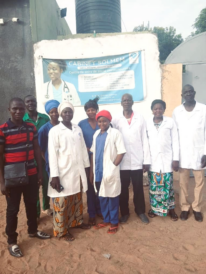
- Staff members are shown at the Cabinet Solmem clinic in Chad.
-
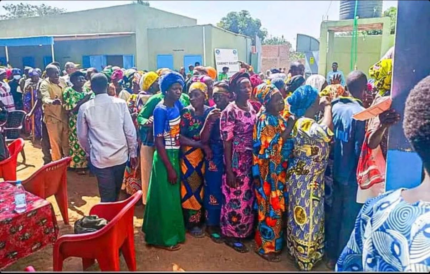
- People wait in line to receive free medical care at the Cabinet Solmem clinic in Chad.
Courtesy of Emelie Menodji
Emelie Menodji is shown after safely helping deliver the first baby at the Cabinet Solmem clinic in Chad.
Emelie Menodji grew up in Chad, located in north-central Africa. At a young age, she knew she wanted to be in healthcare. Six years ago, she moved to Salt Lake City with a dream to pursue healthcare education.
Recently, she graduated with her BSN in nursing from Utah Valley University and began working as a nurse in Utah. She will be attending medical school in the fall. Her ultimate goal is to make a difference in her home country of Chad.
“I want to use my healthcare knowledge to service the underserved,” Menodji said. “Chad has limited resources and struggles with providing adequate healthcare. When I found out that my country was number two in maternal mortality rate, it amplified my desire to develop the clinic right away. I saw women struggling, and I wanted to help alleviate that by helping to provide adequate healthcare.”
Consequently, Menodji founded Cabinet Solmem, a self-funded medical center, over a three-year period. Cabinet Solmem is named after Menodji’s mother. In the Mongo language, Solmem means healing heart/bringing peace. They began working on remodeling two building that her mother already owned, added a third building and found and obtained equipment.
“My mother graciously donated the site and the two buildings,” Menodji said. “Now we have a labor and delivery room, space for a pharmacy, a lab room, a first aid/urgent care room and two provider offices to meet our needs.”
Courtesy of Emelie Menodji
A staff member works in the laboratory at the Cabinet Solmem clinic in Chad.
Menodji did the research and groundwork, and people encouraged her to make it happen. She also worked closely with national and regional government officials who helped them align with norms and policies in the country and obtain national and regional licensing.
“When I shared my passion for medicine and wanting to help the people, my mother was very generous in donating the buildings for the clinic,” Menodji said. “Cabinet Solmem is not just a clinic. It is a place to help people and bring hope and peace to them and to the community that is struggling for resources.”
Currently, Cabinet Solmem is in the process of becoming a nonprofit in the United States, although it has a nonprofit status in Chad. Its mission is serving as a community-based medical care center in Doba, Chad, and providing accessible, compassionate and high-quality healthcare through a team of nurses and midwives, supervised by a general practitioner” (see cabinetsolmem.com).
“Our mission includes providing accessible, high-quality health services to the underserved and helping reduce maternal mortality in Chad. Plus, we have a focus to heal, educate and build lasting trust with families and the entire community — because health is hope, and every life matters,” Menodji said.
When the clinic first opened, it provided a three-day free consultation period. More than 400 people attended. Many of them had never accessed healthcare or seen a provider. Now they are able to see a medical doctor, a nurse practitioner, a midwife, three nurses, a lab technician and many healthcare volunteers.
Courtesy of Emelie Menodji
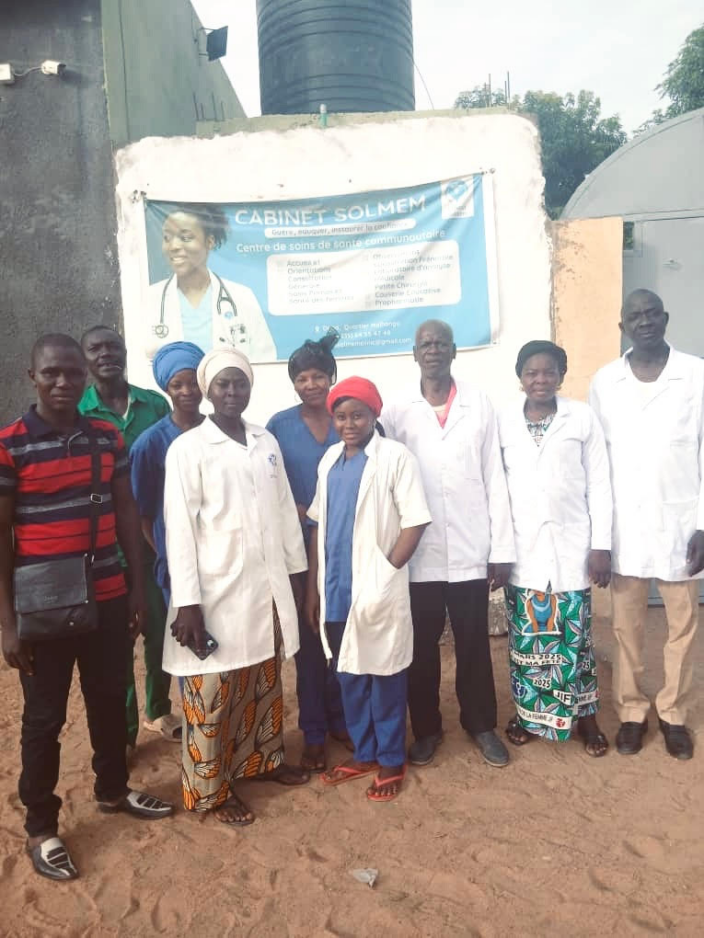
Staff members are shown at the Cabinet Solmem clinic in Chad.
Dr. Allatombaye Bertin, a medical doctor, general surgeon and Menodji’s uncle, is one of the volunteers. Depending on his availability, he comes each Thursday from his own practice — located some 90 kilometers away from the clinic — to help out with surgeries. He also comes other days when emergencies arise.
Dr. Bertin trains the Cabinet Solmem staff so they can provide safe care for the patients.
“When I heard about the clinic, I went to visit it,” he said. “I saw the great work that was going on there, and I had to be a part of it because there is a great need. I am more than happy to come to the clinic to share my skills and give all that I can to help the people I love!”
In December 2025, Menodji established additional online training through video conferencing. She is utilizing the practices that she has received here in the United States. She has also developed learning materials to provide appropriate and safe care.
The local healthcare providers give back to the community. The clinic charges a minimal amount, which is much, much lower than the other surrounding clinics, to keep the Cabinet Solmem clinic sustainable. At least once per year, they provide a three-day free consultation that allows people to come from all areas of the region.
Courtesy of Emelie Menodji
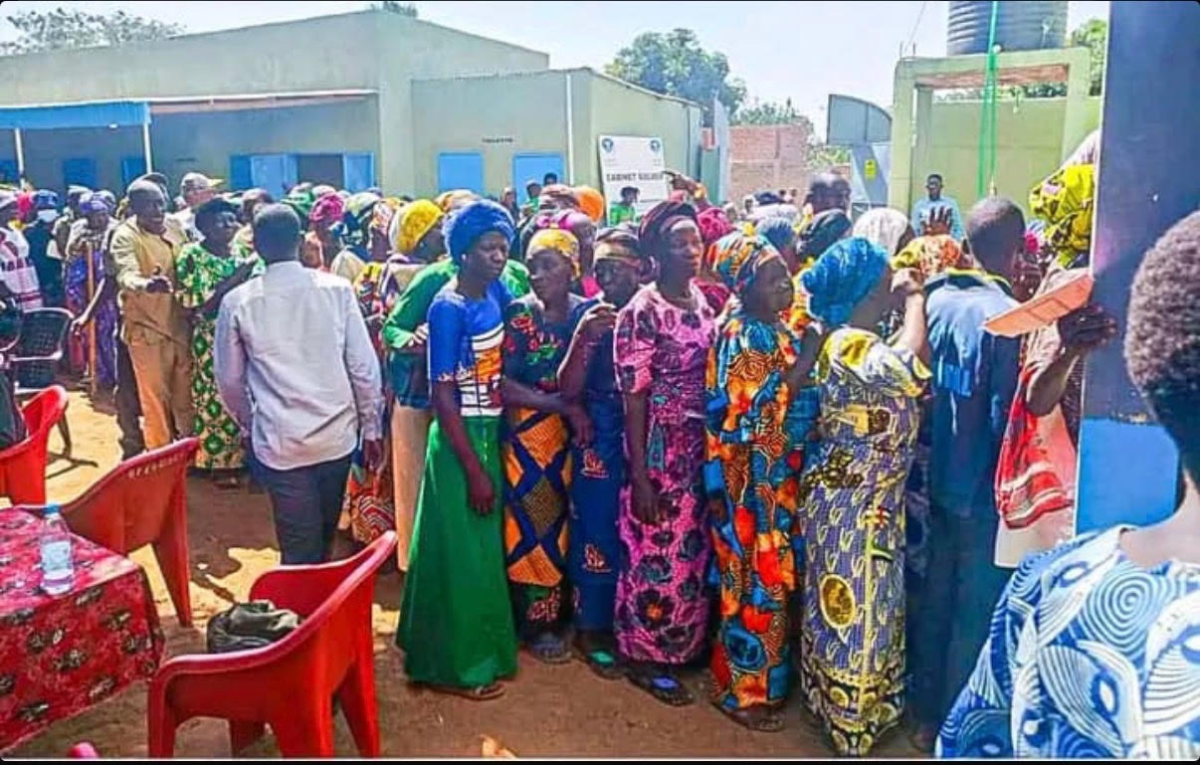
People wait in line to receive free medical care at the Cabinet Solmem clinic in Chad.
“When people come to the clinic, they really have a problem they cannot manage at home,” Menodji said. “Many of them do not have the resources to pay even the minimum amount. We still provide the basic care and make them stable. We do not send them away.”
Two key people at the Cabinet Solmem clinic are Jeremi Ota and Sabine Noteita. Ota, a retired registered nurse, is the clinic’s supervisor. He helped supervise the remodeling of the clinic so they could meet the criteria for a medical clinic. He then volunteered to work at the clinic.
“The community where I live is poor and cannot afford healthcare. I wanted to share my 23 years of healthcare experience as a registered nurse to bring safe healthcare services and care for the people in need,” Ota said. “Plus, I hope I can help take these same services to people in our rural areas.”
Noteita has been a registered nurse and midwife since 2010 and currently manages the maternity ward at the clinic. She lives in a country where women’s maternal healthcare is not as advanced as other parts of the world and has one of the highest maternal mortality rates.
“My role is to teach and care for women with limited resources in the community so they can have a safe delivery and learn how to care for themselves,” Noteita said. “We want to help women deliver healthy babies. Every woman deserves to have a safe birth and prenatal care.”
Cabinet Solmem works in collaboration with clinics from the bigger cities, serves a wide range of people — women, children, men and families — and provides general medicine, minor surgeries, laboratory services, consultations, and labor and delivery services. Many people who come to the clinic come from both the area where the clinic is located and from rural areas if money is available for transportation.
The Cabinet Solmem clinic is making huge differences in its community and in rural areas.
It offers healthcare to an area that does not have access to health resources. It gives hope to people who do not have money. When women give birth, the clinic personnel educate them on reproductive health, risks with childbearing, and postpartum care of the babies and the mothers.
“So far, we have educated numerous women in our community, saved eight births so far and provided medications that patients needed,” Noteita said. “We teach all mothers who come to the clinic how to appropriately care for their children before and after birth. Plus, we follow them throughout the process, from prenatal to birth and beyond, until these mothers feel they are strong enough to be on their own.”
With growth and helping more patients come challenges.
“One challenge we face is that there is not a blood bank close by,” Menodji said. “We have to rely on family members and/or friends who may have the same blood type as the person or is a universal blood donor. Often, before they can find a donor, the patient dies.”
Another challenge is the clinic needs additional equipment and furnishings to accommodate the needs of the patients. Additional challenges include transportation and patients not being able to pay the minimal fee.
“We are grateful for what we have, and we are doing the best we can,” Noteita said. “Many of the women who want to come may not have the funds to do so. Plus, we have a limited supply of medications. The cost for a woman to come for prenatal care to delivery is $45, but they still cannot afford it. Even if they cannot afford it, we still try to help them.”
Despite these challenges, Cabinet Solmem sees a bright future. Goals include enhancing services at the current clinic and extending services to rural areas where people desperately need access to healthcare so they do not have to travel long distances.
“One of our goals is to seek partnerships to help with supplying the clinic with the medical equipment and supplies they need and funding to help us expand healthcare services to the rural areas where there is no access to healthcare,” Menodji said. “Plus, we plan to recruit additional providers and humanitarian groups who are willing to come to the clinic and help us there.”
Menodji and those working with her believe they receive divine help as they complete their mission to serve people most in need.
“It really is not my doing or by my own strength that we continue the work here in Chad,” Menodji said. “Without God’s hand, we couldn’t do it. There will always be a way to do this and keep going forward because we help one patient at a time, soul by soul.”
If people want to plan a health humanitarian trip to Chad or connect with or donate to Cabinet Solmem, they can contact Emelie Menodji by phone at 801-678-0716, by email at cabinetsolmemclinic@gmail.com, or via the clinic website at cabinetsolmem.com.