US House GOP hopefuls have outraised opponents $8.32M to $361,041
-

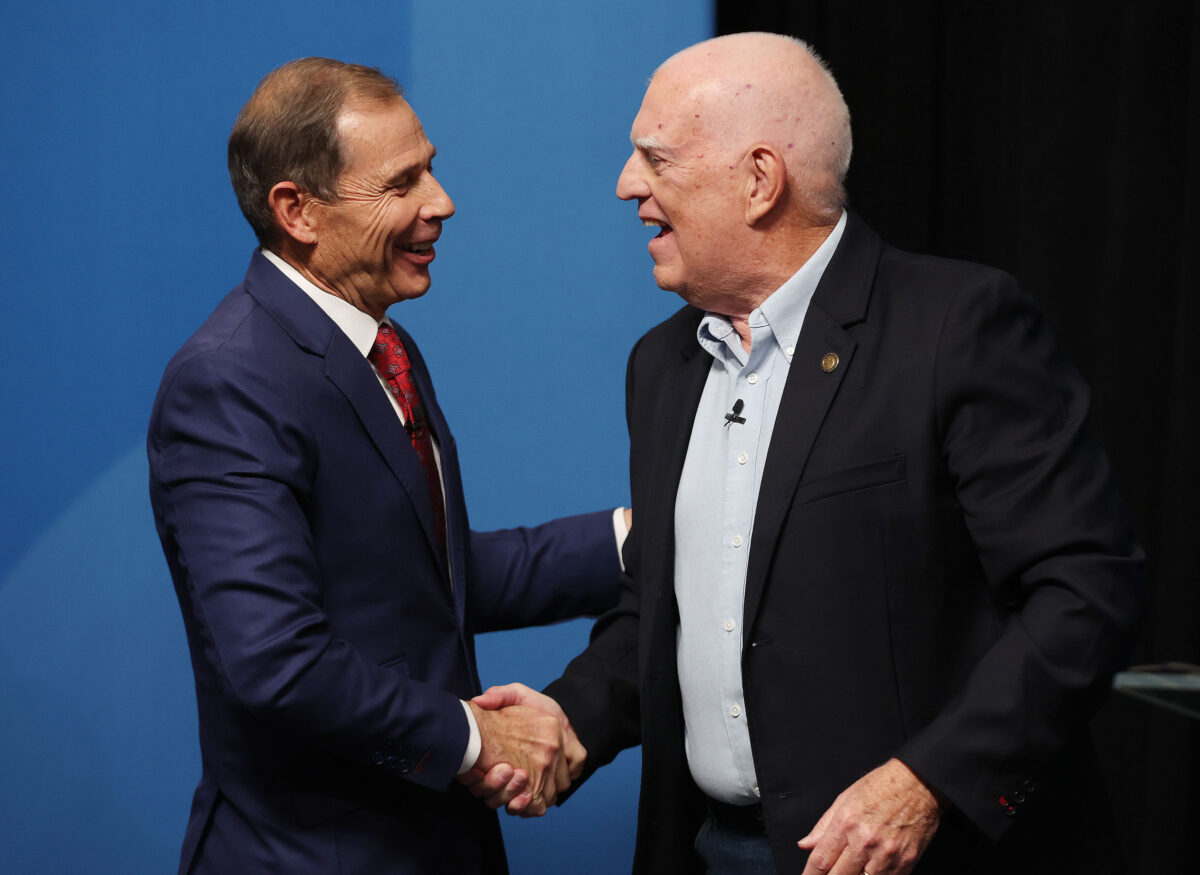
- Rep. John Curtis, R-Utah, and Glenn Wright shake hands after a 3rd Congressional District debate at the KBYU Broadcasting building in Provo on Thursday, Oct. 6, 2022.
-
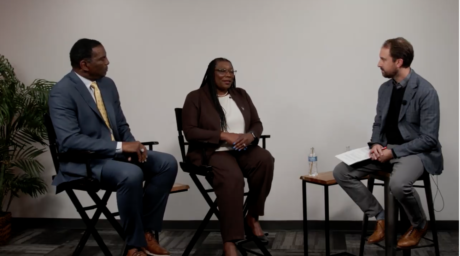
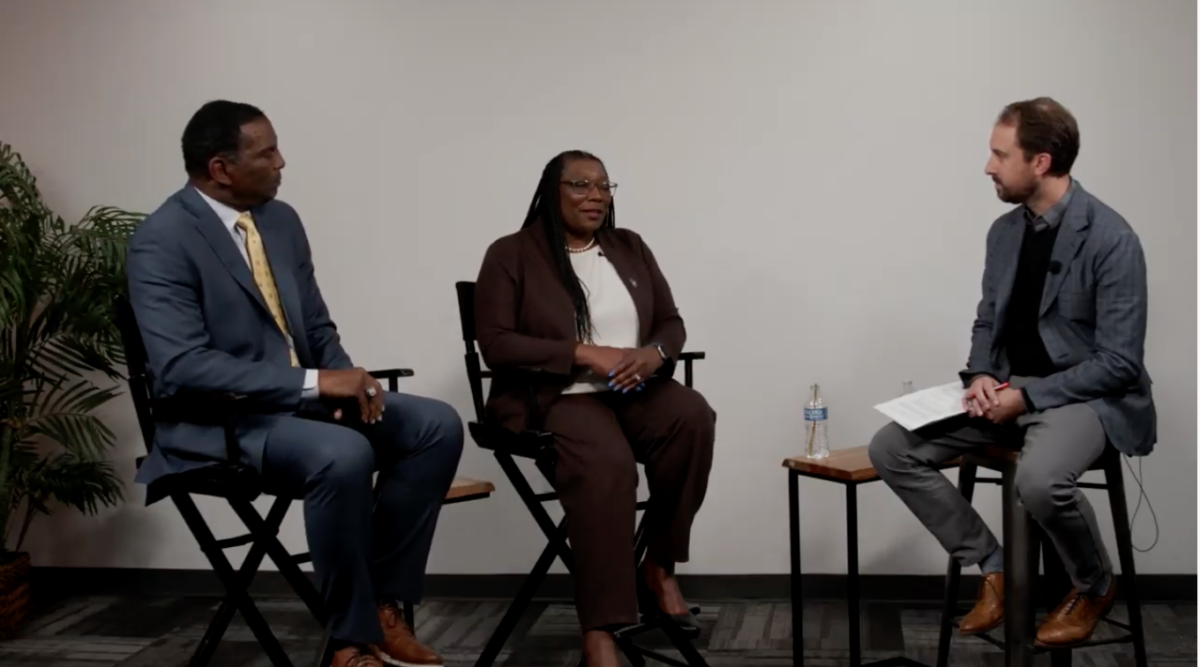
- In this screenshot taken from video, Rep. Burgess Owens, left, and Darlene McDonald, center, participate in a debate Friday, Oct. 28, 2022. Both are candidates for Utah’s 4th Congressional District. At right is University of Utah political science professor James Curry, who moderated the debate.
Jeffrey Allred, Deseret News/Pool
Rep. John Curtis, R-Utah, and Glenn Wright shake hands after a 3rd Congressional District debate at the KBYU Broadcasting building in Provo on Thursday, Oct. 6, 2022.
They don’t call Utah a red state for nothing.
As Election Day edges closer, the four U.S. House races in Utah are solid bets for the four Republican hopefuls, all of them incumbents. Even the 1st District Democratic hopeful, Rick Jones, recognizes the long odds he faces in ousting U.S. Rep. Blake Moore, the GOP incumbent.
“To be completely honest, I will be the first to confess the odds are very much against me,” Jones said. “I do have a likeable opponent.”
In fact, FiveThirtyEight, which analyzes politics and polls, lists each of the four U.S. House contests in Utah as “solid” for the GOP hopefuls. Likewise, finance reports due last Thursday show the four incumbent GOPers outraising and outspending their opponents by wide margins.
The Republicans — Moore, Chris Stewart of the 2nd District, John Curtis of the 3rd District and Burgess Owens of the 4th District — raised $8.32 million between them from Jan. 1 through Oct. 19, the end of the last reporting period, compared to $361,041 for the 10 other remaining hopefuls, a mix of Democrats and other small party candidates.
Courtesy
In this screenshot taken from video, Rep. Burgess Owens, left, and Darlene McDonald, center, participate in a debate Friday, Oct. 28, 2022. Both are candidates for Utah's 4th Congressional District. At right is University of Utah political science professor James Curry, who moderated the debate.
Mail-in balloting is underway, with voting ending on Nov. 8.
The U.S. House, now controlled by Democrats, is likely to flip to Republican control after the election, according to FiveThirtyEight and other prognosticators. The odds that the Senate, now controlled by Democrats, flips to Republicans are pretty even.
Regardless, Moore noted that President Joe Biden, a Democrat, will still be in office after the mid-term elections, meaning it remains to be seen what GOP initiatives will edge ahead. Still, he’s hopeful a GOP House majority will be able to curtail spending put forward by Democrats, who many Republicans charge are the cause of inflation.
In the other U.S. House races in Utah, here’s a breakdown of fundraising, tapping FEC reports:
2nd District: Stewart, the GOP incumbent, had raised $1.05 million since Jan. 1 and had $294,453 left. Democrat Nick Mitchell had raised $42,825 and had $17,542 left, and Jay McFarland of the United Utah Party had raised $84,888 and had $5,594 left. Cassie Easley of the Constitution Party reported no finances.
3rd District: Curtis, the GOP incumbent, reported $2.03 million in donations, with $553,441 of that remaining as of Oct. 19. Democrat Glenn Wright reported $16,005 in donations and $2,890 still on hand. Aaron Heineman of the Independent American Party, Daniel Cummings of the Constitution Party and Libertarian Michael Stoddard reported no funding.
4th District: Owens, the GOP incumbent, reported $3.51 million in donations — the most of any of the House hopefuls — and $305,802 of that remaining. Democrat Darlene McDonald reported $182,122 in donations and $68,562 of that left over. January Walker of the United Utah Party reported $35,202 in donations and $9,579 of that left.
Candidates may donate to their own campaigns.
Moore said fundraising isn’t his favorite part of being a House member. “I use it very judiciously,” he said of the money, and some will be retained after the election is over.
Of Moore’s $1.73 million in donations, $908,420 was listed as individual contributions and $726,490 was listed as contributions from committees, including political action committees.