Friends, family memorialize Darrien Hunt on anniversary of killing
-
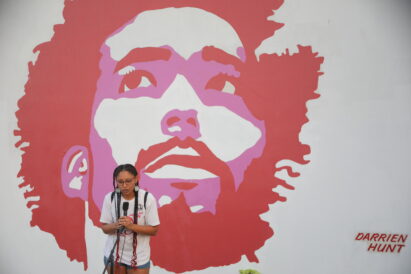
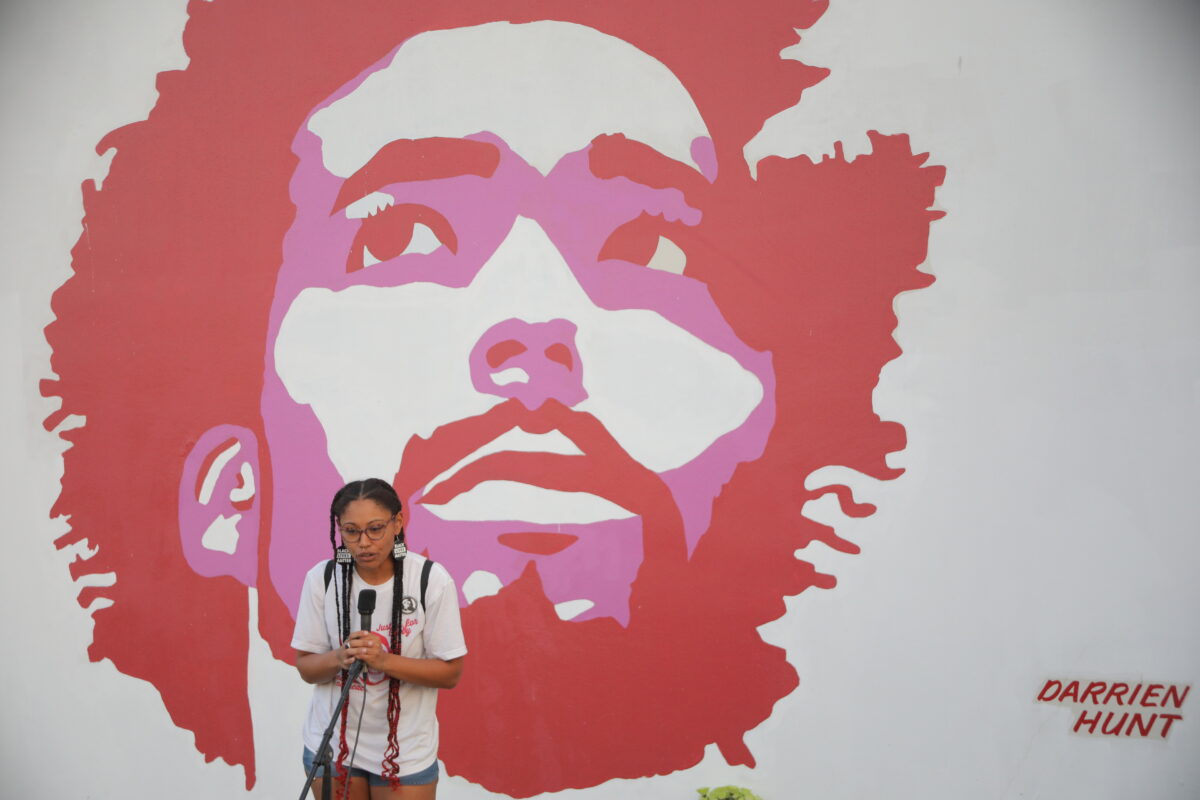
- Rae Duckworth, head of Black Lives Matter Utah, speaks in front of the mural of Darrien Hunt in Salt Lake City on Saturday, Sept. 10, 2022. Hunt was killed by Saratoga Springs police in 2014.
-
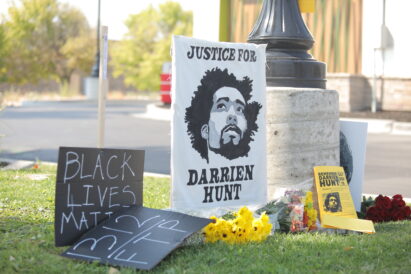
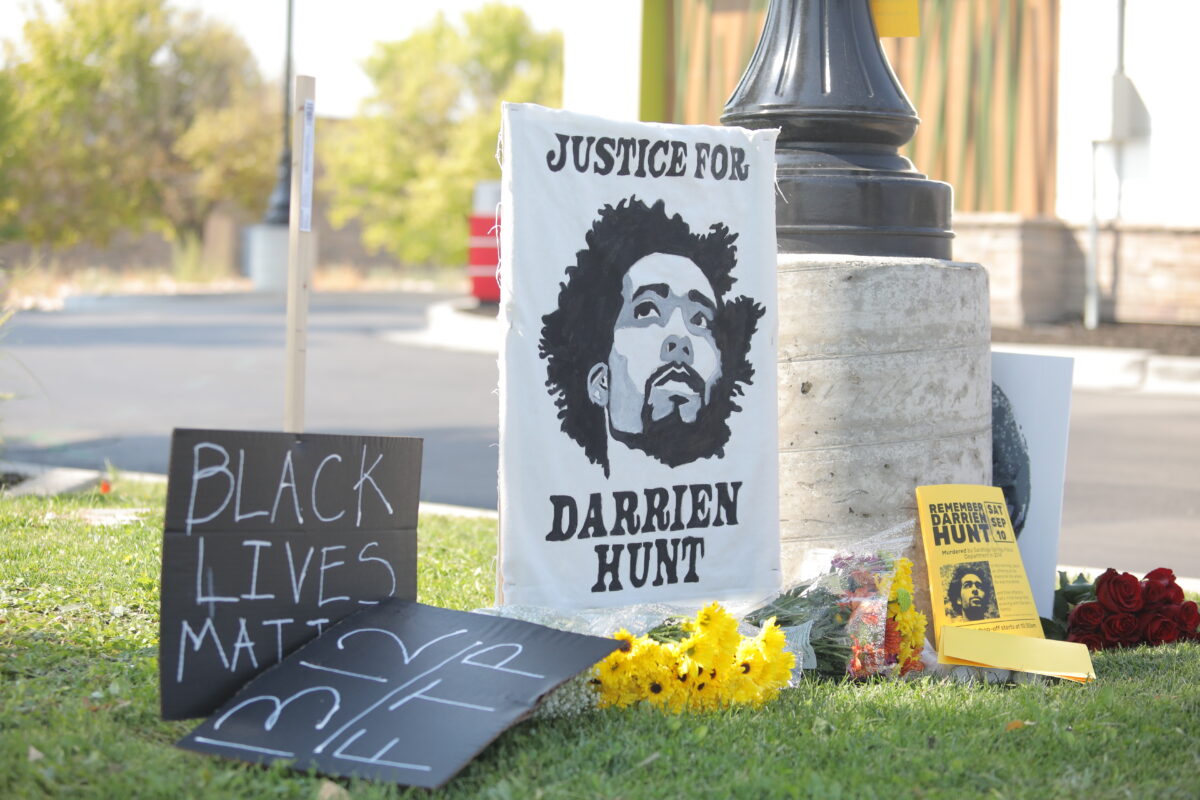
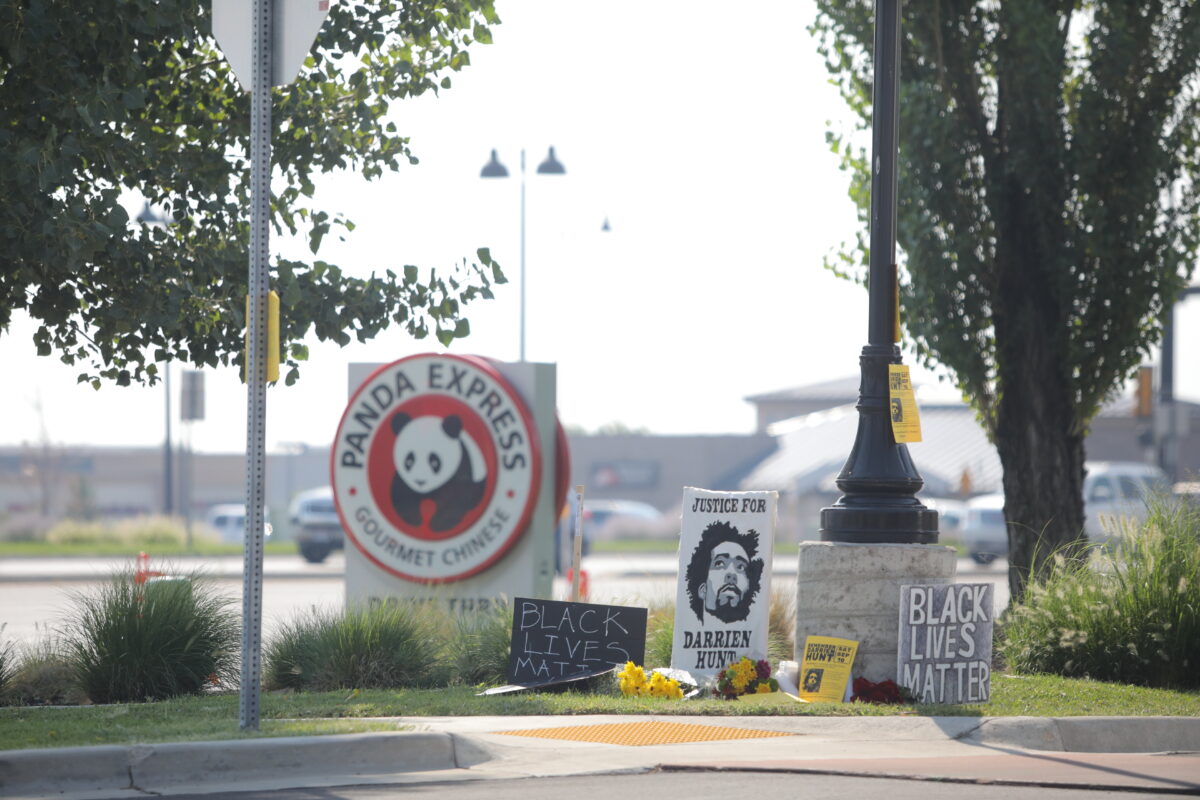
- A memorial made of flowers and posters for Darrien Hunt sits at 1413 Redwood Road in Saratoga Springs on Saturday, Sept. 10, 2022. Hunt was killed at the location by Saratoga Springs police in 2014.
-
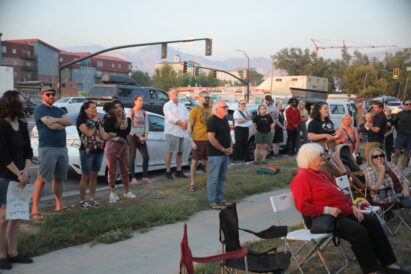
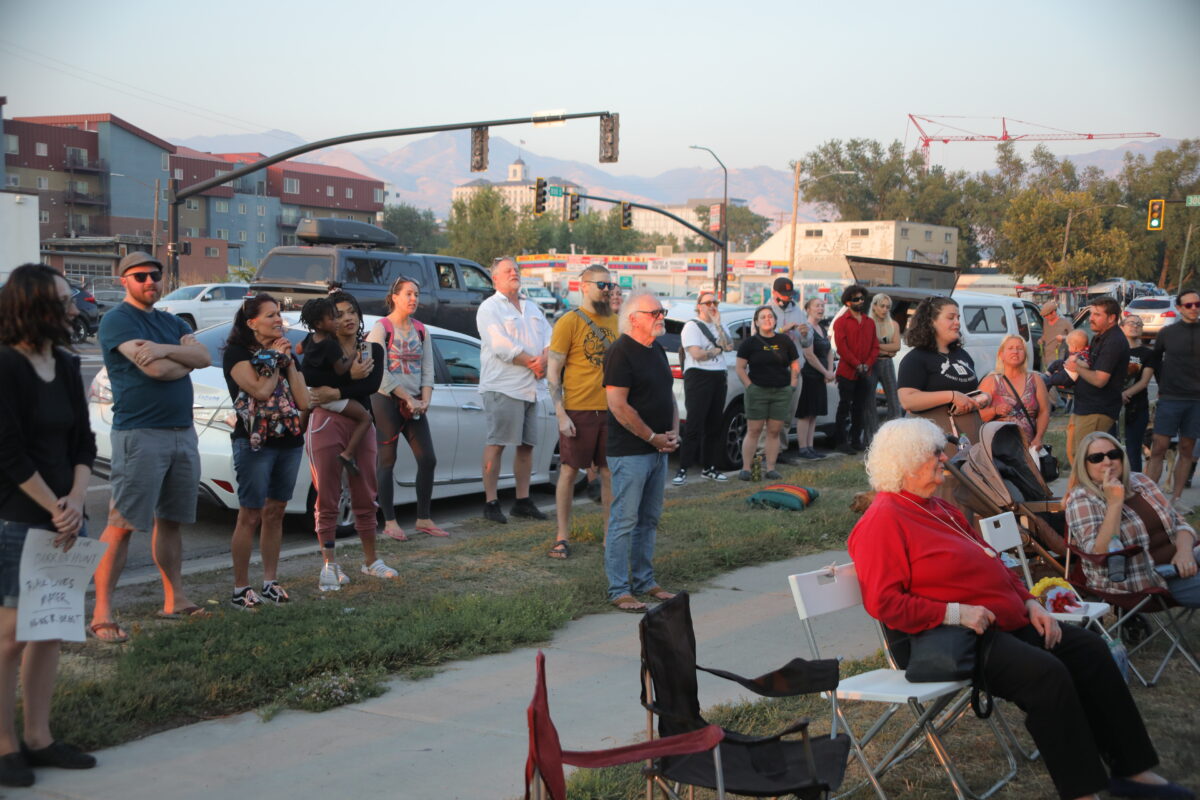
- Friends and family attend a memorial gathering for Darrien Hunt in Salt Lake City on Saturday, Sept. 10, 2022. Hunt was killed by Saratoga Springs police in 2014.
-
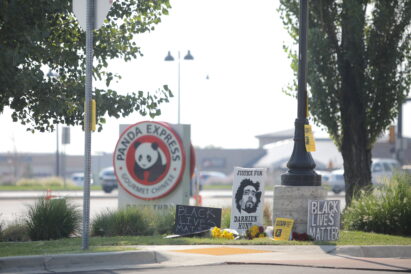
- A memorial made of flowers and posters for Darrien Hunt sits at 1413 Redwood Road in Saratoga Springs on Saturday, Sept. 10, 2022. Hunt was killed at the location by Saratoga Springs police in 2014.
On Sept. 10, 2014, Darrien Hunt was shot in the back and killed by members of the Saratoga Springs Police Department. On Saturday, eight years later, a small memorial of flowers, pictures and signs was left at the scene of the shooting.
Hunt, then 22 years old, was killed in front of the Panda Express, 1413 Redwood Road, after police claimed there was a report of a person brandishing a “samurai-type” sword in the area. In October 2014, an autopsy revealed Hunt was shot six times with at lest the final shot going in a “downward” trajectory.
That November, then-Utah County Attorney Jeff Buhman determined that the shooting was justified, arguing that he lunged toward officers with the replica sword, though that narrative has been contested since by the Hunt family.
“You have this young black man with a pretty big Afro walking down the street carrying what looks like some sort of weapon. It’s a pretty sleepy community. What happened next? And that is where things get very interesting,” said Randy Edwards, an attorney for the family at the time, in an interview with MSNBC in 2014.
The family also sued the city, and an attorney for Susan Hunt, Darrien’s mother, agreed to a settlement that contained a nondisparagement clause. In 2015, she told attendees at a rally marking the first anniversary of his death that she turned down the settlement because of the clause.
Federal Judge Tena Campbell, though, determined that Susan Hunt’s attorney had the power to enter the agreement on her behalf, settling with Saratoga Springs for $900,000 and the nondisparagement clause.
Hunt’s killing came at a time of societal reckoning regarding race and policing in the United States, just one month after Michael Brown was shot and killed by police in Ferguson, Missouri.
In 2022, though, the grief lingers for the Hunt family and all affected — whether they knew the Hunts at the time or not.
Sitting in her car in the Saratoga Springs parking lot on Saturday just in front of the memorial was Rae Duckworth, head of Black Lives Matter Utah, there to pay her respects.
The decision to establish the memorial, by Utah Valley Mutual Aid, was not an easy one, according to Tod Robbins, an organizer with the group.
“We did a memorial because the family, still, is not comfortable entering the city limits. They left because of how they were treated and so that was the safest space we could create for them,” Robbins said.
Saturday evening, Duckworth was one of a few friends and family of Hunt to take the microphone and speak, including his mother, Linda Hunt, and several siblings. A secondary gathering was held in Salt Lake City, at the intersection of 300 West and 800 South underneath a mural of Darrien’s face.
“Darrien was murdered by police, first of all. Don’t let anybody tell you different. Second thing, he was murdered for being himself, which is a Black person who likes to cosplay,” Duckworth said to the group. “Don’t let anybody tell you anything different because that is the truth and that’s the reality this family now has to live with every day.”
In 2020, an online petition with almost 900,000 signees renewed the push to reopen his case and “get justice for his family!”
As people gathered at the mural to remember Darrien, the sun continued to set, illuminating his stylized face along with the faces of Bernardo Palacios-Carbajal, shot and killed by Salt Lake police officers in 2020, and George Floyd, killed after an officer kneeled on his back for over nine minutes in May 2020.
For some, the faces are a brutal reminder of a lack of societal change seen since the murals were first painted two years ago.
“These names are nothing but confirmation that change has not happened and it’s owed to each one of us,” Duckworth said.
For others, they are an opportunity to start a story, rather than let one end.
“It’s critical that we remember that these are people who were complicated individuals who had … traits and experiences and history and that it all gets flattened in a moment in the portrayal of ‘why it was a justified killing,'” Robbins said. “You’re erasing a human being when you’re doing that and we have to keep people expanded — their memories — no matter how many names are stacked on top of the previous names. You have to keep people’s memory complex.”
Local News

Mall makeover: Provo Towne Centre redevelopment project to return to City Council for discussion Tuesday
Fall fun is in season at University Place