Public comment sought on tri-county economic development plan
Harrison Epstein, Daily Herald file photo
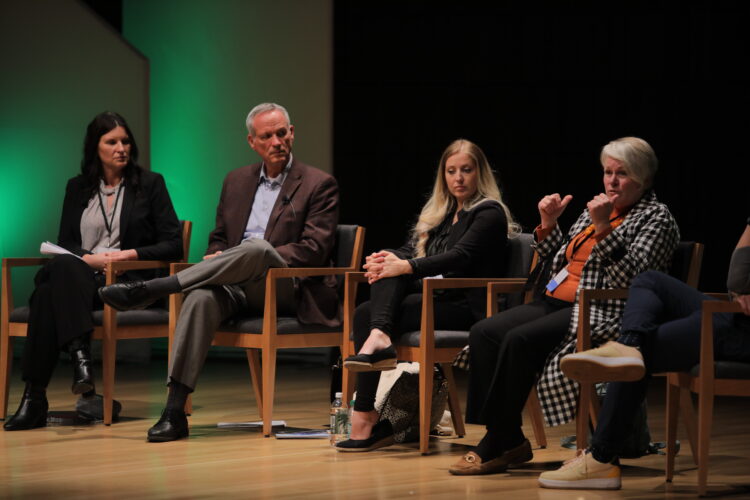
From left, Michelle Carroll, Kay Christofferson, Julie Fullmer and Mary Schaefer discuss transportation during the Utah Valley Growth and Prosperity Summit at Utah Valley University on Thursday, Oct. 28, 2021.Friday is the last day for the public to comment on the Mountainland Association of Governments’ Comprehensive Economic Development Strategy, which addresses economic issues in Summit, Utah and Wasatch counties for the next five years.
According to a press release, the plan will be used as a “guide to understanding and improving the economy of the region, which includes Summit, Utah, and Wasatch counties.”
“The region has been working to manage growth, protect natural resources, address critical barriers to quality of life, preserve what makes us unique and continue to build our diverse and globally competitive economy,” said Jessica DeLora, director of community and economic development, in the press release.
The strategy is developed to “strengthen the economic resiliency” of the region, according to the draft plan published on the organization’s website.
The action plan seeks to address four focus areas — transportation, natural resources, livability and regional collaboration — with a goal for each focus.
The first goal is to provide “safe, connected and accessible” transportation throughout the area with collaboration from other agencies such as the Utah Department of Transportation and Utah Transit Authority.
Expanding public transit and awareness of services is heavily emphasized in this goal, including increasing investment into infrastructure, public awareness campaigns and housing development near transit.
Increased growth has caused a strain on natural resources and water supply, reads the plan, with balancing growth, tourism development and protection of resources as another goal. Expanding sustainable tourism, working with local governments to prioritize green spaces and alternatives to vehicle transportation, and addressing pollution are included in addressing this goal.
With affordability being another issue for the region, the plan’s third goal is to improve quality of life through addressing housing challenges, education affordability and barriers to health and safety needs. Some ways to address these issues in the plan are advocating for legislation to allow local governments to utilize more housing options, increasing investments into child care and K-12 education, and evaluating needs for health care resources.
The final goal is to improve regional collaboration to increase economic competitiveness, increase resiliency and support strategic actions. Steps in working toward this objective include increasing communication between organizations and fostering diversity, and expanding business opportunities.
The plan also identifies the strengths, weaknesses, opportunities and threats the region faces.
High living costs, cost-burdened households and transportation are among the reported weaknesses in the Mountainland area. According to the plan, nearly half of renters are cost-burdened, meaning they spend more than 30% of their income on housing, and about a quarter of homeowners are cost-burdened.
Data provided in the plan states that the average household in the region requires an annual salary of $104,000 to sustain a living wage, or about $50 an hour. In Utah County, the median household salary in 2021 was about $82,900.
Natural landscape, quality of life, rapid economic growth, intellectual capital and the technology industry are the identified strengths of the Mountainland region. Continued growth is projected in the upcoming years, with the region likely exceeding a population of 1 million in the next 10 years.
Economic opportunities include improving housing, infrastructure and tourism while unmanaged growth, lack of action from local governments in addressing housing, natural disasters and workforce misalignment are said to be “threats” to the region.
The plan can be reviewed at mountainland.org/ceds-2023, and public comments can be made in the survey link on the first page of the document.