Wildlife officials offer tips for bear encounters after killing animal sighted at Utah County campgrounds
-
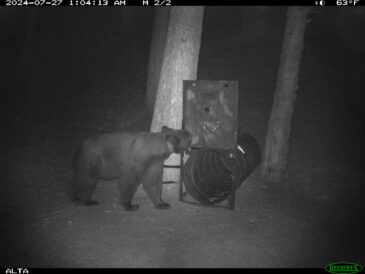
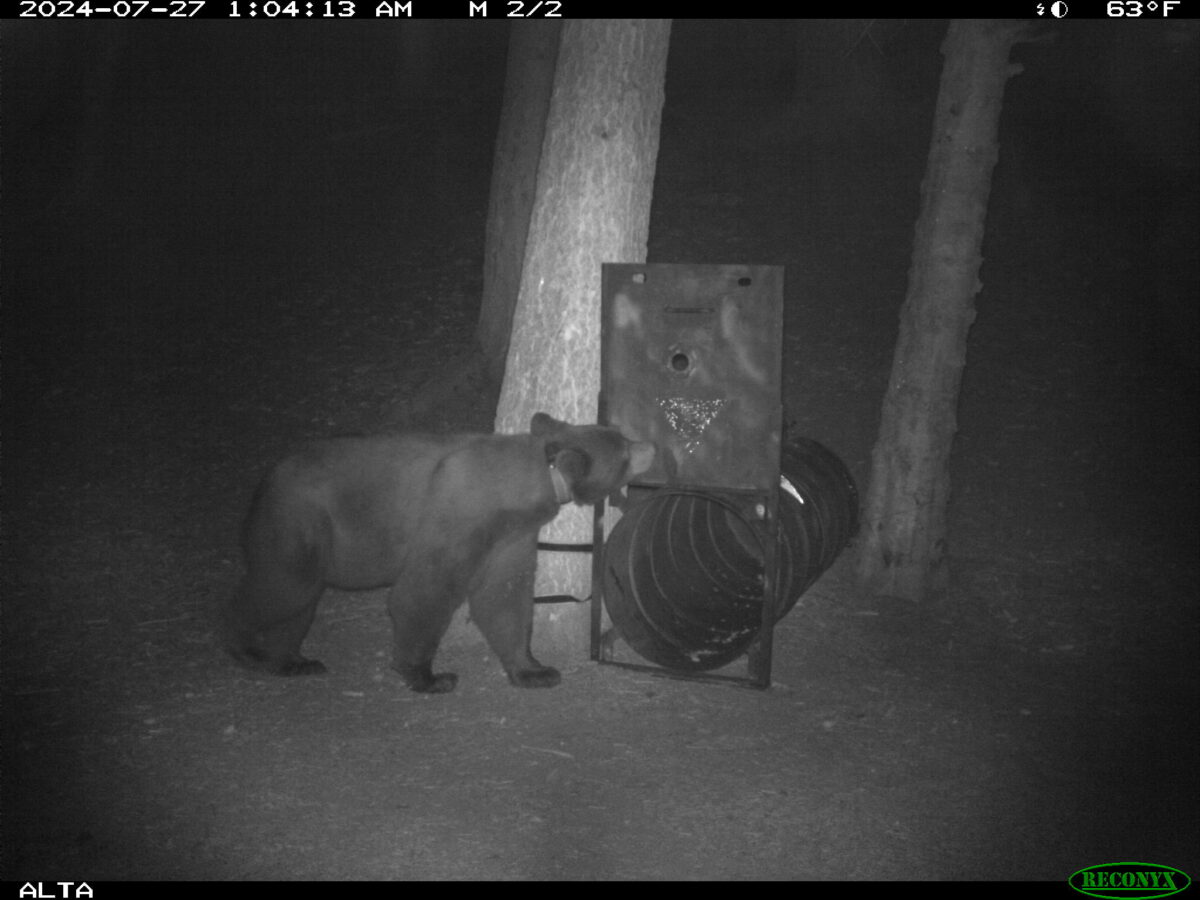
- This surveillance photo captured Saturday, July 27, 2024, shows a black bear near recreation campgrounds in American Fork Canyon.
-
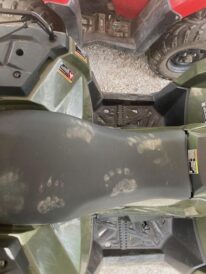
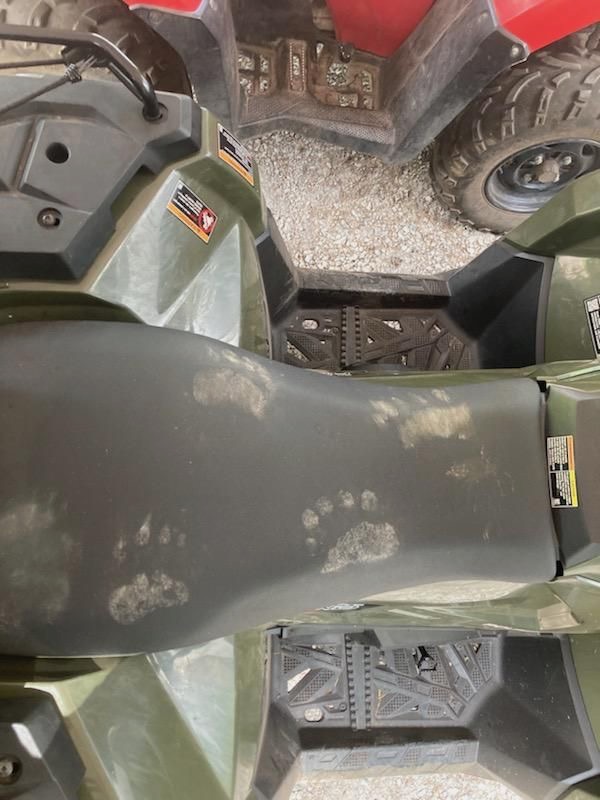
- This photo shows apparent bear prints on a small motorized vehicle near campgrounds in American Fork Canyon.
-
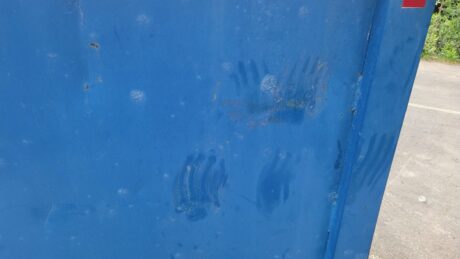
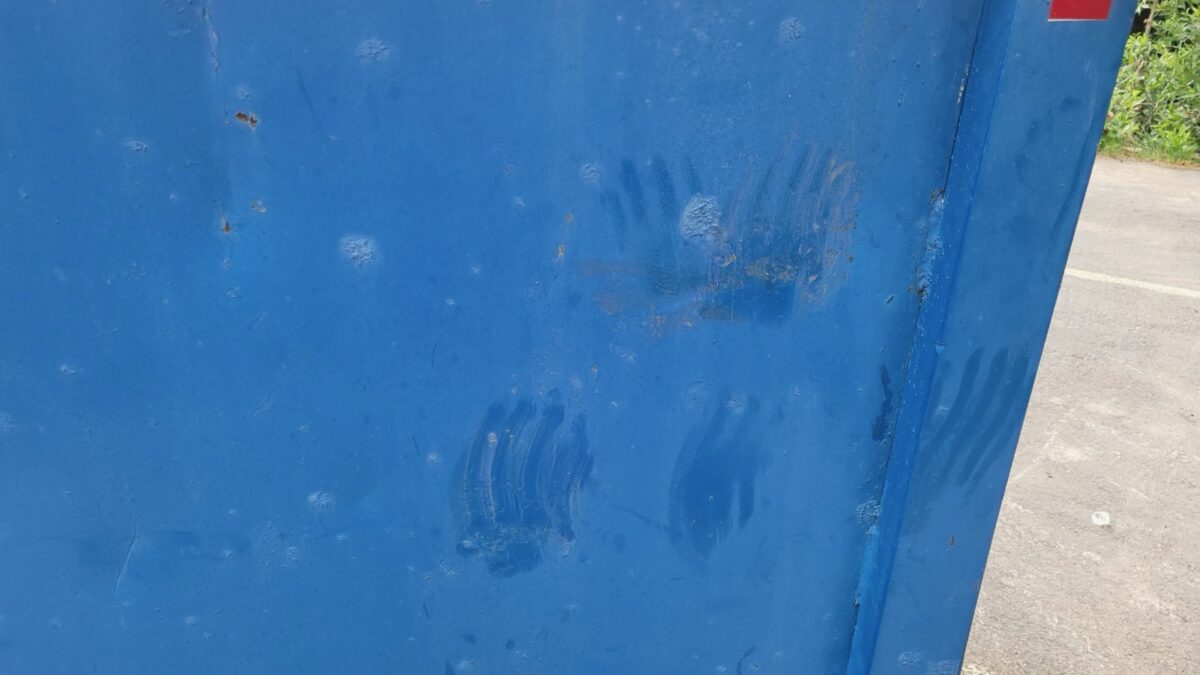
- This photo shows apparent bear prints on a dumpster near campgrounds in American Fork Canyon.
Courtesy Utah Division of Wildlife Resources
This surveillance photo captured Saturday, July 27, 2024, shows a black bear near recreation campgrounds in American Fork Canyon.
Wildlife officials say a bear spotted in American Fork Canyon has been euthanized after exhibiting “aggressive behaviors” that could have been threatening to the public.
Early last week on July 23, the U.S. Forest Service announced closures along the Granite Flat Campground as the Utah Division of Wildlife Resources worked to trap a black bear that was rummaging through the area, the agency said on social media.
Later that week, after it appeared that the bear had been on the move, Forest Service officials with the Uinta-Wasatch-Cache National Forest made the call to also close the Timpooneke and Altamont campgrounds as DWR continued efforts to locate and trap the large mammal.
“This bear was just going from campground to campground, and we knew it was the same bear,” DWR Conservation Outreach Manager Scott Root told the Daily Herald.
The 5-year-old male black bear reportedly had been getting into dumpsters along with other areas in search of food and was evading the traps wildlife officers sat out.
Courtesy Utah Division of Wildlife Resources
This photo shows apparent bear prints on a small motorized vehicle near campgrounds in American Fork Canyon.
Root said the bear appeared to show very little fear toward responding law enforcement agencies. “(It) bluff charged them, so we knew this bear was trouble and it was considered a nuisance bear,” he said.
Those factors placed it into what Root called a “level 3” category, which includes animals deemed to be threats to public safety.
“(That’s) where we know we’re going to euthanize it,” Root said. “If we just move it somewhere else, it’ll go to other campgrounds because it’s been rewarded with food. Then it goes into places where people are hanging out and public safety is our No. 1 priority.”
DWR officials say black bears typically try to avoid conflicts with humans, though encounters are not uncommon. The risk heightens for public safety when food is easily accessible to the wild animals.
The bear was captured Saturday at Timpooneke Campground, which sits along the Alpine Scenic Loop in American Fork Canyon. The impacted campgrounds shortly were reopened to the public.
Bear sightings in usual and unusual places
Courtesy Utah Division of Wildlife Resources
This photo shows apparent bear prints on a dumpster near campgrounds in American Fork Canyon.
Utah is black bear country. Wildlife officials constantly remind citizens that thousands of bears live in the state’s mountains and forests, often in the same places where humans recreate.
Root said it’s not uncommon to spot a black bear in the higher elevations or, in some cases, residential neighborhoods. In early June, a bear was spotted and captured from a tree in Salt Lake City’s Capitol Hill neighborhood.
“If you look around the (Salt Lake) foothills, there is a lot of yellow, dry grass up there. And so if you’re a bear or a moose or some other animal and you see lush green vegetation down below, and water sources, that’s going to be an attraction for you. And so we expect it to happen occasionally,” Root said.
In that case, the bear was removed and relocated to another area.
Black bears and humans coexisting
Wildlife officials recommend properly storing food and other items that may attract a bear into your yard or recreation area in the foothills and mountainous parts of the state.
Ensure a clean camp by packing away food not being eaten, tossing away all trash in bear-proof dumpsters (if one is available), and cleaning off picnic tables, barbecue grills and stoves. While hiking, try to travel in groups and keep a close eye on small children and pets, especially at dawn or dusk.
If you see a bear, stand your ground and don’t run.
DWR recommends carrying a can of bear spray as one safety mechanism. “It’s just a great tool to have, and I wouldn’t bury it in your backpack, have it on your belt. You could just pull it up immediately if something were to charge you,” Root said.
For frequent backcountry recreators, the spray also works on other wildlife that have a tendency to be aggressive, such as cougars and moose.
Enjoy Utah’s outdoors
Depending on the proximity, seeing a bear in the wild can be a special treat or a potential threat.
The National Park Service says bear attacks in the United States are fairly rare as most are concerned with protecting their food, cubs and space.
However, in 2011, a family was awarded $1.95 million after a black bear mauled a young boy to death four years prior while camping in American Fork Canyon, ironically near the same campground associated with the most recent sighting.
A judge held the U.S. Forest Service mostly responsible for the death, accusing the agency of not doing enough to warn recreators of the bear’s presence.
The incident remains Utah’s only fatal black bear attack in recent years.
Still, wildlife officials encourage people to enjoy the beauty of Utah’s mountains while staying bear aware.
“Enjoy yourself in the outdoors. Just, if you know what to do if a bear wanders into your campground, you’ll be prepared,” Root noted.