Symposium highlights recent successes at Utah Lake, lists efforts to educate community and dispel misconceptions
-

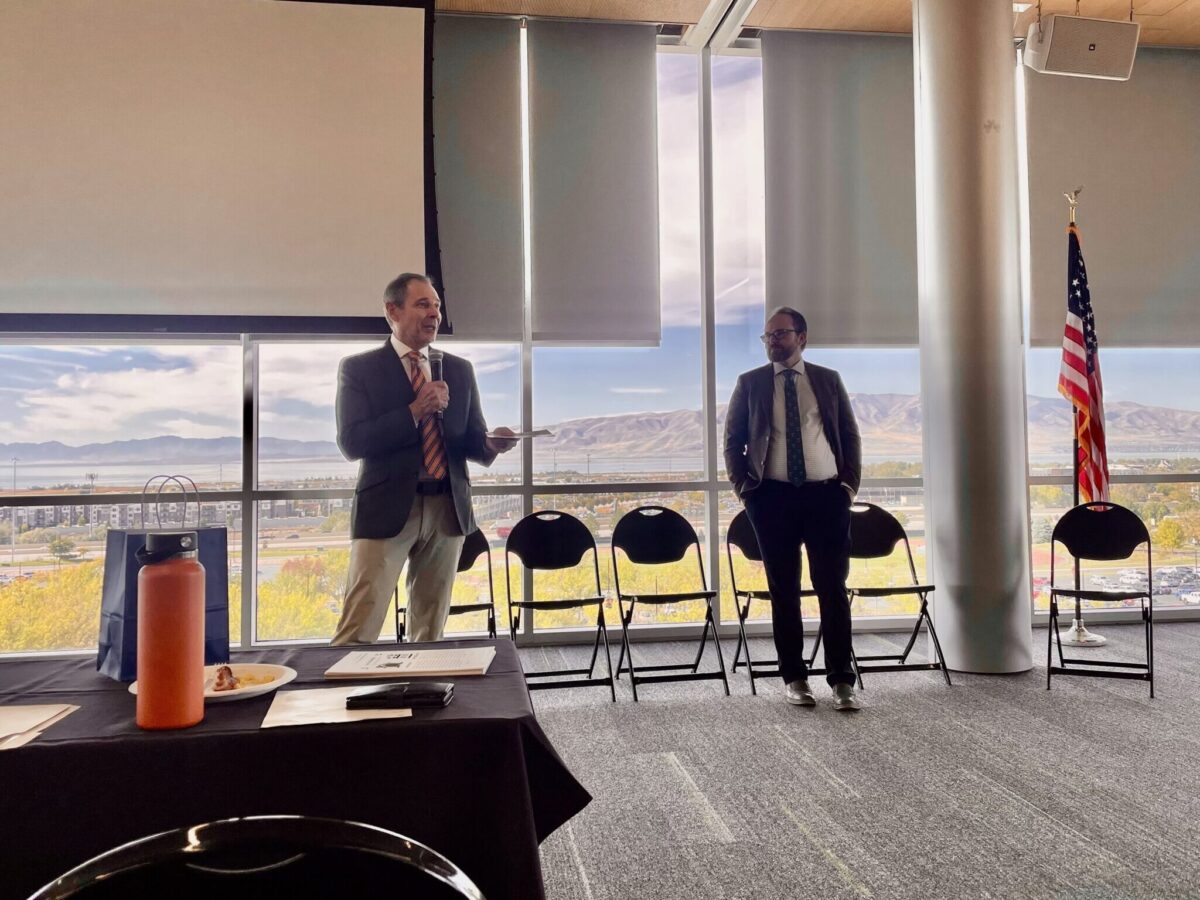
- U.S. Rep. John Curtis speaks to a crowd during the 2024 Utah Lake Symposium at Utah Valley University on Monday, Oct. 21, 2024.
-
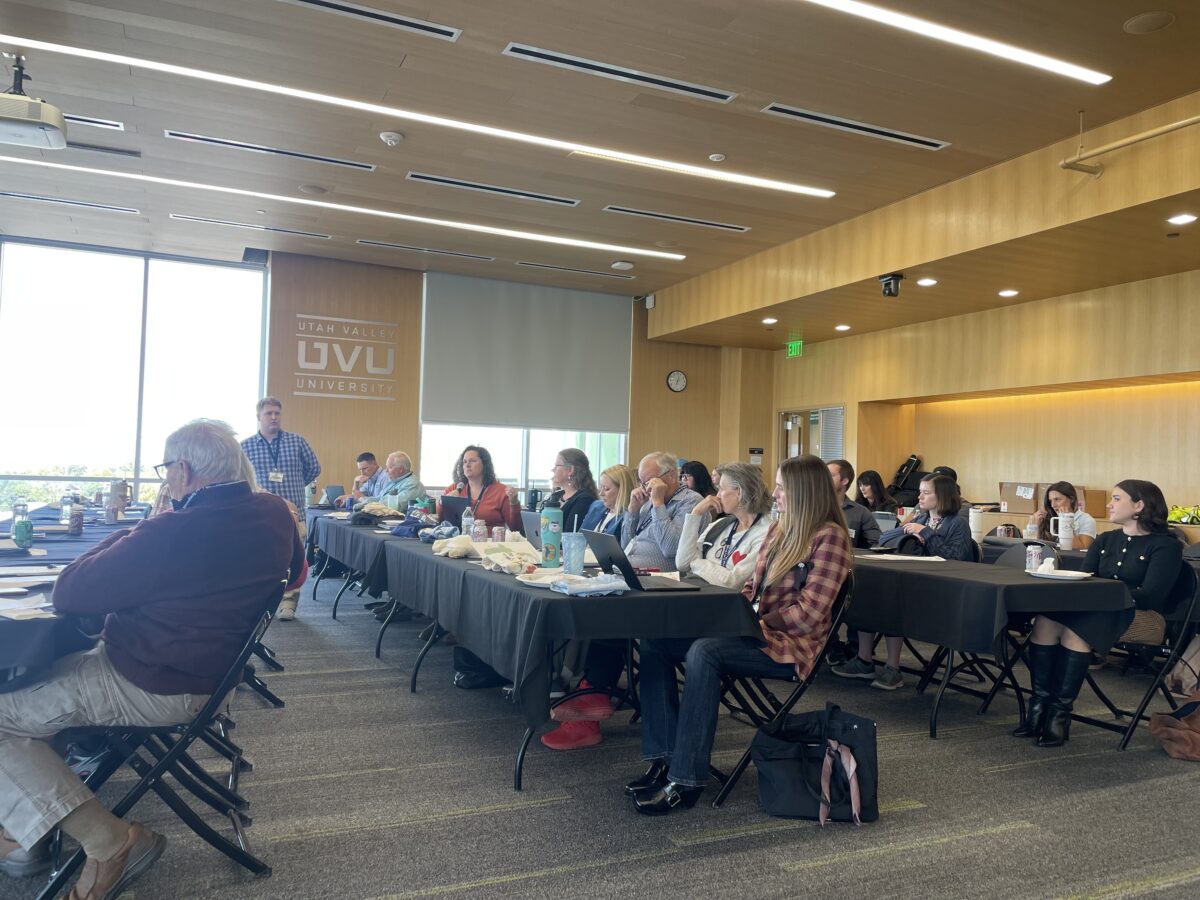
- Utah Valley University professor Tara Bishop asks a question during the Q&A portion of U.S. Rep. John Curtis’ keynote address at the Utah Lake Symposium on Monday, Oct. 21, 2024.
Curtis Booker, Daily Herald
U.S. Rep. John Curtis speaks to a crowd during the 2024 Utah Lake Symposium at Utah Valley University on Monday, Oct. 21, 2024.
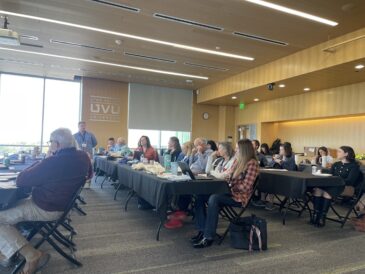
On a fall Monday morning inside the fifth-floor conference room at Utah Valley University’s Clarke Building looking west over Utah Lake, dozens gathered to learn about recent wins and ongoing efforts to improve the health of the lake.
The Utah Lake Authority’s second annual symposium featured a bevy of speakers and presentations surrounding the lake’s ecological state, purported misconceptions that have plagued the lake and why education is vital to the future of the large water body.
Utah Lake has long been marked by its challenges with invasive species, harmful algal blooms and negative perceptions. However, recent efforts to improve the lake have proved successful, speakers said.
Since 2009, common carp populations are down around 70%; Phragmites, an invasive plant that covered the shores of Utah Lake, have been reduced by just under 80%; and the June Sucker recovery program helped grow the population of native the Utah fish to just over 30,000.
“It’s one of the few fish in this country that have ever been down-listed from endangered,” said Luke Peterson, executive director of the ULA, during introductory remarks at the symposium. “So these are huge success stories, but part of the question for me is, how do we get to the next level?”
Curtis Booker, Daily Herald
Utah Valley University professor Tara Bishop asks a question during the Q&A portion of U.S. Rep. John Curtis' keynote address at the Utah Lake Symposium on Monday, Oct. 21, 2024.
Toxic algal blooms were detected earlier than usual in 2024, the first one being in May, according Hannah Bonner of the Utah Department of Environmental Quality. These harmful algal blooms post a host of concerns for people visiting the lake, which is why the DEQ and Utah County Health Department work to alert the public with warning advisories.
Bonner said that while pockets of algal blooms were detected in multiple areas of the lake, they are not as dominant as they once were.
“We’re not seeing those massive, dominating lake white blooms like we saw in 2016,” she said.
Bonner encourages people to stay updated on algal blooms through the DEQ website when the season for Utah Lake recreating returns next spring, as well as other water quality improvements.
The theme of Monday’s symposium was “Sailing Forward,” with discussions about the lake’s progress. The day also had a focus on sustaining what’s been done via education and creating more community enthusiasm about the lake.
The Utah Lake Authority is working to develop the Utah Lake Nature Center — a joint collaboration between Utah Valley University, the ULA, Lindon City and the Hutchings Museum in Lehi — as well as resources for more advanced research.
Plans for a nature center currently haven’t reached more than concept layouts that were drawn up more than three years ago.
Utah Congressman John Curtis helped secure around $5 million for the project. The ULA is looking to raise the remaining nearly $20 million to help fund building the center.
“Our mission with the lake is to somehow bring it back and restore it and that is a huge, huge effort, but one that will be just incredibly worth it and very valuable,” said Curtis, who was a keynote speaker during the symposium.
The ULA and local legislators plan to take the funding request before Utah lawmakers in January during the 2025 legislative session.
Additionally, they’re hoping to secure another $2.5 million in ongoing funding needs for applied research, which would work in conjunction with the center.
“The lake is alive and it’s dynamic and it’s always changing. So we’ve made progress, but every time you make progress, you have to adjust things a little bit, come up with a new solution for the next phase and the next phase. So that’s part of the work that we’re really focused on now,” Peterson said.
According to speakers, the Utah Lake Nature Center, once built, will strive to be an active center, not just a building, with continuous research and community engagement.
There also will be a goal to educate thousands of students and support scientific collaboration.
An exact location was not given but the ULA says it will be located along the Utah Lake Trail on a parcel donated by the City of Lindon, with UVU taking ownership of the building.
However, since funding is still at the heart of what’s still needed, there are no building contracts or a timeline in the works at the moment.
“In a perfect world, if we got the funding this March, we (could) start working on a contract to hopefully get it built by summer or spring of 2026,” Addy Valdez, ULA conservation biologist, told reporters in a media scrum.