Dems vying for CD1 seat reject call to consolidate race around ‘progressive’ candidates

Scott G Winterton, Deseret News, pool
Moderator Max Roth of Fox 13 speaks to candidates Nate Blouin, Liban Mohamed, Ben McAdams and Mike Farrell as they face off in the First Congressional District Democratic primary debate at the Eccles Broadcast Center in Salt Lake City on Wednesday, May 27, 2026. (Pool photo by Scott G Winterton/Deseret News)Democrats’ primary race for the newly drawn 1st Congressional District has energized the party in deep red Utah. But, the excitement for potential Democratic representation has brought a crowded race that hasn’t tightened as the primaries approach.
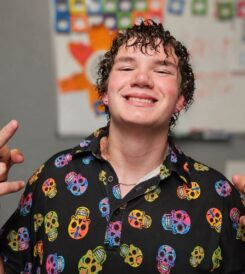
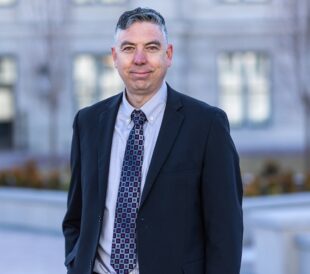
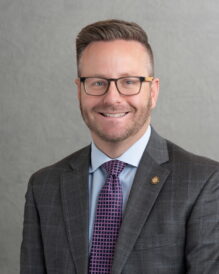
A call by candidate Nate Blouin to consolidate the race among “progressive” candidates to compete against Ben McAdams, the last Utah Democrat to serve in Congress, was overwhelmingly rejected by newcomers Liban Mohamed and Michael Farrell, leaving the list of candidates four deep on the June ballot.
“It is white privilege to call for the person who won first place, as an individual who was in third place, to step aside,” said Mohamed, who won 51% of delegates’ support at the Democratic convention.
“It’s giving desperation,” Farrell said about Blouin’s proposal.
Blouin has, however, vowed to commission an independent public poll and to withdraw from the race “if he is not the leading progressive candidate within the poll’s margin of error,” according to a news release from Blouin’s campaign.
When the four Democrats vying for the seat gathered for a debate, organized by the Utah Debate Commission and broadcast by PBS Utah, a lot of their answers and views were similar on hot button issues like immigration, healthcare accessibility and artificial intelligence woes.
But, for them, the details that differentiate their proposals could make or break what is expected to be the state’s sole Democratic voice in Washington, D.C.
As the candidates took shots at each other for past jobs, offensive comments, voting records and Hail Mary efforts, moderator Max Roth had to mention: “I think you’ve all seen that people will get more time on camera if you mention their name.”
Ultimately, any voters in the district, regardless of their affiliation, has a chance to cast a vote for the Democratic Party’s pick for the seat, since the June primary will be open.
McAdams has often been described as a moderate candidate in the party, a tag that he said comes with aiming “to tackle tough issues.”
“I’ve always been somebody who focuses on getting things done, because I believe the people who are counting on us can’t afford for us to let a purity test get in the way of progress,” McAdams told reporters after the debate. “And so what I would say is I’m a pragmatist, and I prioritized moving the needle and delivering results for people who are counting on us and (I’m) not ashamed of that label.”
However, the other candidates in the race, now clinging to the example of New York City Mayor Zohran Mamdani, a democratic socialist, say there are ways to advance the Democratic agenda without compromising too much.
“I have challenged Democrats to be better, to stop taking corporate contributions like they are here in Utah. Unfortunately, that puts me in a box,” Blouin said after the debate to questions about being unable to pass a bill during his time in the Utah Senate.
Most pressing issues
The new 1st Congressional District will most likely go blue this year, since it encompasses a compact area around northern Salt Lake County, which leans Democratic — the product of a yearslong anti-gerrymandering lawsuit.
All candidates took turns rejecting Immigration and Customs Enforcement practices the Trump administration has implemented, all denouncing an ICE detention center proposed on Salt Lake City’s west side, and all but McAdams urging for ICE as a whole to be abolished.
“Abolish ICE and build an immigration system that is rooted in our shared humanity. We need to make sure that we have pathways to citizenship for all that are undocumented neighbors,” Mohamed, a son of Somali immigrants said. “We need to make sure that each and every person that steps on the land of the United States of America has rights and make sure they have legal representation and due process.”
McAdams, like Farrell, compared the proposed detention center to the Topaz Camp, an incarceration site for Americans of Japanese ancestry during World War II, a practice that the federal government now considers to be “one of the worst violations of civil rights against citizens in the history of the United States.”
“This detention center will be a scar on the face of Utah, and we must stop it. But it doesn’t stop there. We also must get ICE out of our American cities. We must hold ICE accountable, of course. That starts with things like body cams, removing the masks, requiring warrants, requiring due process, but that is the bare minimum,” McAdams said, calling for further reforms in the border patrol system.
Lately in Utah, with a decaying Great Salt Lake, drought, and talks about a proposed massive data center in Box Elder County, water availability has been on top of many policy discussions.
“We need to put a tax on excessive water consumption by agricultural producers, and we need to ban data centers nationwide,” Farrell said.
Blouin, who has sponsored environmental legislation in the state Senate, added he believes using eminent domain is acceptable to secure water rights for the Great Salt Lake.
“That billion dollars that Trump put forward is a start, but we need that every year, and I will fight for a billion dollars a year to actually solve this problem in the long term,” Blouin said.
Utah News Dispatch is part of States Newsroom, the nation’s largest state-focused nonprofit news organization.