Beehive Archive: Ghost Towns: Sego, a Coal Town with a Colorful Past
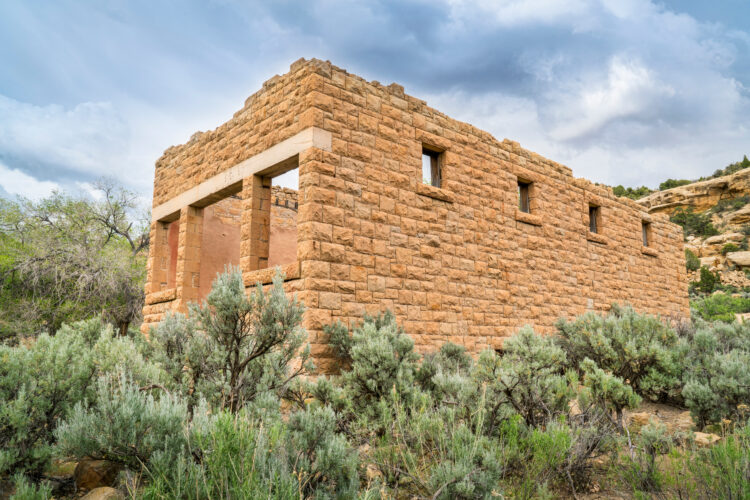
Ruins of coal mining company general store at the ghost town of Sego in Book Cliffs area of eastern Utah
Welcome to the Beehive Archive–your weekly bite-sized look at some of the most pivotal–and peculiar–events in Utah history. With all of the history and none of the dust, the Beehive Archive is a fun way to catch up on Utah’s past.
Beehive Archive is a production of Utah Humanities, provided to local papers as a weekly feature article focusing on Utah history topics drawn from our award-winning radio series, which can be heard each week on Utah Public Radio.
Ghost Towns: Sego, a Coal Town with a Colorful Past Down a bumpy canyon road in the Book Cliffs of southeastern Utah, curious travelers can find the ghost town of Sego. Named for Utah’s state flower, it’s a dusty coal town with a colorful past.
The canyon where the ghost town of Sego sits has been visited by people for millennia. A panel of pictographs in the canyon dates back thousands of years, but its mining history began in 1908, when local rancher Henry Ballard discovered a seam of coal near his ranch in northern Grand County.
For a time the area flourished, but the changes in Utah’s local mining economy ultimately caused its collapse. Ballard bought the land and hired local folks to mine the coal. They set up a small coal camp, calling it Ballard. In 1911, he sold the mine to a Salt Lake-based businessman, who formed a corporation called the American Fuel Company.
They set up coal processing equipment, and extended a railroad line to connect the mines to the Denver & Rio Grande Railroad line to the south. The company developed the coal camp into a proper town — giving it the new name, Nelsen, after the mine’s new general manager, Richard Nelsen. By 1915 profits were low, and paydays were irregular.
The miners went on strike after not having been paid in months. In 1916, Neslen was replaced, and the company renamed itself to Chesterfield Coal Company. The town’s name was changed once again in 1918, this time to Sego for the sego lily, Utah’s state flower, which flourished in the canyon.
Despite these bumpy beginnings, the coal town lived on for decades. Sego was home to a diverse community. Miners of Italian, African American, Japanese, and Greek descent all made homes in the town.
Betty Coccio Dalton grew up in Sego, and remembers childhood in the 1930s and 40s. “My grandparents… migrated to America [from Italy] for a better life,” she said. “My grandfather worked in the mines but also had an orchard, vineyard, hay fields and large garden.” Some families carried on traditions from their homelands, including Italian families making wine from grapes grown in the rocky canyons.
By 1947, the mine was unprofitable, and the company closed. Some of the miners bought out the assets, but a fire in 1949 destroyed crucial equipment and flash flooding in the 1950s wiped out several buildings. Today, the skeletons of buildings remain – and Sego lives on in memories. Beehive Archive is a production of Utah Humanities and its partners.
This episode of the Beehive Archive was contributed by the Moab Museum. Sources consulted in the creation of the Beehive Archive and past episodes may be found at www.utahhumanities.org/stories. © Utah Humanities 2024