Utah faces mixed water conditions as spring approaches
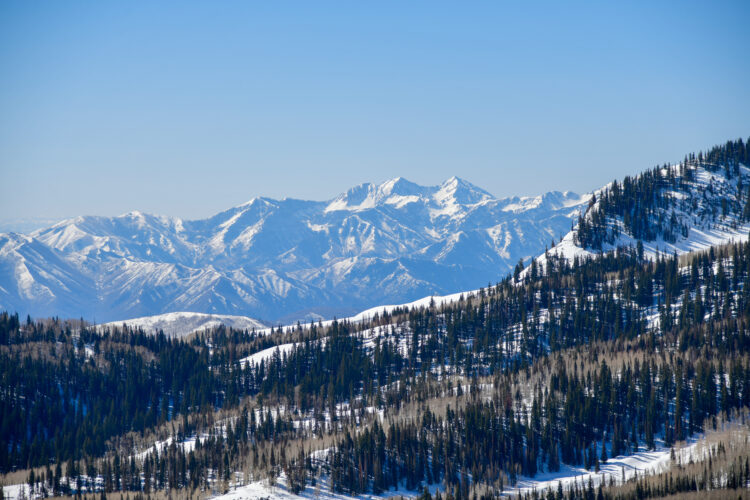
Fantastic landscape in Park City Ski Area, Utah. Top view to the valley with mountains range during early spring weather conditions.
SALT LAKE CITY — Utah’s water outlook remains a mixed bag as the state transitions into spring. Recent storms have contributed to the statewide snow water equivalent reaching 82% of its normal peak for the year. However, southern Utah continues to experience significantly below-average levels, raising concerns for water availability in the coming months.
“We are seeing our snow water equivalent decline as the state warms up,” said Jonathan Jennings, meteorologist at the Utah Division of Water Resources. “We may have already peaked for the year. With the warm week we have had, I don’t anticipate our snow water equivalent to make a rebound above what has already melted in the last couple of days.”
Water supply and snowpack levels
The Colorado Basin River Forecast Center, which models anticipated water supply based on soil moisture and snowpack, predicts water supply levels between 70% and 90% of average across much of Utah. However, southwestern Utah remains critically low at below 30% of normal levels, underscoring ongoing drought concerns.
Despite the uneven snowpack, Utah’s reservoirs are in good condition, averaging 20% above normal levels for this time of year. This provides a crucial buffer against below-normal runoff and potential water shortages in drier regions.
Conservation efforts and drought resilience
Candice Hasenyager, director of the Utah Division of Water Resources, emphasized the importance of ongoing conservation efforts.
“We are facing dismal snow water equivalent in southern Utah and are seeing increasing drought conditions in southwest Utah,” Hasenyager said. “Reservoir storage will help this year. Let’s conserve this summer and keep water in our reservoirs.”
Approximately 95% of Utah’s water supply comes from snowpack, making efficient water use and reservoir management critical for sustaining resources through the dry summer months and future drought years.
The Department of Natural Resources continues to promote initiatives such as the Agricultural Water Optimization Program for farmers and SlowTheFlow.org for residents. These programs educate and incentivize water-saving practices to ensure Utah remains drought-resilient. Slow the Flow provides residents with various indoor and outdoor water-saving tips to help stretch the state’s water supply further.
Looking ahead
With the likelihood that Utah has already seen its peak snow water equivalent for the season, water conservation will be key in ensuring stable water supplies through the summer. While reservoir storage provides a temporary safeguard, the state urges all Utahns to be mindful of their water use and adopt sustainable practices to help mitigate the impact of below-average runoff, particularly in the hardest-hit regions.
For more information on water-saving programs and tips, visit SlowTheFlow.org.