DWR looking for Utah families to adopt captive desert tortoises
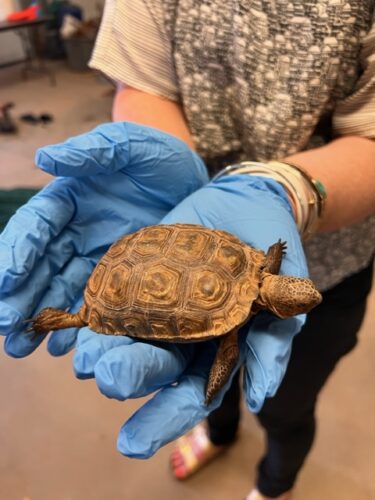
The Utah Division of Wildlife Resources currently has 15 desert tortoises available for adoption and is accepting applications.
SANPETE COUNTY — Utah residents interested in adopting an unusual but low-maintenance pet may have the opportunity to provide a home for one of 15 captive desert tortoises currently available through the Utah Division of Wildlife Resources Desert Tortoise Adoption Program.
The program helps place Mojave desert tortoises that cannot be returned to the wild due to health concerns or legal restrictions.
Mojave desert tortoises, native to areas north and west of the Colorado River in Arizona, Utah, Nevada and California, were listed as threatened under the federal Endangered Species Act in 1990. Because of that designation, they are protected under both federal and state law.
In Utah, it is illegal to collect desert tortoises from the wild, release captive tortoises back into natural habitats, or transport tortoises into the state without proper certification.
According to DWR officials, removing tortoises from the wild can have serious consequences for native populations.
“Removing tortoises from the wild can harm wild populations by reducing their ability to reproduce and sustain themselves on the landscape,” said Alyssa Hoekstra, native herpetology coordinator for the DWR.
Hoekstra said tortoises taken from the wild cannot safely be returned because of the risk of spreading disease, particularly upper respiratory tract disease, which can severely impact wild tortoise populations.
“We are concerned primarily about the upper respiratory tract disease, spread by the release of sick captive tortoises and associated with population declines in the wild,” she said. “This disease causes symptoms similar to pneumonia.”
In Utah, the native range of the Mojave desert tortoise is limited to Washington County, where growing development and outdoor recreation have led to more frequent encounters between people and tortoises.
The DWR often takes possession of captive tortoises when someone illegally removes one from the wild, illegally keeps one without proper permits, or when adopted tortoises are surrendered because families relocate.
The Utah Desert Tortoise Adoption Program was established in the 1990s to provide permanent homes for tortoises that cannot be released back into the wild.
Officials say captive tortoises can make excellent pets for the right owner.
“Captive tortoises make great pets,” Hoekstra said. “They have their own unique personality, they will gladly eat the weeds in your backyard, and they are fairly independent as long as they have shade and food.”
She added that tortoises also hibernate for about five months each year, making them a relatively low-maintenance companion animal.
However, adopting one is a long-term commitment. Desert tortoises can live between 60 and 70 years, and adopters are responsible for all veterinary expenses throughout the animal’s life.
Those interested in adopting must live in Utah, but they cannot reside in Washington County. Applicants must first submit an application by emailing tortoise@utah.gov and pay a $10 handling fee.
Potential adopters must also create both safe indoor and outdoor habitats that meet DWR guidelines. After the setup is inspected and approved, adopters must pay a $75 certificate of registration fee.
Wildlife officials remind residents that these protected reptiles are not typical pets and should only be adopted by those prepared for the long-term responsibility.
Most of Utah’s wild desert tortoise population lives within the Red Cliffs Desert Reserve, where more than 2,000 adult tortoises currently reside.
News
Gunnison Valley Hospital expands governing board to include more community representation
GUNNISON — Gunnison Valley Hospital is expanding its Governing Board to give more communities in the hospital's ...
Manti-La Sal National Forest lifts Stage 1 fire restrictions
Manti-La Sal National Forest lifts Stage 1 fire restrictions PRICE — Visitors to the Manti-La Sal ...