Utahns can catch a Near-Total Lunar Eclipse Thursday night
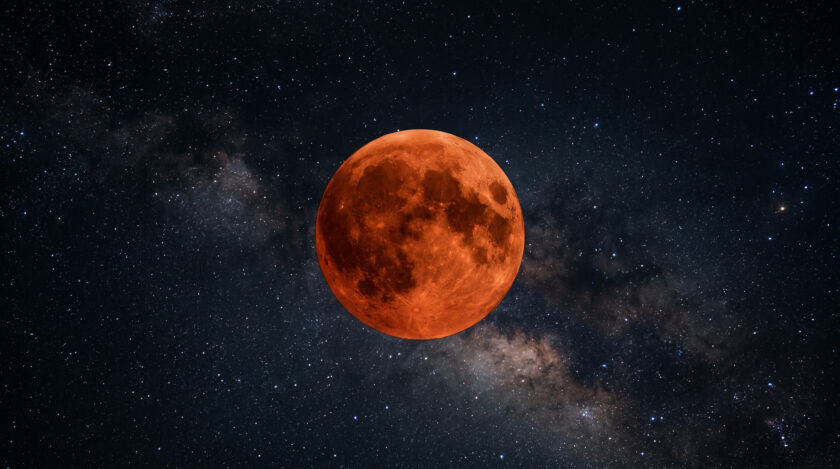
Utah "eclipsophiles" will have a chance to a near-total eclipse of the Moon the night of Thursday, the 27th.
Utahns who enjoy looking to the night sky will have another opportunity to witness a celestial event Thursday night, Aug. 27, when the moon passes through Earth’s shadow in what will be a near-total lunar eclipse.
The event will give Utah skywatchers a chance to see most of the moon disappear into Earth’s dark shadow, with the possibility of some of the reddish and other colors commonly associated with total lunar eclipses.
Patrick Wiggins, NASA/JPL Solar System Ambassador to Utah, said the eclipse will begin shortly after 8:30 p.m. Thursday as the moon enters Earth’s dark, umbral shadow.
There is one challenge for those hoping to catch the beginning of the event: The moon will be relatively low in the eastern sky. For residents in areas surrounded by mountains, including much of Utah’s mountain valleys, the surrounding terrain could make the early stages of the eclipse difficult to see.
By the time the eclipse reaches its maximum shortly after 10 p.m., however, the moon should have climbed high enough in the eastern sky to provide a much better view for observers across the state.
While the event will not technically be a total lunar eclipse, it should come close. At maximum eclipse, a small portion of the moon will remain outside Earth’s darkest shadow.
That small uncovered section means the eclipse will officially be classified as a partial lunar eclipse. However, much of the moon will be immersed in the umbra, and viewers away from city lights may be able to see some of the colors that make total lunar eclipses such an interesting sight.
During a total lunar eclipse, the moon can take on shades of red, orange or copper as sunlight passes through Earth’s atmosphere before reaching the lunar surface. The effect is sometimes referred to as a “blood moon.”
The amount and intensity of color can vary depending on atmospheric conditions around Earth at the time of the eclipse. For Thursday night’s near-total event, getting away from bright city lights could improve the experience, particularly when trying to see subtle changes in the moon’s appearance.
The eclipse will continue through the evening, with the moon leaving the dark, umbral portion of Earth’s shadow just before midnight.
After that, the moon will continue moving through Earth’s much fainter penumbral shadow for approximately another hour. While technically still part of the eclipse, the shading will be considerably more difficult to notice.
For most observers, the best viewing opportunities will come between the beginning of the partial eclipse and the time of maximum eclipse.
The event is also a reminder of just how uncommon opportunities to see a total lunar eclipse from Utah can be. According to Wiggins, Utah will have to wait until 2029 for its next total lunar eclipse, when the moon will once again pass completely into Earth’s umbral shadow.
Skywatchers looking even farther ahead will have an even longer wait for another major eclipse event. The next total solar eclipse visible from Utah will not occur until 2045.
Unlike a solar eclipse, which requires proper eye protection when viewed directly, a lunar eclipse is completely safe to watch with the naked eye. No special glasses, filters or other viewing equipment are required.
A pair of binoculars or a telescope can make the moon’s surface and changing shadow even more interesting, but neither is necessary to enjoy the event.
For those planning to watch Thursday night, finding a location with an unobstructed view toward the east will be especially important early in the evening. As the moon rises higher, the surrounding terrain will become less of a concern.
Clear skies, of course, will be the final requirement.
For Utahns who missed the opportunity to see this month’s total solar eclipse — and for those whose view of February’s total lunar eclipse was spoiled by clouds — Thursday night offers another chance to step outside and look upward.
The near-total lunar eclipse may not provide the perfectly covered moon of a total eclipse, but with most of the lunar surface passing into Earth’s darkest shadow, it should still offer a memorable show.
And unlike many astronomical events, there is no ticket to buy, no special equipment required and no need to travel far.
All that is needed is a clear night, an open view of the eastern sky and a few minutes to look up.