Local Olympians: Rovetti and Sedrick win bronze in rugby, Jimmer loses to Serbia in 3×3
-
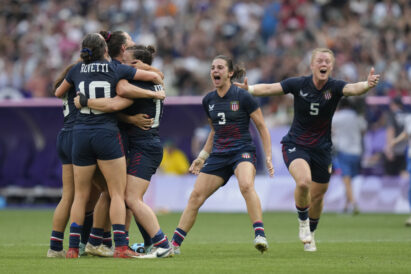
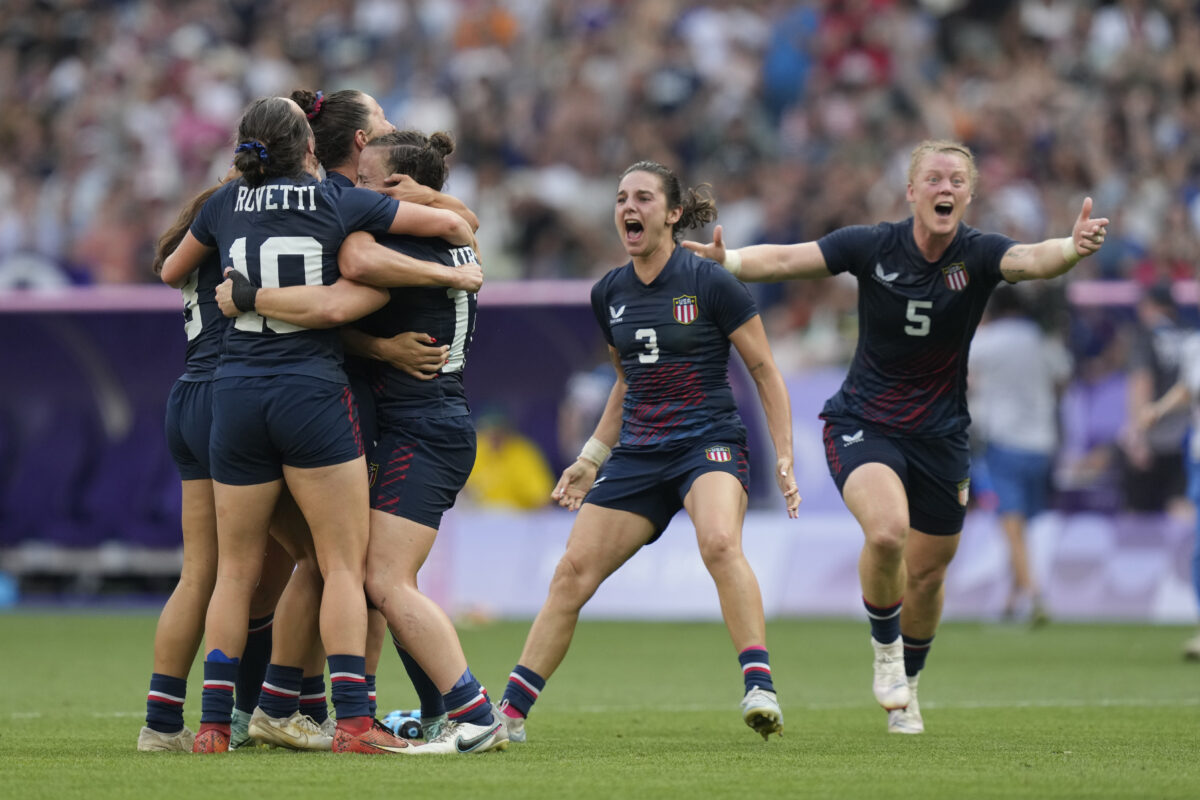
- The United States team including former BYU women’s basketball player Stephanie Rovetti (10) celebrate after winning the women’s bronze medal Rugby Sevens match between the United States and Australia at the 2024 Summer Olympics, in the Stade de France, in Saint-Denis, France, Tuesday, July 30, 2024. The US won the game 14-12. (AP Photo/Vadim Ghirda)
-
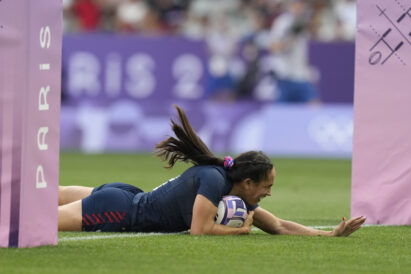
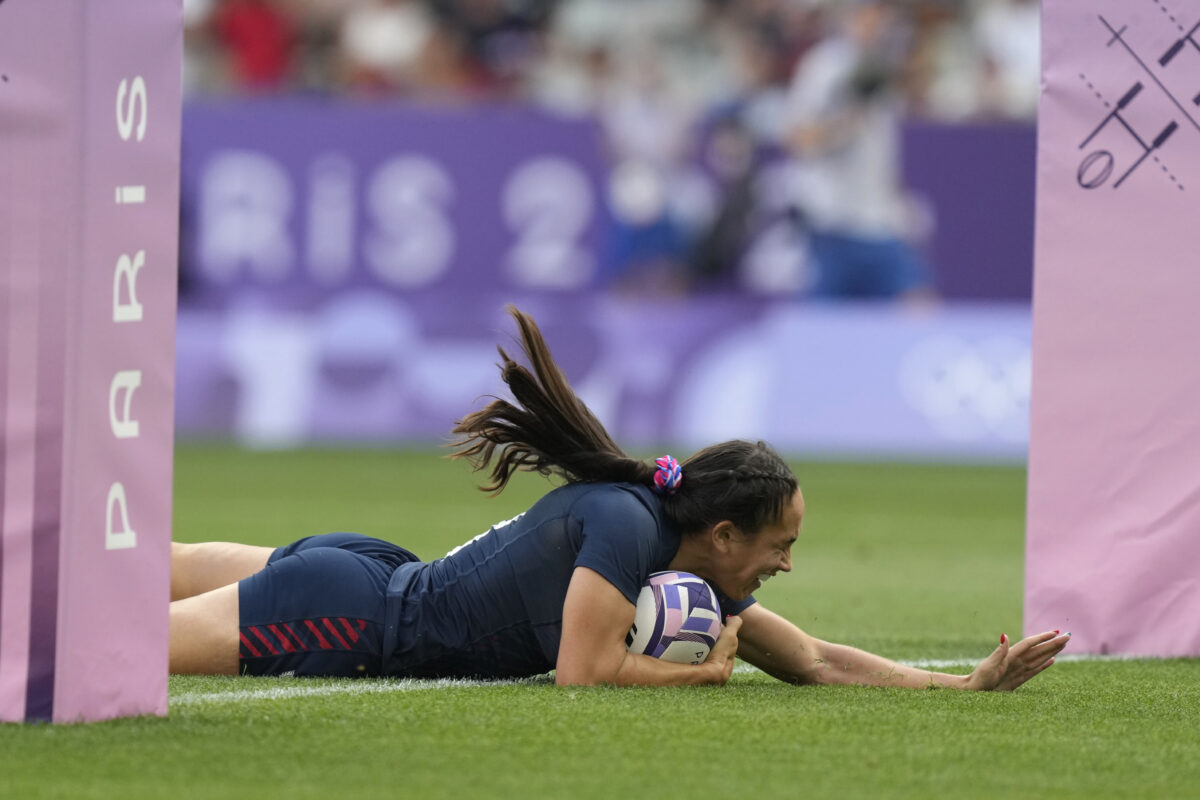
- United States’ Alex Sedrick scores the winning try during the women’s bronze medal Rugby Sevens match between the United States and Australia at the 2024 Summer Olympics, in the Stade de France, in Saint-Denis, France, Tuesday, July 30, 2024. The US won the match 14-12. (AP Photo/Vadim Ghirda)
-
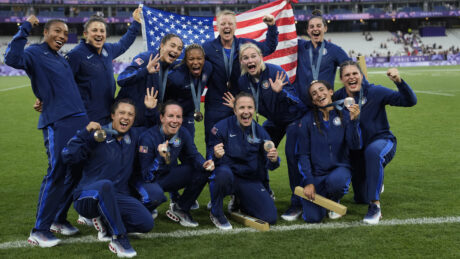
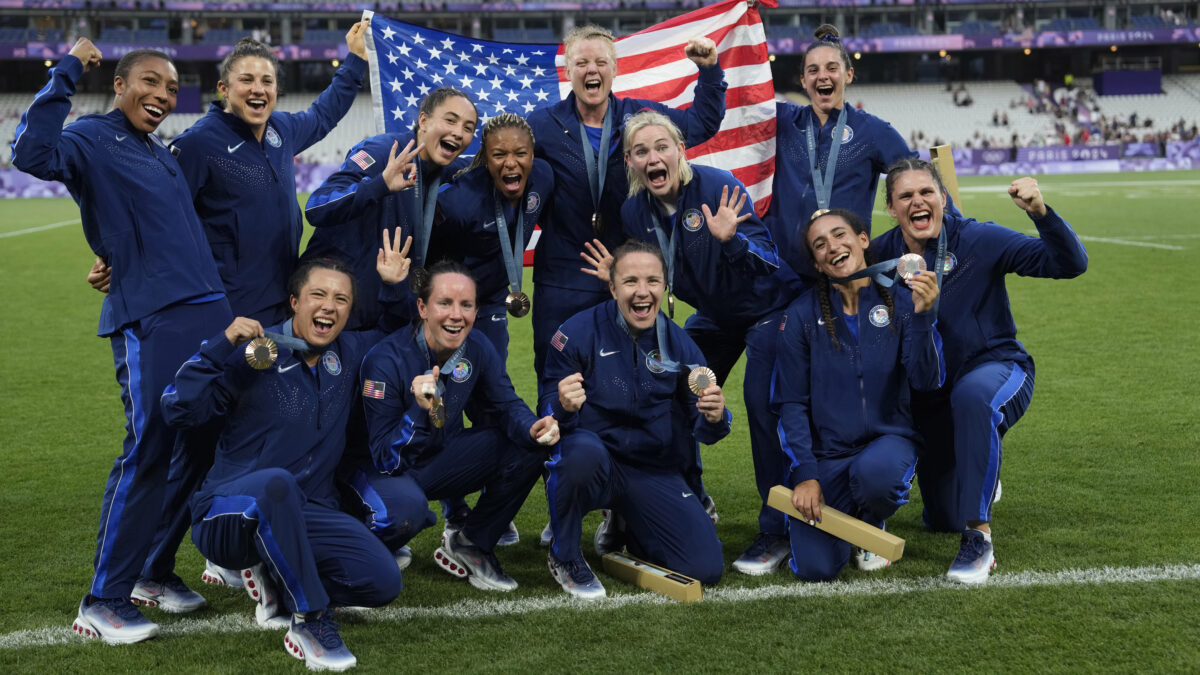
- Members of the United States Rugby Sevens team pose for the media with their bronze medals after the medals ceremony at the 2024 Summer Olympics, in the Stade de France, in Saint-Denis, France, Tuesday, July 30, 2024. (AP Photo/Vadim Ghirda)
-
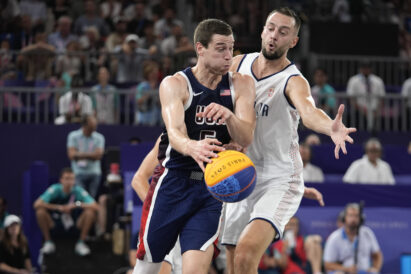
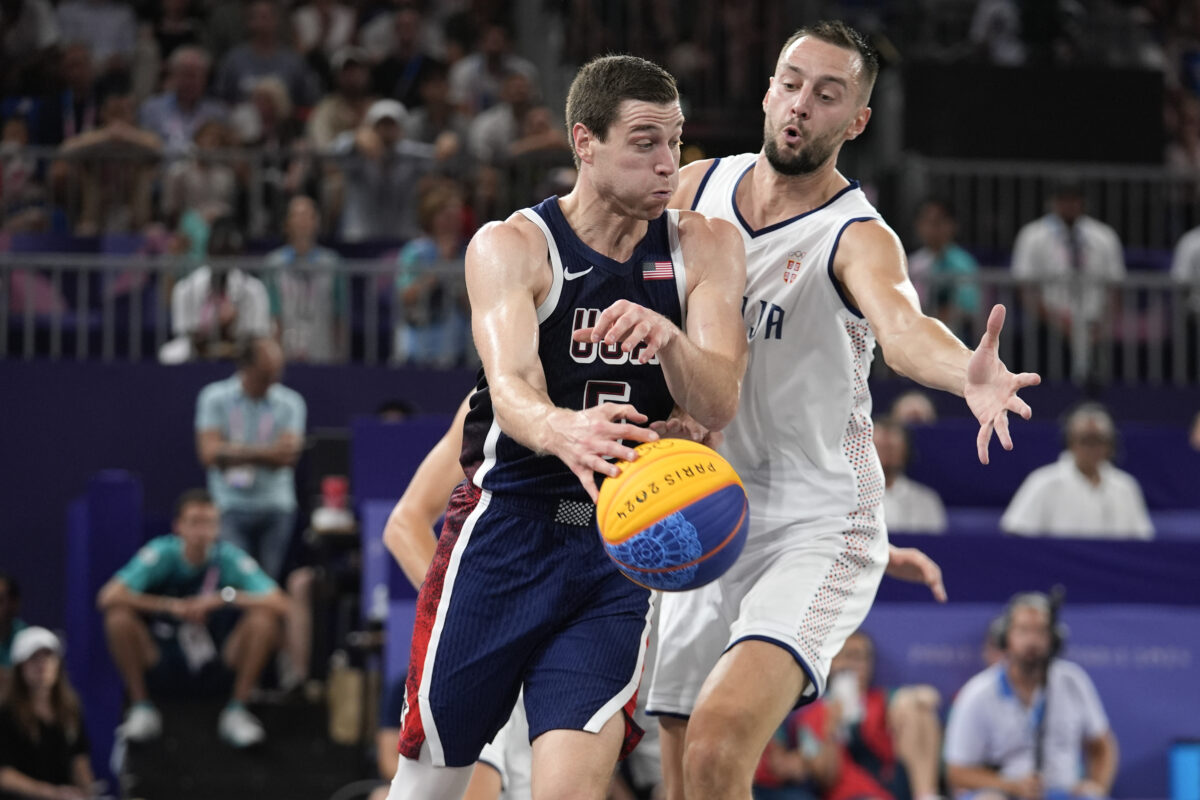
- Jimmer Fredette of the United States comes under pressure from Marko Brankovic of Serbia in the men’s 3×3 basketball pool round match between Serbia and the United States at the 2024 Summer Olympics, Tuesday, July 30, 2024, in Paris, France. (AP Photo/Rebecca Blackwell)
Two former BYU basketball players and another athlete from Salt Lake City experienced the highs and lows of competition at the Olympics in Paris on Tuesday.
Ex-Cougar superstar Jimmer Fredette’s USA men’s 3×3 team had a tough loss, while former BYU women’s hoops player Stephanie Rovetti turned rugby star and Salt Lake City’s Alex Sedrick were part of a dramatic victory to win the bronze medal for the USA.
Here is what happened:
US women win a first Olympic medal in rugby sevens with a comeback victory over Australia
Alex Sedrick (who went to Herriman High) ran the length of the field, dived in under the posts and then calmly took the conversion, securing a first Olympic rugby sevens medal for the United States with a 14-12, last-minute upset over Australia.
Ilona Maher watched in awe as Sedrick bumped off two tacklers near her own tryline before sprinting all the way to the other end to score in front of a 60,000-plus crowd at Stade de France and spark jubilation for the Americans.
“I was kind of like, ‘What is this? No way? It was crazy because I was like, ‘No, there’s no way this is happening,” Maher said of the audacious, winning try. “And then for her to have to make the kick as well, and she’s not our kicker.”
The American women lost to defending champion New Zealand in the semis — their first experience at that level — but overcame a 12-7 deficit against the 2016 champion Australians with just seconds on the clock.
The Australians scored first via Maddison Levi — who set a record for most tries in an Olympic tournament — but Alev Kelter got the Americans back into it with a try to level before halftime.
Levi scored again with about two minutes to play but the Australians missed the conversion, leaving the door open if the Americans scored a try and converted it.
It’s a fast-paced game, much faster than traditional 15-a-side rugby. It’s two seven-minute halves, multiple matches daily over three days — and only seven players on each team on a full-size field. As all the coaches and players say, anything can happen.
For Sedrick, the game-breaking play was just an example of her “trying to channel my big girls. Ilona Maher. I’m just trying to be like her.”
Maher is the undisputed face of women’s rugby in America, but Sedrick’s long-range try is the defining image of the bronze medal game.
The American players and staff rushed onto the field to celebrate. Sammy Sullivan was in tears, after watching the finish from the sidelines. Maher raised both arms up in triumph.
Bruce Springsteen’s “Born in the U.S.A.” blared over the stadium speakers.
Former BYU women’s basketball player Stephanie Rovetti started the final play, catching the bouncing ball as the Americans found one final moment of magic.
She could be seen on the broadcast with her hands on her face and hugging her teammates, celebrating winning the bronze.
The U.S. women had to wait until after New Zealand beat Canada 19-12 in the final to take their place on the podium. Maher and teammates Naya Tapper, Kelter and Lauren Doyle had waited so long for this. Others, like U.S. Army captain Sammy Sullivan, were there for the first time.
Maher was a breakout social media star at the Tokyo Olympics three years ago, when her funny outtakes of life in the pandemic-era athletes’ village went viral.
But she was devastated after a quarterfinal loss to Britain. She did a lot of sports psychology and worked out how to stay centered and also keep promoting rugby and women’s sports and her team with her social media presence.
“I wanted to be good at social media — and I do a lot of social media — but also be a very good rugby player,” she said. “And that was important to me.”
The medal is evidence of that.
“It was important for me to show I am funny but I’m also the real deal and I also a very good rugby player,” she said. “And so it was important for me to show that you can be anything. You can be beast, beauty, brains.”
– John Pye, AP Sports Writer
US men fall to Serbia 22-14 in 3×3 men’s basketball
The U.S. men’s debut in Olympic 3×3 basketball at the Paris Games was one to forget.
The Americans fell to Serbia 22-14 on Tuesday night in their opening game of these Olympics after failing to qualify for the Tokyo Games.
Marko Brankovic had eight points and Strahinja Stojacic added seven, including a 2-pointer that ended it with 2:34 remaining, to lead Serbia, the bronze medal finisher in Tokyo.
The U.S. brought in former NBA player Jimmer Fredette after not qualifying for the last Olympics. But he managed just four points in the rout.
Kareem Maddox made a 2-pointer with about three minutes remaining to cut the lead to 18-14. But Dejan Majstorovic made 2-point shot before Dylan Travis missed for the U.S. to set up Stojacic’s game-winner.
Serbia didn’t miss a 1-point shot, making all 12 attempts, while the U.S. made just 10 of 16 of those opportunities, including a miss by Fredette on a wide-open layup.
Maddox had six points to lead the United States. Canyon Barry, who works as a scientist for a defense contractor, added two points and a rebound. He is the son of Hall of Famer Rick Barry.
Neither team talked to reporters after the game because of the threat of severe storms that were expected in the area.
– Kristie Rieken, AP Sports Writer