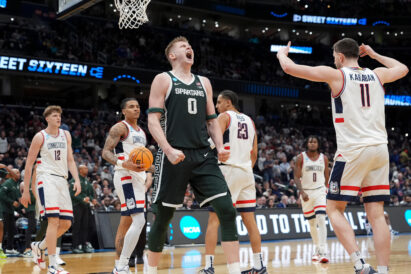
BYU has always made the most of post-season opportunities



-

- BYU head coach Kalani Sitake lifts the trophy as Cougar players celebrate after winning the 2024 Valero Alamo Bowl against Colorado at the Alamodome in San Antonio on Saturday, Dec. 28, 2024.
-
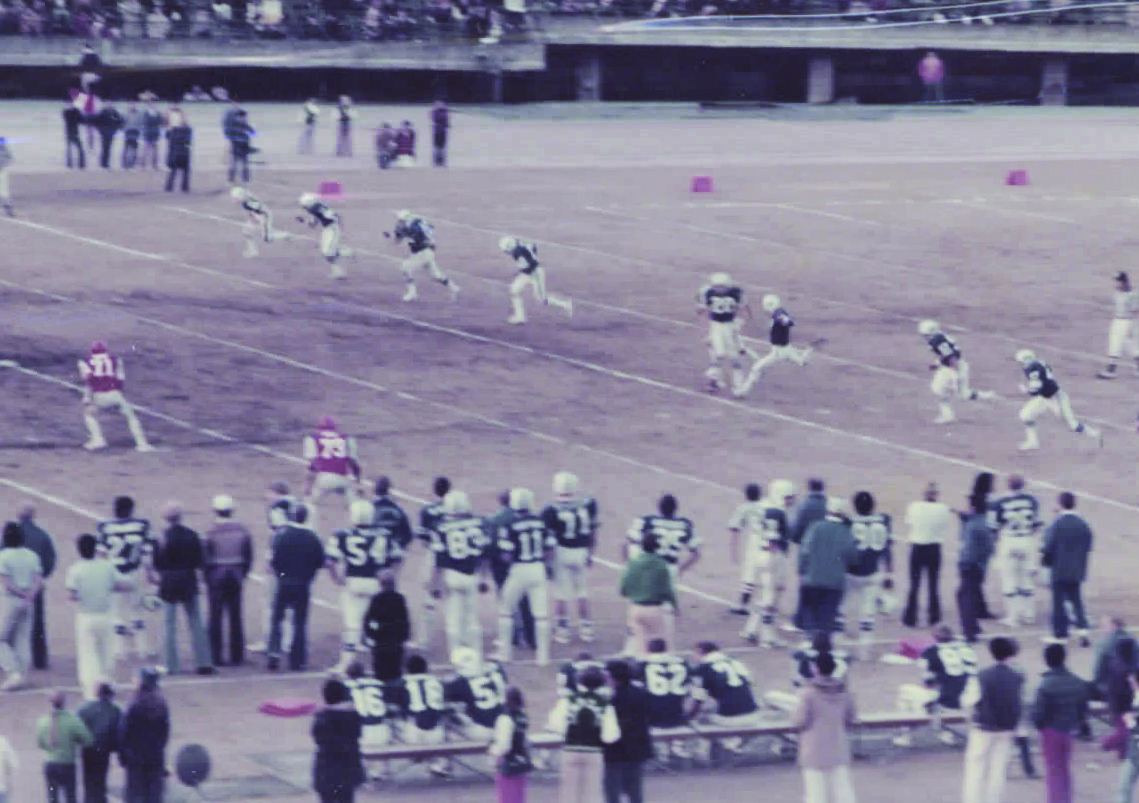
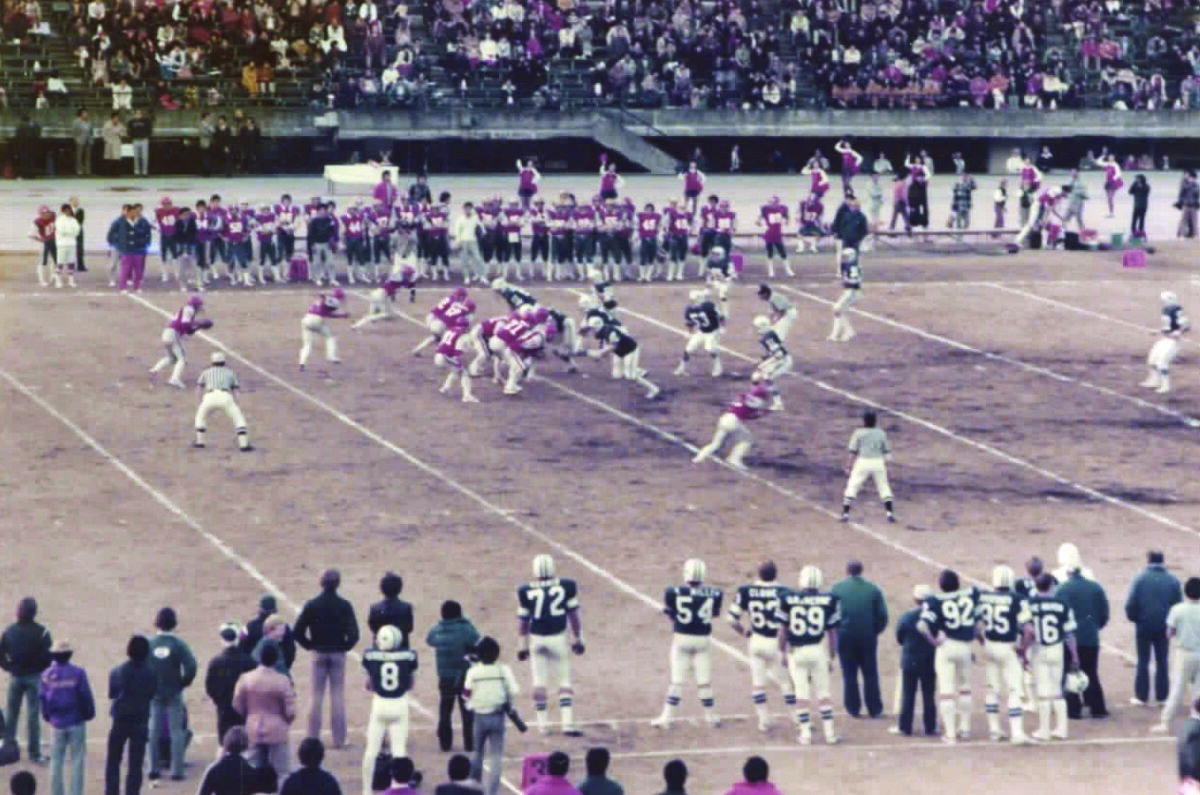
- BYU football competes against the Japanese All-Stars in the Silk Bowl in 1977.
-
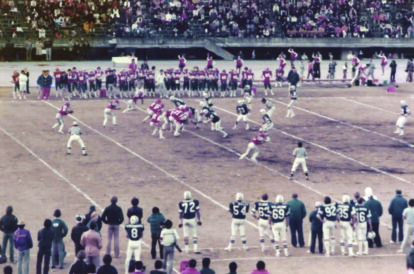
- BYU football competes against the Japanese All-Stars in the Silk Bowl in 1977.
-
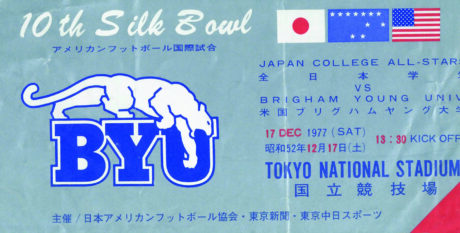
- BYU football competed against the Japanese All-Stars in the Silk Bowl in 1977.
-

- BYU’s Vai Sikahema (center) returns a punt for a touchdown against SMU in the 1980 Holiday Bowl in San Diego.
-

- Former BYU quarterback Jim McMahon celebrates his team’s comeback victory in the 1980 Holiday Bowl against SMU.
Where is college football headed?
It’s a loaded question with many possible topics of discussion.
For now, let’s concentrate on the future of the postseason.
What used to be a bevy of bowl games culminating with the big ones — Rose, Sugar, Orange, Cotton — on New Year’s Day has morphed into two separate tracks: The College Football Playoffs and then what amounts to exhibition games.
BYU and Georgia Tech will participate in one of those exhibitions on Saturday in Orlando, meeting in the Pop-Tarts Bowl at Camping World Stadium. As bowl games go, the Pop-Tarts version is pretty tasty as each team is guaranteed $3 million. It’s not chump change but pales in comparison to the $20 million total payout in the college football playoffs.
The NCAA has ceded power to the SEC and the Big Ten to decide if the playoffs, which jumped from three teams to 12 this season, increases to 16 or 24 teams over the next several seasons. That could mean a drastic reduction or even the end of the bowl season.
Which is a shame, because BYU had a long and storied bowl history.
It all started in 1974 when the Cougars earned an invitation to the Fiesta Bowl, which ended up a 16-6 loss to Oklahoma State. BYU lost its first four bowl games before scoring a win in one of the most famous comebacks in college football history, recovering from a 45-25 deficit with under three minutes to play for a 46-45 win in the Holiday Bowl against SMU on a Hail Mary from Jim McMahon to Clay Brown.
BYU beat Michigan 24-17 in the 1984 Holiday Bowl to clinch its only national championship. The Cougars played in one New Year’s Day game after the 1996 season, topping Kansas State 19-15 and ending up No. 4 in the final polls.
BYU has an 18-22-1 record in bowl games and played in sevens under Kalani Sitake, posting a 5-2 mark heading into Saturday’s game against Georgia Tech.
The postseason for the Cougars also included a trip to Japan for the Silk Bowl in 1977.
Ralph Zobell, a retired BYU sports information director, began his career one year earlier as an intern. His experience in Japan is a good example of the unique memories post-season opportunities other than the CFP can provide.
“BYU announced at the beginning of the 1977 season that if we won the league championship, we wouldn’t play in the Fiesta Bowl because Christmas Day was on Sunday,” Zobell said. “Some of the media thought we were smug, thinking we could win the title.”
The Cougars finished 9-2 and tied for first place in the Western Athletic Conference. True to its word, BYU didn’t accept the automatic bid to the Fiesta Bowl.
“Many among Cougar Nation felt the team should be rewarded with postseason play, but at that time there were only 15 bowl games and BYU’s reputation wasn’t as well known,” Zobell said. “Our men’s gymnastics coach at that time was Greg Sano (Hiromichi Sano Kawada), who was from Japan and with his help and that of the American Football Association of Japan, we were invited to the Silk Bowl.”
Zobell had served his mission to Indonesia and was selected to join LDS Church representative Charles Graves from New York City to promote the Silk Bowl against the Japanese All-Stars.
“We worked hard in preparation for the Japan trip, getting press materials translated into Kanji before leaving Provo,” Zobell said. “I arrived a week before the team to promote the game. I was featured at a press conference where I was told I must say that All-American quarterback Gifford Nielsen would be playing. I knew there was no way Nielsen could play after injuring his knee earlier in the season, but Japanese officials told me it would hurt ticket sales if I said otherwise.
“I hedged and when asked I said it would be a game-time decision and for them to ask Nielsen when the team arrived. Japanese newspapers featured of photo fo Nielsen barring his knee to show a zipper scar (from the surgery) when the Cougars landed.”
BYU easily defeated the Japanese All-Stars in both Tokyo (61-13) and Nagoya during its 10-day stay.
“When it came time to return home, the big American football players got bumped around by Japanese citizens on Christmas Eve and the Haneda Airport in Tokyo, so Cougars interlocked arms to stay afoot to get to their flight home,” Zobell recalled.
Those kinds of experiences are precious and will never be duplicated. All BYU head coach Kalani Sitake knows is that a bowl game is one more change to honor all the hard work that his staff and players done in nearly a year’s time.
“Everybody wants to win because they want to send their seniors out the right way,” he said in Orlando. “The truth is winning just makes saying goodbye easier. It’s going to be hard at the end of the day to say goodbye to our seniors who put so much work into our program. The bowl game has been amazing because it’s a great reward to players, their families, also our coaches, our staffs and their families.”
The Cougars may have missed out on the college football playoffs but Sitake is only looking forward.
“A playoff committee made the decision. We are okay. We will move on. This is not a consolation prize. This is something we were looking forward to, this matchup. We get to play football again.”
BYU Football Bowl History (18-22-1)
1974 Fiesta Bowl (Oklahoma State, lost 16-6)
1976 Tangerine Bowl (Oklahoma State, lost 49-21)
1978 Holiday Bowl (Navy, lost 23-16)
1979 Holiday Bowl (Indiana, lost 38-37)
1980 Holiday Bowl (SMU, won 46-45)
1981 Holiday Bowl (Washington State, won 38-36)
1982 Holiday Bowl (Ohio State, lost 47-17)
1983 Holiday Bowl (Missouri, win 21-17)
1984 Holiday Bowl (Michigan, won 24-17)
1985 Florida Citrus Bowl (Ohio State, lost 10-7)
1986 Freedom Bowl (UCLA, lost 31-10)
1987 All-American Bowl (Virginia lost 22-16)
1988 Freedom Bowl (Colorado, won 20-17)
1989 Holiday Bowl (Penn State, lost 50-39)
1990 Holiday Bowl (Texas A&M, lost 65-14)
1991 Holiday Bowl (Iowa, tied 13-13)
1992 Aloha Bowl (Kansas, lost 23-20)
1993 Holiday Bowl (Ohio State, lost 28-21)
1994 Copper Bowl (Oklahoma, won 31-6)
1997 Cotton Bowl (Kansas State, won 19-15)
1998 Liberty Bowl (Tulane, lost 41-27)
1999 Motor City Bowl (Marshall, lost 21-3)
2001 Liberty Bowl (Louisville, lost 28-10)
2005 Las Vegas Bowl (California, lost 35-28)
2006 Las Vegas Bowl (Oregon, won 38-8)
2007 Las Vegas Bowl (UCLA, won 17-16)
2008 Las Vegas Bowl (Arizona, lost 31-21)
2009 Macco Bowl Las Vegas (Oregon State, won 44-20)
2010 New Mexico Bowl (UTEP, won 52-24)
2011 Armed Forces Bowl (Tulsa, won 24-21)
2012 Poinsettia Bowl (San Diego State, won 23-6)
2013 Fight Hunter Bowl (Washington, lost 31-16)
2014 Miami Beach Bowl (Memphis, lost 55-48 2OT)
2015 Las Vegas Bowl (Utah, lost 35-28)
2016 Poinsettia Bowl (Wyoming, won 24-21)
2018 Famous Idaho Potato Bowl (Western Michigan, won 48-18)
2019 Hawaii Bowl (Hawaii, lost 38-34)
2020 Boca Raton Bowl (UCF, won 49-23)
2021 Independence Bowl (UAB, lost 31-28)
2022 New Mexico Bowl (SMU, won 24-23)
2024 Alamo Bowl (Colorado, won 36-14)
2025 Pop-Tarts Bowl vs. Georgia Tech
BYU
BYU’s Gibb helps lead Canada into FIBA final
Hamberlin’s second half brace leads No. 9 BYU past USC
BYU women's soccer coach Jennifer Rockwood said Emma Hamberlin hadn't trained a single minute at forward in ...