Garden Help Desk: Timing critical in controlling growth of foxtails
-
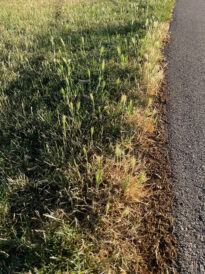
- Just like other weeds in lawns, foxtails often show up first at the edges where they can get an easier foothold.
-
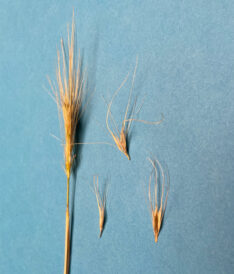
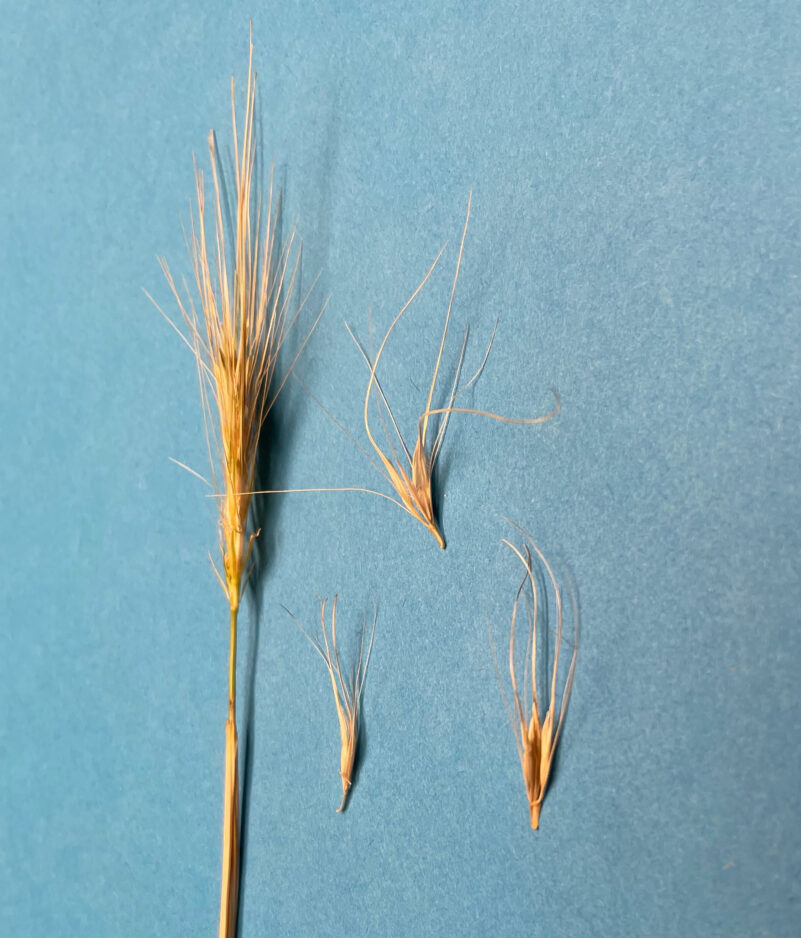
- The foxtail seeds that torment animals and irritate hikers begin as small flowers attached to a long floral spike. As the spike matures and dries, the individual seeds break away.
-
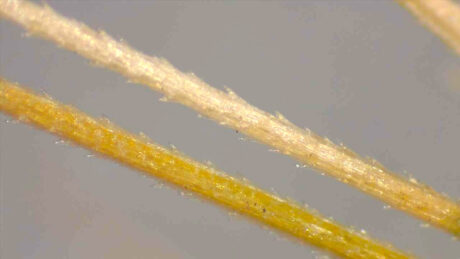
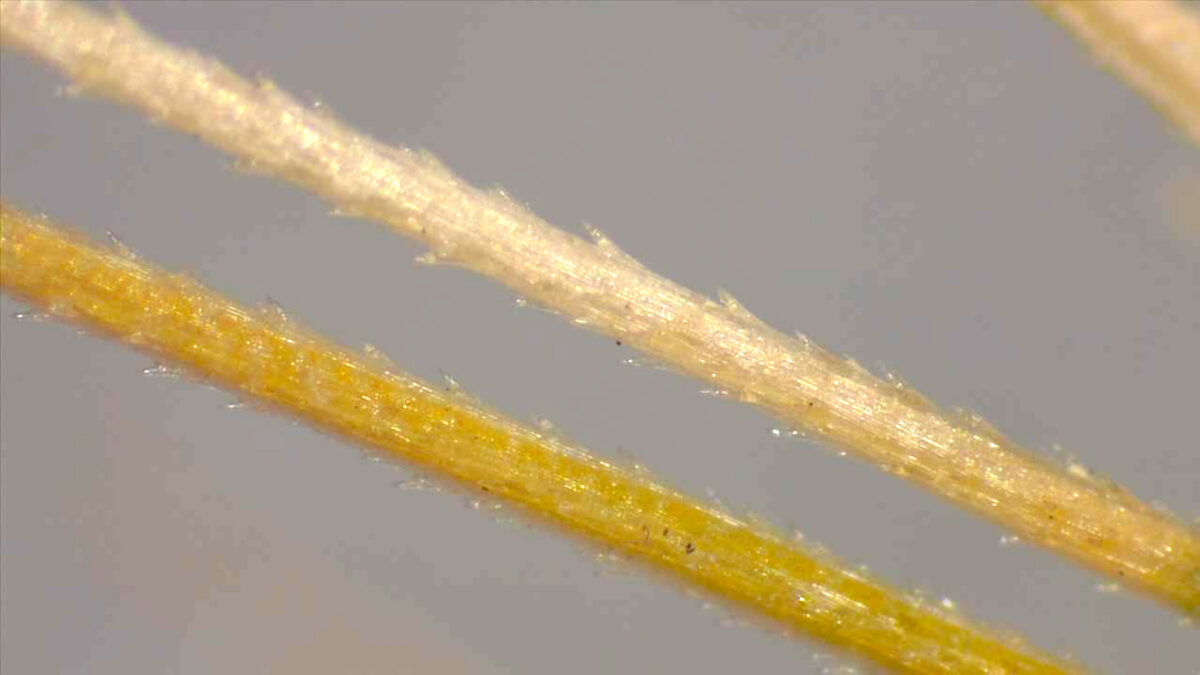
- Foxtail awns, the bristles that angle backward on the seed, are covered with tiny barbs that prevent the awn and seed from moving backward. These barbs are the reason it is so hard to pull out a foxtail once it become embedded in a pet’s skin or fur.
-
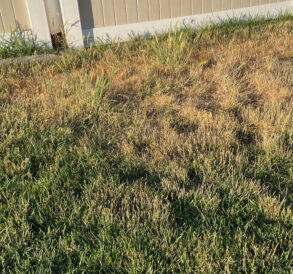
- Lawns with poor irrigation coverage or thinning turf are more prone to foxtail infestations.

Courtesy Meredith Seaver, USU Extension
Just like other weeds in lawns, foxtails often show up first at the edges where they can get an easier foothold.
I just spent several hundred dollars getting foxtails removed from my dog’s foot. I didn’t realize they could work their way so deep into his skin. How can I get rid of them and keep them from coming back?
May through early October is foxtail season and the time when pets are at greatest risk of foxtail injuries. There are several grass species whose individual seeds can pose a health risk for pets and other animals (foxtails, bromes, barleys, etc.), but their inflorescences (aka flower spikes or seed spikes) are all commonly called foxtails because of the shape of these long spikes.
Their common characteristic is narrow, pointed seeds with bristling awns that catch on fur, between toes, or on the face (eyes, ears, nose or mouth) and work their way deeper into the skin or eyes. As you’ve learned with your own dog, this can be very painful for the animal and expensive for you, but you might not know that embedded burrowing seeds can be serious or even life-threatening for dogs (and cats).
Foxtails aren’t only a problem for pets. They can also be a nuisance to children, hikers and gardeners, becoming embedded in socks, shoes and other clothing.
A foxtail seed is hard to pull out because everything about the seed is engineered for forward movement. The seed is pointed on one end, with bristling awns spreading behind. The awns are lined with microscopic barbs that increase a seed’s grip and forward motion and resist backward movement. It’s an effective strategy that helps the seed plant itself by moving it deeper into the soil.
Courtesy Meredith Seaver, USU Extension
The foxtail seeds that torment animals and irritate hikers begin as small flowers attached to a long floral spike. As the spike matures and dries, the individual seeds break away.
Foxtail are annual grasses, reproducing by seed every year. Your goal in eliminating foxtails is to prevent this year’s seeds from germinating and prevent new seed production for next year.
So, how can you get rid of any foxtails you see, and how can you prevent them in the future? That depends on how far we are into the season when you notice the problem and where the foxtails are growing.
The time to eliminate existing foxtails is when the plants are young and haven’t flowered yet. By May, the grass has flowered, and the seeds are maturing, breaking loose and collecting on the soil to catch on children’s socks and pets’ faces. We’re well past the point of getting rid of them this year. Instead, your focus should be cleaning up what you can. Thoroughly rake up and dispose of the dead grasses and seeds for now, but keep in mind that there will still be many seeds left to deal with next year.
Where are the foxtails? In your yard? On a hiking trail? A vacant lot? If they’re on your own property, there are some things you can do to reduce the problem in the future. If the plants are on public or private property, you can’t simply do as you please to solve the problem.
Your best choice for locations where you have no control over weeds and how they’re managed is to avoid those places with your dog. If you live near problem sites like that, take extra steps to prevent your dog from wandering off and getting into weedy patches.
Courtesy Meredith Seaver, USU Extension
Foxtail awns, the bristles that angle backward on the seed, are covered with tiny barbs that prevent the awn and seed from moving backward. These barbs are the reason it is so hard to pull out a foxtail once it become embedded in a pet's skin or fur.
The best defense against foxtails in your home landscape is a dense, healthy lawn, effective landscape watering with good coverage, and well-maintained mulch and vegetation in shrub and flower beds.
Foxtails can get a foothold in landscapes with poor irrigation coverage, especially in neglected yards or vacant lots. They’re more common along sidewalks, driveways, gravel parking and RV storage areas, roadways, shrub beds with bare soil, the edges of pastures, open fields, etc. Areas like these need regular inspection. If you see foxtails any place on your property where there aren’t desirable plants growing, you can use a Grass & Weed killer product while the plants are young. Once seed heads form, herbicides may kill the plants but won’t prevent the seeds from becoming a problem. Common weed killers for broadleaf weeds in lawns will not be effective.
Mowing your lawn 3 to 3.5 inches tall and using a mulching mower can shade the soil and reduce weed seed germination and seedling vigor. Using mulch in shrub and flowerbeds will do the same.
In addition to improved yard care, you can use a preemergent herbicide to prevent the germination and establishment of foxtail seedlings, especially in areas where you’ve had foxtails in the past. Any weed preventer that controls crabgrass will also be effective for controlling foxtails and other weedy grasses. Timing is important! Preemergent applications need to be made in the spring at about the same time you see forsythia shrubs blooming. Some of these grasses may also germinate in the cooler temperatures of the fall, so an application at summer’s end can be helpful. Read the label of your product carefully and follow the directions.
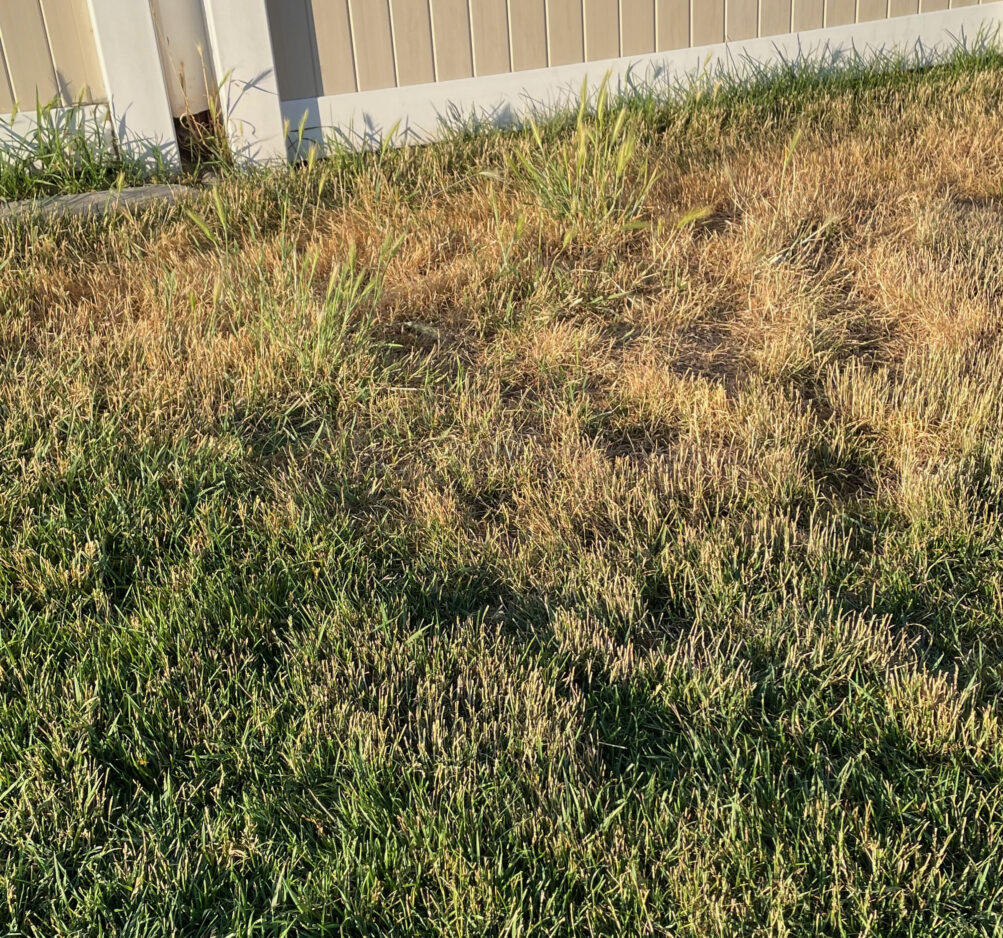
Lawns with poor irrigation coverage or thinning turf are more prone to foxtail infestations.