Garden Help Desk: Figuring out what’s damaging your lawn and garden
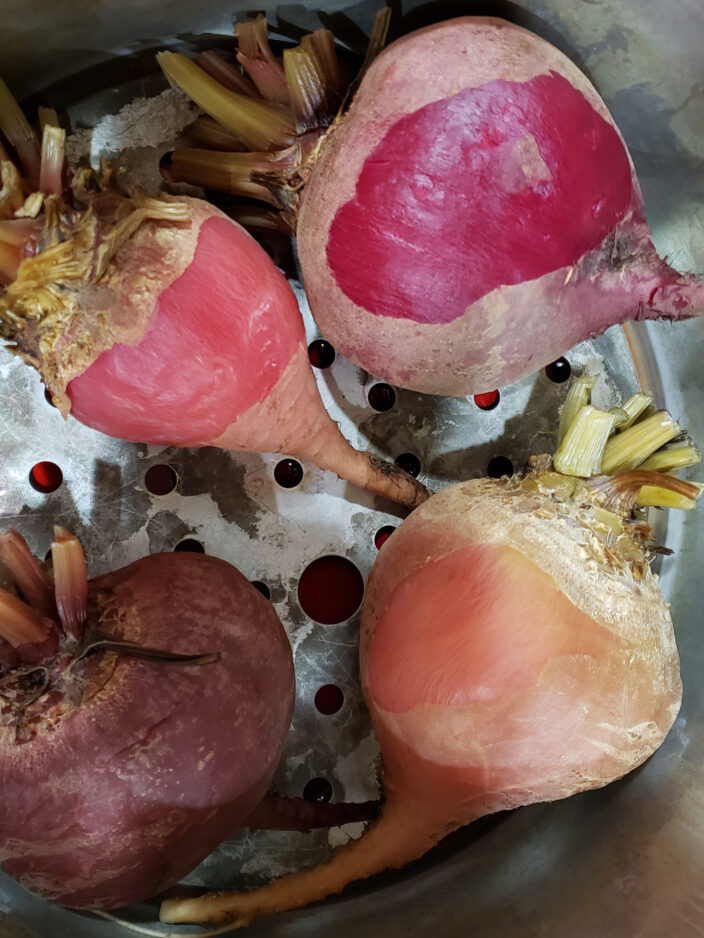
Heat stress, visible by its pale color, on beets. (Courtesy photo)
This has shown up in my park strip. What could be causing this?
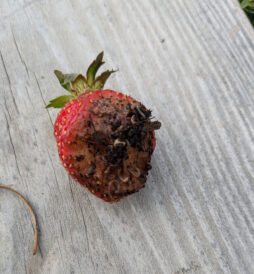
This looks like skunk, or possibly raccoon, damage. Based on the pattern of damage in your lawn, the most likely offender is a skunk. These animals can really make a mess of a lawn when they shred or peel back the grass looking for grubs, one of their favorite foods. The solution for this problem is to do some grub control in mid to late spring next year. There is no benefit to doing an insecticide application now. Look for a product that says it is effective for grubs. There are lots of beneficial insects in the lawn, so choose a product that targets grubs, webworms, and billbugs, not a product that kills lots of different insects.
Another thing that will help with grub control is to practice good lawn care. Egg-laying females of the beetles that cause grubs are attracted to the lush growth of overwatered, overfertilized lawns, and you don’t want to be encouraging them. Water deeply, but infrequently, and give the lawn adequate fertilizer but don’t overdo it. Enough is good, but extra isn’t better.
Some of my beets are dark red and some are a light pink and some have white layers in them. They’re all from the same seed packet, and they should all be dark red. Why are some of them a pale color? Are they all good to eat?
Also, some of them (most) push up out of the ground as they grow. Is that normal, or is there something I can do to get them to all grow deeper in the ground?

Damage done by presumably a skunk or raccoon. (Courtesy photo)
Beets can develop white rings or poor color because of inconsistent watering or high fluctuating temperatures. The beets are still good for eating.
The layers/rings on beet roots are laid down over the course of the summer, so our spells of very high temperatures could have caused pale layers in addition to entire beet roots that are pale instead of deep red.
You can’t do much about high temperature extremes like we had during the summer, but you can make sure you have good leaf coverage to shade the tops of the beets and reduce the temperature in their leaf canopy a bit. If you haven’t added compost or nitrogen to the soil in the last few years, that can make the difference between having enough leaves to produce good beet roots or having beet roots with a little sunscald on the top if we have extreme heat next summer. Just like any other vegetable crop though, enough compost or fertilizer is good, but extra can cause problems. This fall is a good time to collect a soil sample and send it to the Utah State University Analytical Laboratory, http://www.usual.usu.edu/home-soil/index for testing.
Another thing you can try is 20-30% shade cloth. It’s often used to protect vegetable and fruit crops from heat stress and sunscald. Shade cloth over crops can reduce the air temperature at crop level by a few degrees, which is often enough to make a difference between productive plants and stressed plants. Beets are a vegetable that can benefit from afternoon shade.
Watering is something you can control. For the best beets you need to avoid drought stress, but the soil should not stay wet either. You may need to water deeply about once every 3-7 days during the summer, depending on your soil type and the weather, then letting the soil dry a bit between waterings.
You’ve probably already learned that beets can get fibrous as they get larger and older but the same conditions that can cause pale beets, hot weather and water stress, can also cause beet roots to be tough or woody.
Don’t worry about the tops of the beet roots showing above the soil. This is normal as the beets “size up.” You can mound up soil over the tops of the beet roots if you feel like too much of the tops are exposed during our hot summer weather. Or you can mulch over the top of the plants. This will also improve the soil structure over time, which is also helpful when growing beets.
-
- Heat stress, visible by its pale color, on beets. (Courtesy photo)
-
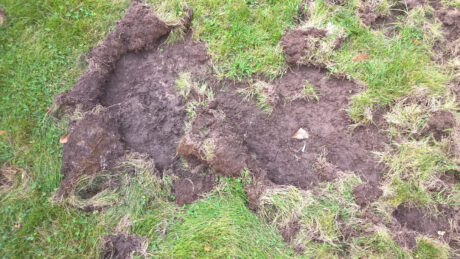
- Damage done by presumably a skunk or raccoon. (Courtesy photo)