Garden Help Desk: Safely identifying and deadheading your lilies
-
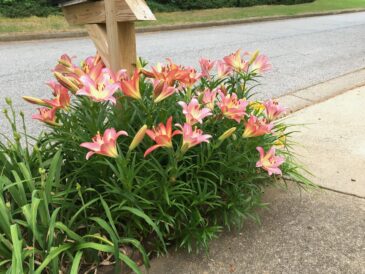
- Lilies are especially attractive when grown together in masses.
-
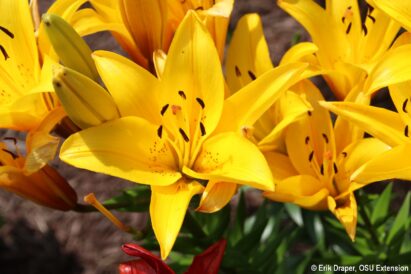
- Lilies are hardy and popular perennials in local flowerbeds.
-
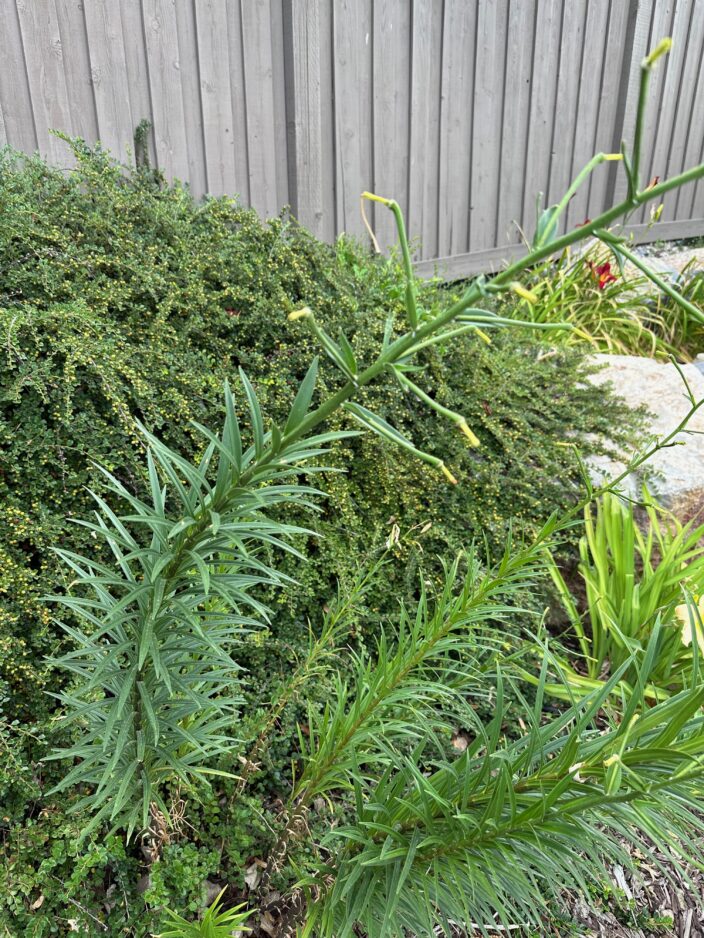
- Asiatic lilies bloom from early to mid-summer. When it’s time to cut back the flower stalk, only cut the stalk back to where it meets the uppermost leaves.
Courtesy photo
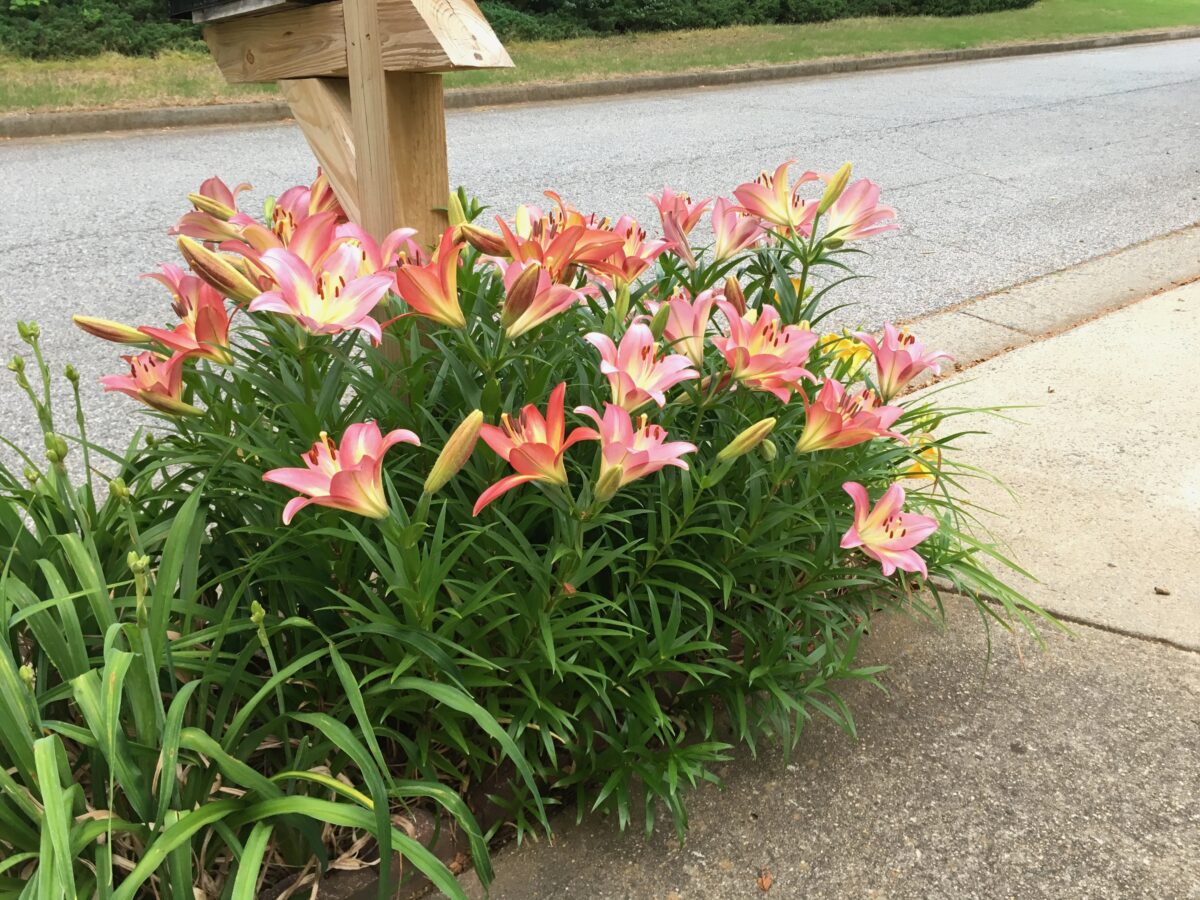
Lilies are especially attractive when grown together in masses.
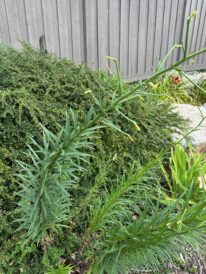
I think this plant is some kind of lily. The flower stalk is leaning out over the driveway and getting in the way. Can I cut it back now that it’s done flowering without hurting it?
Sure. Deadheading (cutting off the old flowers) is the right thing to do. Go ahead and cut back the flower stalk now to get it out of the way. Make your cut just above the first leaves at the base of the stalk.
When you leave spent flowers on the stalk, your lily may use some of its energy to produce seedpods, which is fine if you’re ambitious and want to try growing lilies from seed. If you don’t plan to collect some seeds, though, that extra energy is wasted instead of being stored and used for more vigorous growth and bigger, better blooms next year.
Every year, you can pinch off blossoms on the stalk as they fade instead of leaving them to drop their petals on their own. You can remove the bare stalk once the last flower on the lily has faded.
Don’t cut the rest of the plant clear back to the ground until after the leaves have turned yellow-to-brown in the fall. You want that leafy green foliage to keep creating carbohydrates for the rest of the season so that your plant can continue to store energy for next year.
Courtesy photo
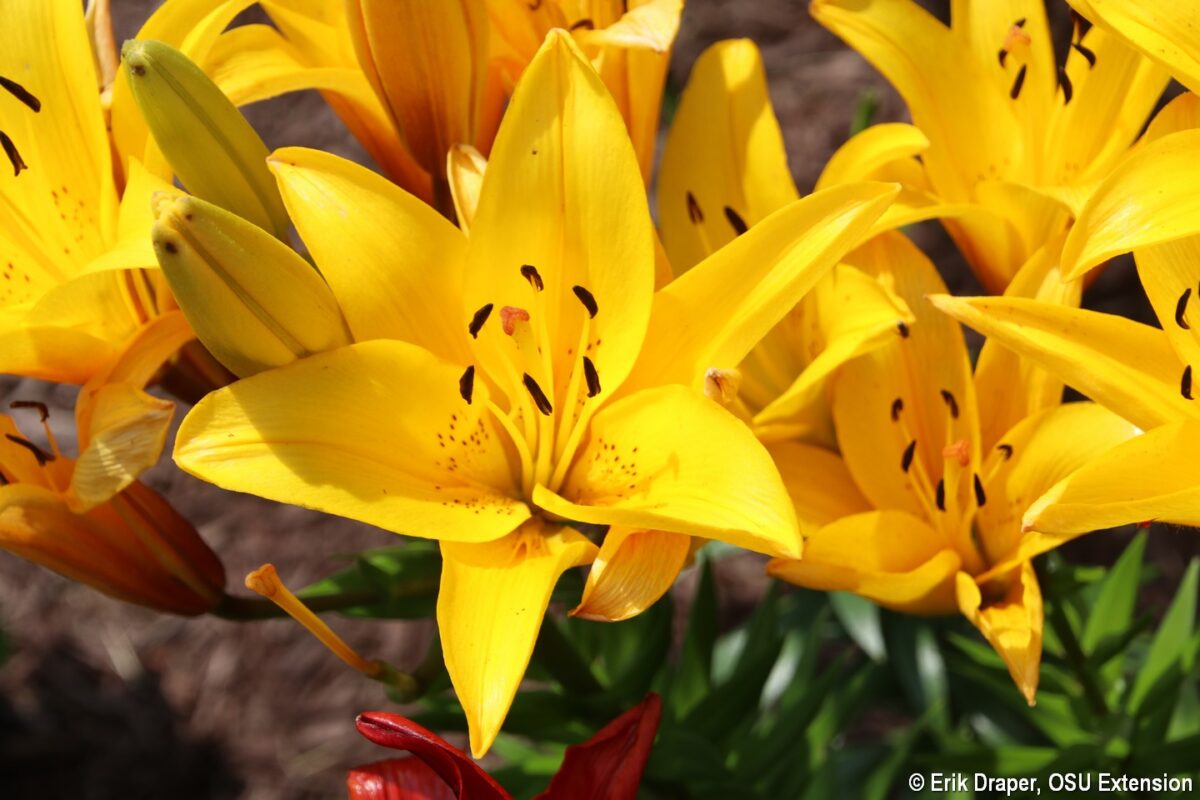
Lilies are hardy and popular perennials in local flowerbeds.
Last month I found small (3/8″) long black bugs with red spots on their heads on my two year old peach and nectarine trees. They could fly. What do you think they are? I don’t want bug problems next year. What can I spray to keep them away?
Your photos aren’t sharp enough for me to see the details I need for an ID, but based on your description, the general shape of the insects, plus the fact that they are on your peach and nectarine trees, you have most likely found some Western fireflies.
There are several firefly species in Utah and late May through the first part of July is prime firefly spotting season. I usually get one or two samples or photos at about this time of year from people who find them in their fruit trees. They are very beneficial predators of aphids, scale, and other small insect pests, so no spraying, please.
Your second question — “What can I spray to get rid of them” — is a question that comes to the Garden Help Desk frequently, but it reflects an attitude that we need to change. There are so many beneficial or harmless insects in our landscapes and gardens that our first question should be the one you asked at first — “What is this insect?” Then our second question should be, “Is this insect going to be a problem?”
Most of the time, spraying isn’t needed because the insect isn’t going to be a problem. If you’ve identified the insect, and you’ve learned it can cause damage in your landscape or garden, here are a few more questions to ask yourself before you reach for an insecticide.
Courtesy photo
Asiatic lilies bloom from early to mid-summer. When it's time to cut back the flower stalk, only cut the stalk back to where it meets the uppermost leaves.
Am I seeing any damage on my plants, and is it enough to affect the health of my plants or my harvest? Most often, we can tolerate some damage on our plants instead of using an insecticide that will also harm beneficial insects.
I can see there is more damage than I should ignore. What control method will be safest for beneficial insects but still do the job for me? Aphids can often be controlled with strong sprays of water- an inexpensive, readily available method. Insecticidal soap and horticultural oil would be next in line. They’re effective for the most common soft-bodied insects we have here, but less harmful for many of the beneficial insects.
What will the daytime high temperature be today? During hot weather, insecticidal soap, horticultural oil, or other sprays with an oil or soap ingredient can scorch leaves if the spray is wet when temperatures are high. Those products should be sprayed in the early morning or in the evening after temperatures are below 85 degrees so that the sprays are dry before the day heats up.