Garden Help Desk: Picking the best pumpkins and squash for your garden
-
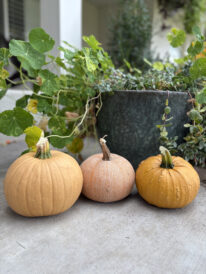
- The “Hot Chocolate,” “Winter Luxury” and “Grizzly Bear” varieties of pumpkins (shown from left to right) are all good choices for autumn decorating, but “Winter Luxury” is also a stand-out choice for cooking.
-
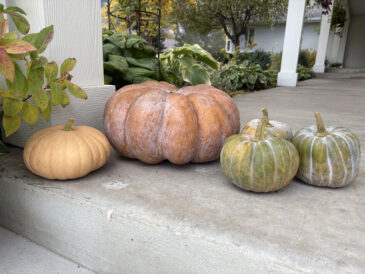
- The “Long Island Cheese,” “Musquee de Provence” and “Autumn” varieties of pumpkins (shown from left to right) are attractive decorative pumpkins that are also grown for their excellent flavor and texture.
-
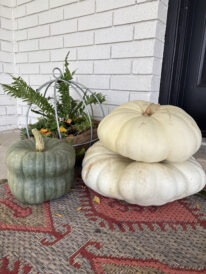
- “Queensland Blue” (at left) and “Flat Stacker” pumpkins belong to the same species as tasty “Kabocha,” “Hubbard” and “Buttercup” squashes as well as the record-breaking giant pumpkin varieties.
-
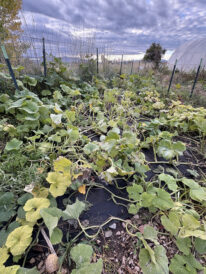
- Pumpkins can stay on the vine even after the vines begin to decline at the end of the season. It’s normal to have a few pumpkins on the vine that got a late start and didn’t have time to mature. You’ll know they’re ready for harvest when the rind (skin) of the pumpkin is too hard to scratch and the stem is dry and hard.
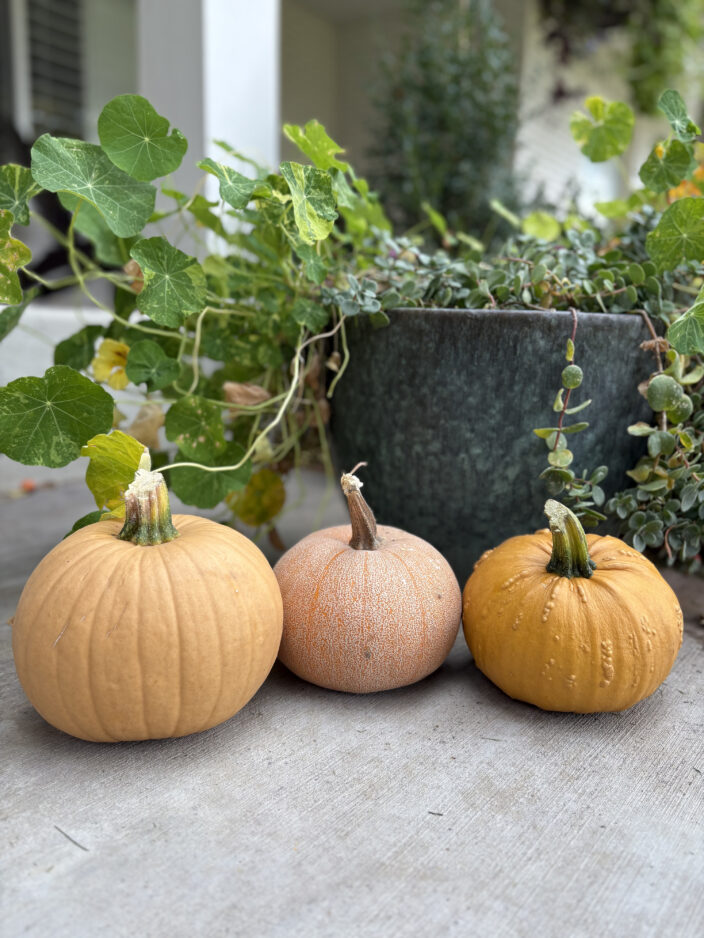
Photo by Elizabeth Binks
The "Hot Chocolate," "Winter Luxury" and "Grizzly Bear" varieties of pumpkins (shown from left to right) are all good choices for autumn decorating, but "Winter Luxury" is also a stand-out choice for cooking.
It’s fall, ya’ll! And that means displaying pumpkins on your porch and eating butternut squash with abandon. Perhaps you are wondering – what is the difference between all of these different winter squash? Are they easy to grow? And what can I do with them once I have them? Do I even have the space to grow vining crops like these?
Well, settle in and let’s talk squash.
Pumpkins and other winter squash belong to the Cucurbit family and are native to the Americas. These warm season annuals are directly sown or transplanted in late May and June along the Wasatch Front. The three main species of squash are Cucurbita pepo, Cucurbita moschata and Cucurbita maxima. Each has a particular set of characteristics and will not usually cross-pollinate with each other.
Cucurbita moschata: Some of the best-tasting winter squash belong to this group. It includes butternut types and the Dickinson pumpkin, which is the most common commercially canned pumpkin. With their flavorful, firm flesh, moschata squash are often roasted and used in soups, pies and desserts. This species is easy to grow as it is the most resistant to vine borers and squash bugs. Specific cultivars include “Waltham” butternut, “Musquee de Provence” and “Long Island Cheese.”
“Autumn Frost” is a particularly useful variety. Its sweet taste and colorful patina let it double as a delicious food and a stunning seasonal decoration. As a bonus, it also has good resistance to powdery mildew. It has excellent storage life as well.
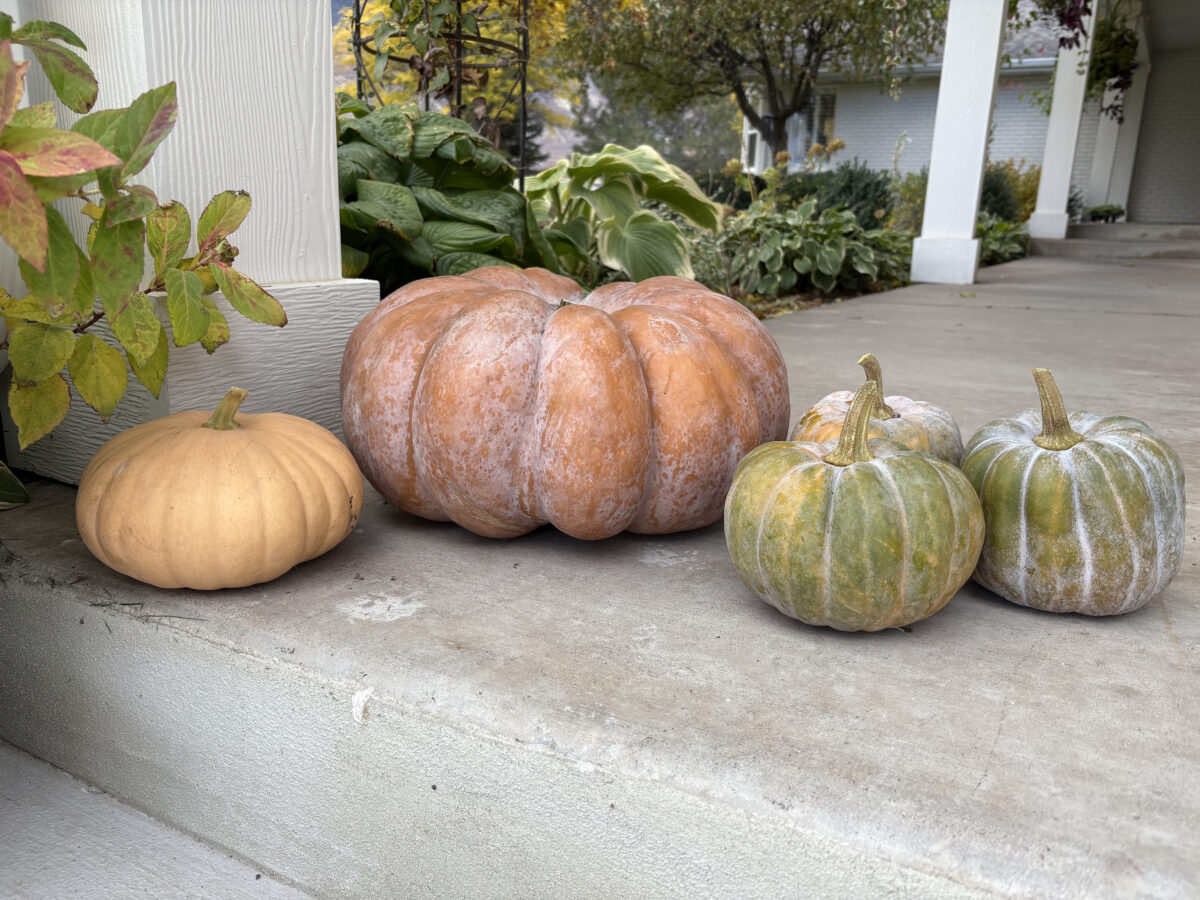
Photo by Elizabeth Binks
The "Long Island Cheese," "Musquee de Provence" and "Autumn" varieties of pumpkins (shown from left to right) are attractive decorative pumpkins that are also grown for their excellent flavor and texture.
Cucurbita pepo: This species includes most summer squash like zucchini, patty pan and crookneck. It also includes several winter squash such as acorn, delicata, spaghetti and many common pie and jack-o-lantern pumpkins. The flesh is often softer than other types and can be stringy. Pepos are only somewhat resistant to squash bugs and vine borers. Some fun cultivars of decorative pumpkins in this group include “Grizzly Bear,” “Hot Chocolate” and the tiny white “Baby Boo.”
While some pepo pumpkins are too stringy and bland to use for pies, “Winter Luxury” is a stellar option. Its netted golden-orange skin and smooth texture make it stand out amongst its peers. Some describe its taste as nutty, sweet and mild.
Cucurbita maxima: This versatile group includes kabocha, hubbard and buttercup squashes. It also includes most giant pumpkins. This species is the least resistant to vine borers and squash bugs and can be difficult to grow. However, it is worth the struggle to try to grow colorful cultivars such as gray-blue “Jarrahdale” and “Queensland Blue” as well as the white “Flat Stacker.” These charming varieties also double as excellent choices for soups, pies and other baked goods.
Planting: Squash prefer a sunny location and rich, well-draining soil. Amend the soil with a couple of inches of compost or balanced fertilizer before planting. Once soil temperatures have reached 65 degrees and the average last frost date has passed, plant three to four seeds directly in the soil 1 to 2 inches deep in mounds spaced roughly 4 feet apart. Water deeply and infrequently once the plants are established.
Keep the area weed-free and monitor for insects and other pests throughout the summer. Consider using mulch to conserve moisture and discourage weed germination.
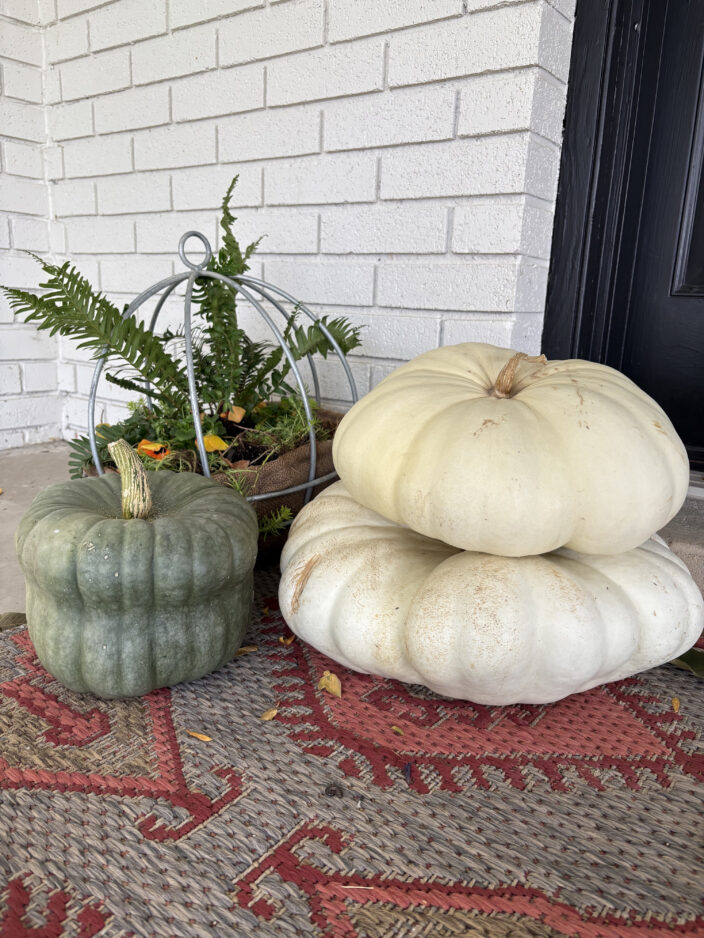
Photo by Elizabeth Binks
"Queensland Blue" (at left) and "Flat Stacker" pumpkins belong to the same species as tasty "Kabocha," "Hubbard" and "Buttercup" squashes as well as the record-breaking giant pumpkin varieties.
Vining crops can take up a lot of space when grown horizontally. Save space by growing them vertically on trellises. This method is best used for small- to medium-sized squash. Some gardeners support heavier squash with slings made from nylon or other material.
Harvest: It takes around 50 days for winter squash to mature after flowering. They are ready to pick once the skin is fully colored, the rind is hard (to the point that it does not dent when scratched with a fingernail), and the foliage has died back. Keep at least an inch of stem on each squash for better storage life.
To optimize sweetness and extend storage longevity, let squash cure in an airy, warm and dry place for around a week to 10 days. Store in a cool (50 to 55 degrees), dry place. Many winter squash store for three months or more.
Use: Besides serving as porch pumpkins and fall décor, winter squash are an excellent source of vitamins and minerals. They are low in calories and high in fiber. They can be served roasted, pureed, mashed and baked. Their nutrition, versatility and long storage life truly make them one of the best things to grow in your garden next season.
Elizabeth Binks is a horticulture assistant at Utah State University Extension.
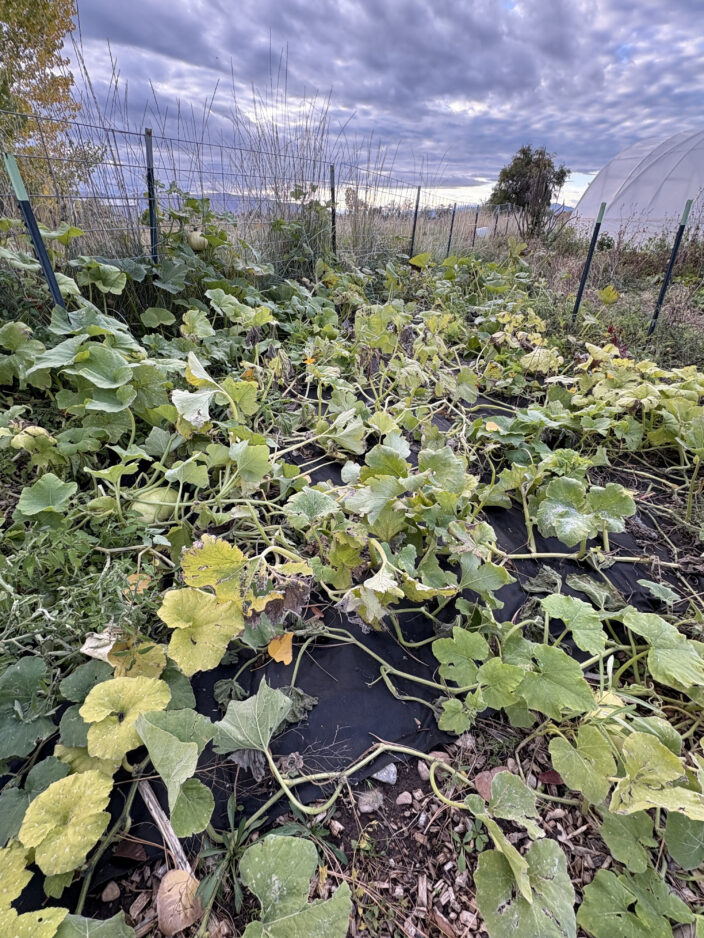
Photo by Elizabeth Binks
Pumpkins can stay on the vine even after the vines begin to decline at the end of the season. It’s normal to have a few pumpkins on the vine that got a late start and didn’t have time to mature. You’ll know they’re ready for harvest when the rind (skin) of the pumpkin is too hard to scratch and the stem is dry and hard.