Garden Help Desk: Easy solution for wilting raspberry plants
-
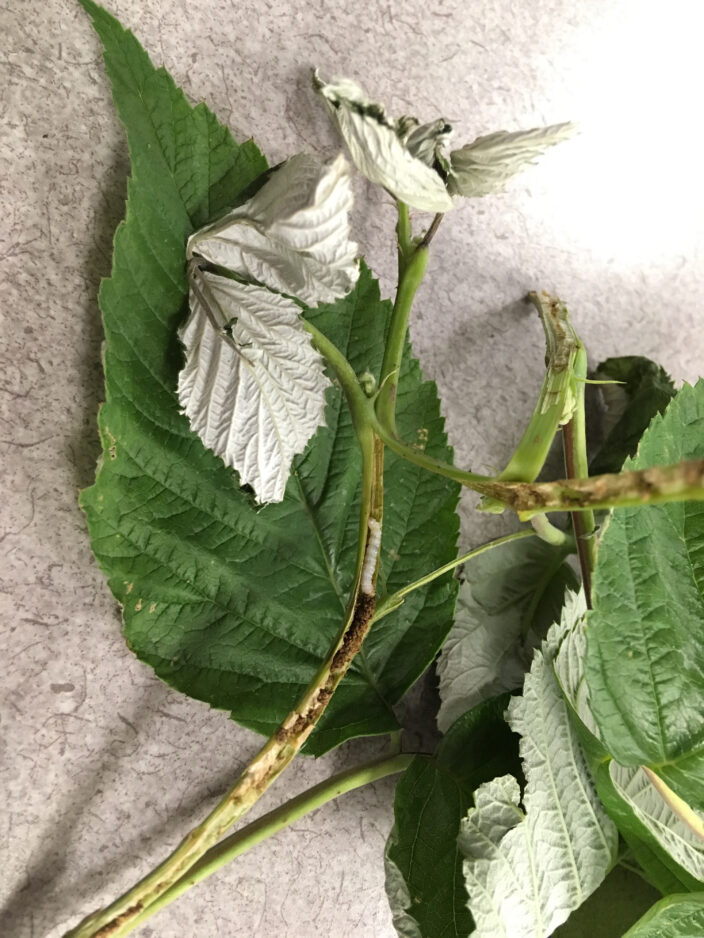
- Raspberry horntail larvae like this one feed inside the tops of canes, working their way several inches down the cane. The larva can be removed by pruning out the tip, but it needs to be pruned down beyond the brown grass (excrement) in the cane until you reach healthy, creamy-white pith.
-
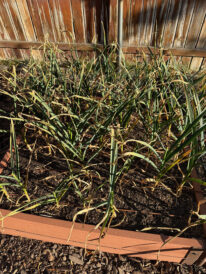
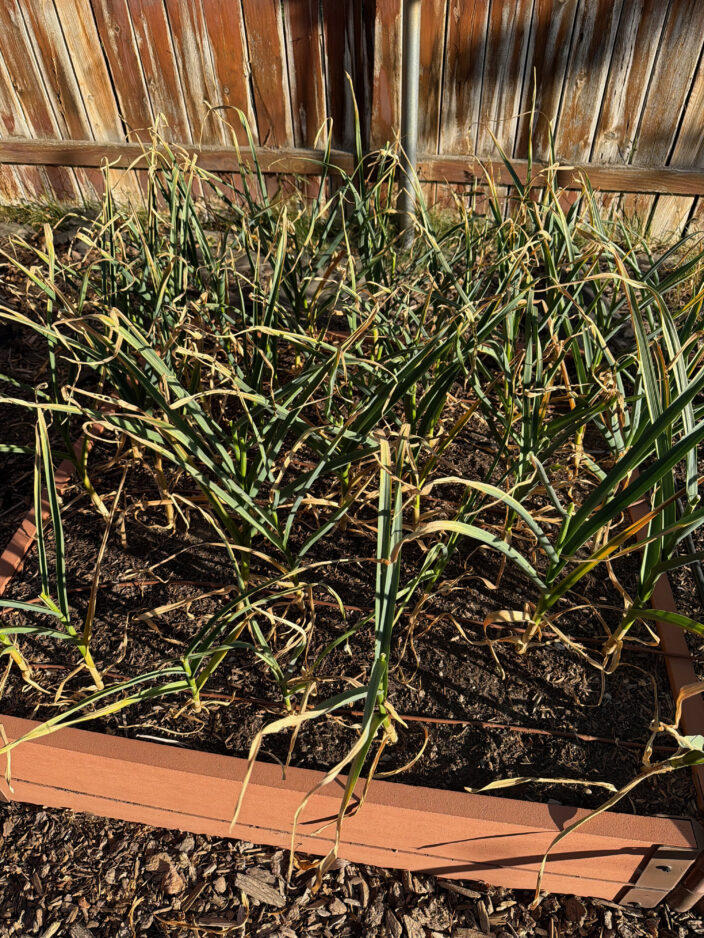
- This garlic is very ready to prepare for harvest. Watering should stop so the bulbs will be ready to lift from the soil several days later.
Your description sounds like your raspberries have some raspberry horntail damage. Raspberry horntails are sawflies, related to wasps and bees. Adult horntails that have overwintered inside raspberry canes begin to emerge in late May and and will lay eggs inside primocanes (new green canes). Egg laying extends into early summer while new primocanes are growing. The larvae will feed inside the canes, moving down from the tips of the canes as they feed. The damage from this feeding is what causes cane tips to wilt and die.
If you want to use an insecticide to prevent egg laying, synthetic pyrethroids or pyrethrin (an organic option) are effective. Insecticidal sprays are applied during the egg-laying season. Eggs and larvae are protected inside the canes, so any spray is only effective against the adults. A second spray needs to be applied about 10 to 14 days later, depending on the product you used. Insecticides should not be applied during bloom.
For most home gardeners, though, the best option is chemical-free, easier and more practical: simply prune out and dispose of affected cane tips. Don’t just leave the cane tips in the berry patch. If you are diligent in doing this about twice a week, it can significantly reduce the number of larvae that will overwinter and reinfest your raspberries the following year. Prune about inches below the wilting tips or until you see creamy-white, healthy tissue. You can also try to crush larvae by squeezing and pinching along affected cane tips if they are soft enough.
Healthy plants are generally less attractive to insect pests and less susceptible to diseases. Giving your raspberry plants good care is an important part of the integrated pest management program.
- Water your berries deeply and consistently but not too early in the season or too frequently (about once every 5 to 7 days, depending on the weather).
- Apply nitrogen in the early spring (about 3 to 5 pounds of ammonium sulfate).
- Add chelated iron to the soil in late spring and early fall if iron chlorosis has been a problem.
- Use an organic mulch when the soil is warm to help improve the soil, reduce weeds and even out soil moisture.
Get started on pruning out those wilting cane tips and you’ll be on your way to fewer horntail problems next year.
Should I stop watering my garlic? I wouldn’t usually harvest for a few more weeks, but the plants look ready now.
This is something we may be able to blame on the weather we’ve had so far this season: spells of colder and warmer weather than usual. I’ve walked past a couple of other gardens with garlic that looks nearly ready, and my own garlic is ahead of what I expected.
Yes, if your garlic tops have started to yellow, it’s time to stop watering. Don’t wait for them to dry completely as that extra watering can affect successful curing and storage.
Meredith Seaver is a horticulture assistant at the USU/Utah County Extension Service.