Garden Help Desk: Some timely tips for May gardening and frost-damaged trees
-
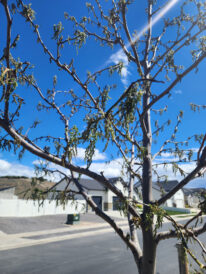
- Newly emerging leaves are very tender and can easily be damaged by a hard frost.
-
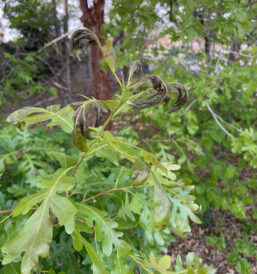
- It’s best to leave frost-damaged trees alone for a while. They shouldn’t be pruned or fertilized. Most trees with frost-killed leaves will put out new leaves after a few weeks.
-
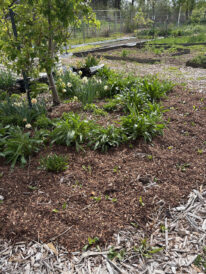
- Bark nugget or shredded bark mulch needs to be refreshed every year or two to reduce weeds, conserve water and keep the beds looking tidy.
Anonymous
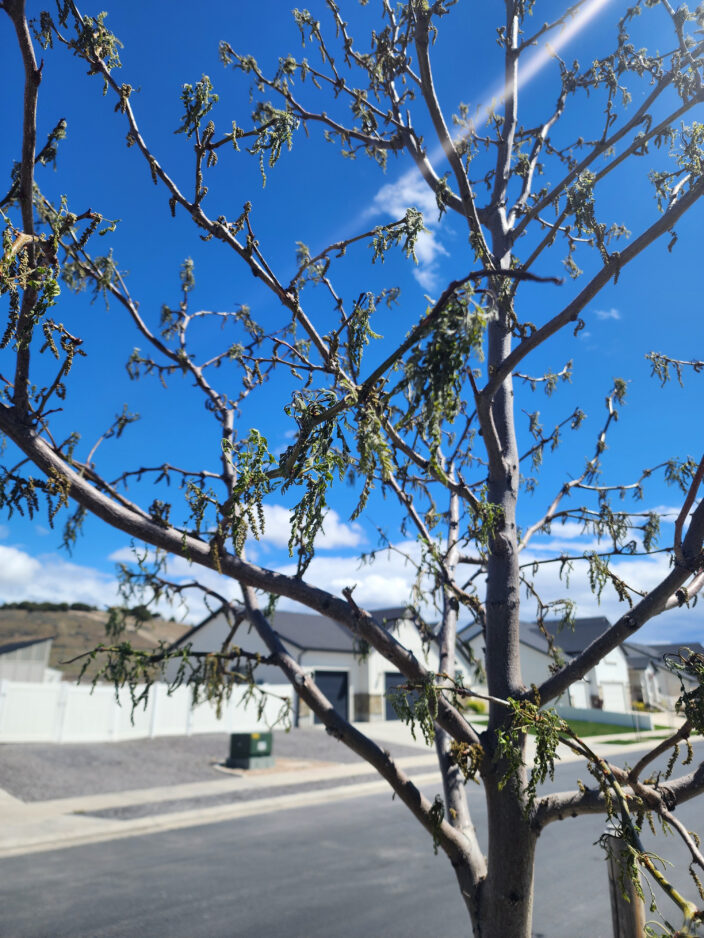
Newly emerging leaves are very tender and can easily be damaged by a hard frost.
May is the busiest month for most gardeners along the Wasatch Front. The average last frost date in this area is early to mid-May. This frost-free environment creates opportunities for a whole new set of warm-season crops. There is a lot to accomplish this month. Here are a few suggestions:
Plant nurseries will be extremely busy this month. Time your visit on weekdays to avoid the largest crowds. Choose healthy transplants; avoid plants that look nutrient-deficient or sickly. Root-bound transplants have a harder time getting established, so avoid those as well.
Before you plant your warm season annuals, harden them off to decrease transplant shock. Place them outside in a sheltered spot and gradually increase the amount direct sunlight they get over the next week. Remember to check at least a couple of times a day to see if they need water. They can dry out quickly.
Prepare garden beds if you haven’t already. Remove weeds and debris. Incorporate well-aged compost or other organic matter into the top 6 inches of soil. If possible, use a drip system to water your garden this summer and conserve water.
After the average last frost date, if the forecast looks frost-free, plant your warm-season annuals like tomatoes, peppers, beans and squash. Remember: there is no harm in waiting until the end of May or even early June to plant these vegetables as they prefer warm soil and warm air temperatures. Water daily for the first week, then slowly taper irrigation frequency as the plants become more established. Once established, water deeply two to three times a week depending on soil type and daily temperature.
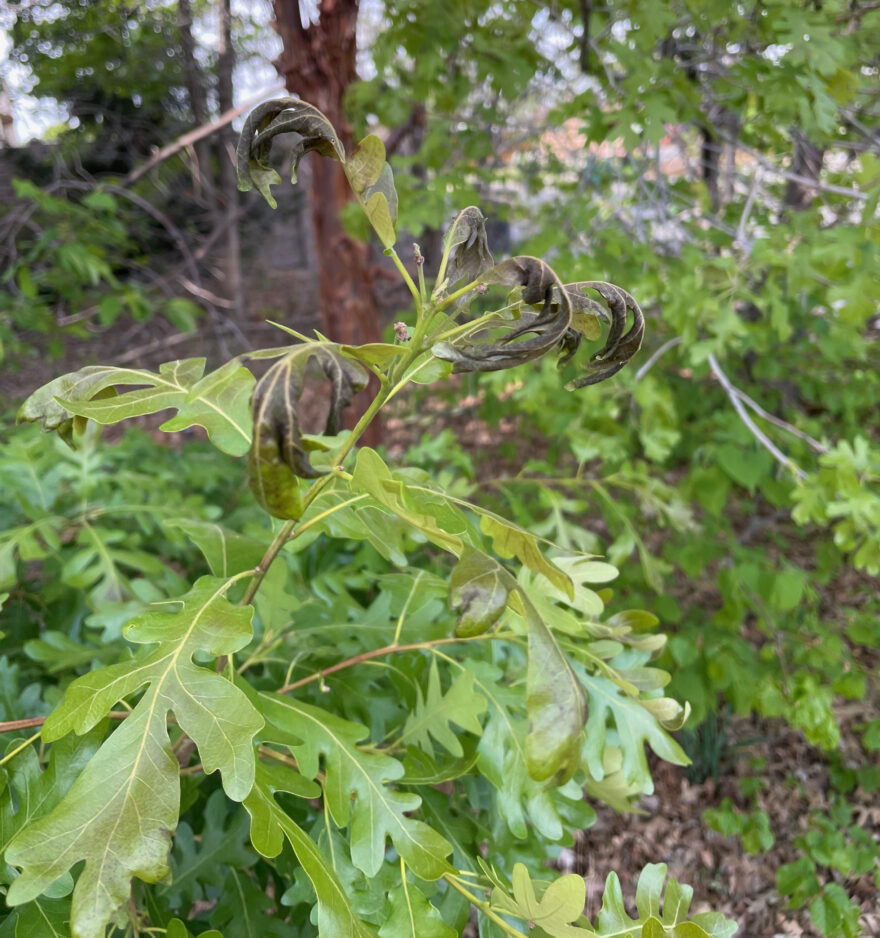
Photo by Meredith Seaver
It’s best to leave frost-damaged trees alone for a while. They shouldn’t be pruned or fertilized. Most trees with frost-killed leaves will put out new leaves after a few weeks.
Warm season annual flowers can also be planted this month. These include zinnias, marigolds, dahlias, petunias, and impatiens. Consider planting them in pots instead of landscape beds. Landscape beds full of shrubs, trees and perennials do not need to be watered as often as annuals. Annual flowers usually thrive in pots and they can provide a dramatic punch of color in the landscape. Add some slow-release fertilizer to the soil to keep them blooming all summer long.
Mulch, mulch, mulch. Applying 3 to 4 inches of mulch such as wood chips or compost to garden and landscape beds can greatly benefit your yard this year. Mulch reduces weeds and eventually breaks down to build your soil. It can also dramatically reduce water needs for your garden and helps keep your plants healthy. Remember that it is important to keep the mulch pulled back a few inches from the base of trunks to reduce the risk of rot, disease or infestation.
Scout and remove pests. Consider using a bait such as Eco-bran for young grasshoppers. Use light-weight row covers, completely covering susceptible crops, to prevent pests such as cabbage moths and squash bugs from reaching their preferred crops. For squash, remember to remove the cover when female flowers appear to allow for pollination. Early efforts to control young pests will benefit you later in the summer.
All the honey locust trees in my neighborhood look like the leaves are wilted and dying. Does this have anything to do with the snow drought? How can I help my trees?
Many plants on our hillside property are struggling, especially our shrub oak. Is this caused by winter drought or the late frost or something else. What can be done to save these trees?
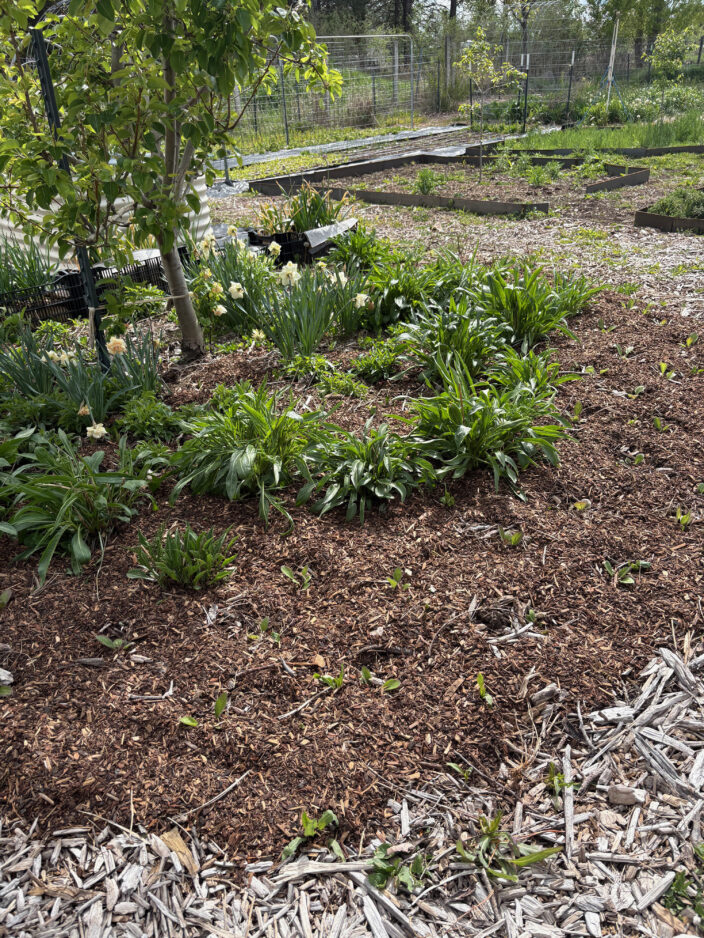
Photo by Elizabeth Binks
Bark nugget or shredded bark mulch needs to be refreshed every year or two to reduce weeds, conserve water and keep the beds looking tidy.
Last month’s cold temperatures froze our honey locust trees. Is there anything that can be done to bring a new crop of leaves? We are leery of pruning the honey locusts.
There are many trees in the valley with the same problem. Honey locusts, oaks and some other tree species throughout the valley were leafing out, with emerging leaves at a very tender stage, when we had the hard frost that killed or damaged emerging leaves. My own gamble oaks have some leaf damage from the recent hard frosts.
Do not prune. It isn’t needed. Don’t try to strip away dead leaves either as they may provide a little protective insulation for buds on trees in areas where there could still be some frost danger. Trees will typically re-leaf after a freeze like this.
Most trees like this will re-leaf. There’s no need right now to prune, fertilize or use other “treatments” that you might find online as this could make things worse. Just leave your trees alone to manage the problem.
There may be some smaller branches and twigs that haven’t re-leafed by early summer. You can check their health by scratching into the bark to look for green tissue underneath. If there’s green tissue, they’re alive and just need more time. Dead twigs and branches should be pruned back to the nearest live twig or branch.
Meredith Seaver and Elizabeth Binks are horticulture assistants with USU Extension.