Garden Help Desk: Timely tips for June gardening
-
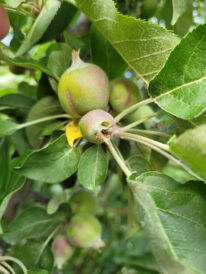
- The severity of frost damage on blossoms and fruits depends on a combination of the low temperature, how long the coldest temperature lasts and other factors like the condition of the soil and whether there are clear skies or clouds.
-
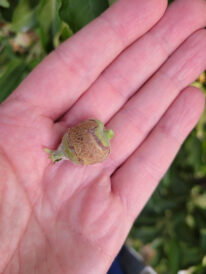
- When frost damage is severe, like the damage on this apple, the fruitlet may self-thin or drop naturally.
-
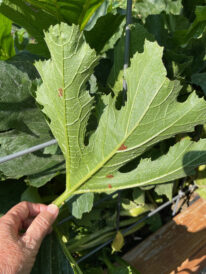
- Squash bug eggs are most often found along veins on the underside of squash leaves. Scouting frequently and early in the season, then crushing or removing eggs, will reduce the number of squash bugs you’ll have to deal with later in the year.
-
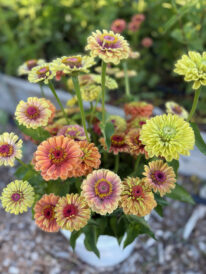
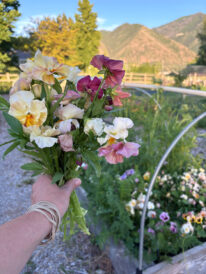
- Now is the time to direct seed tender annual vegetables and flowers like these zinnias because they need warm soils for a healthy, vigorous start.
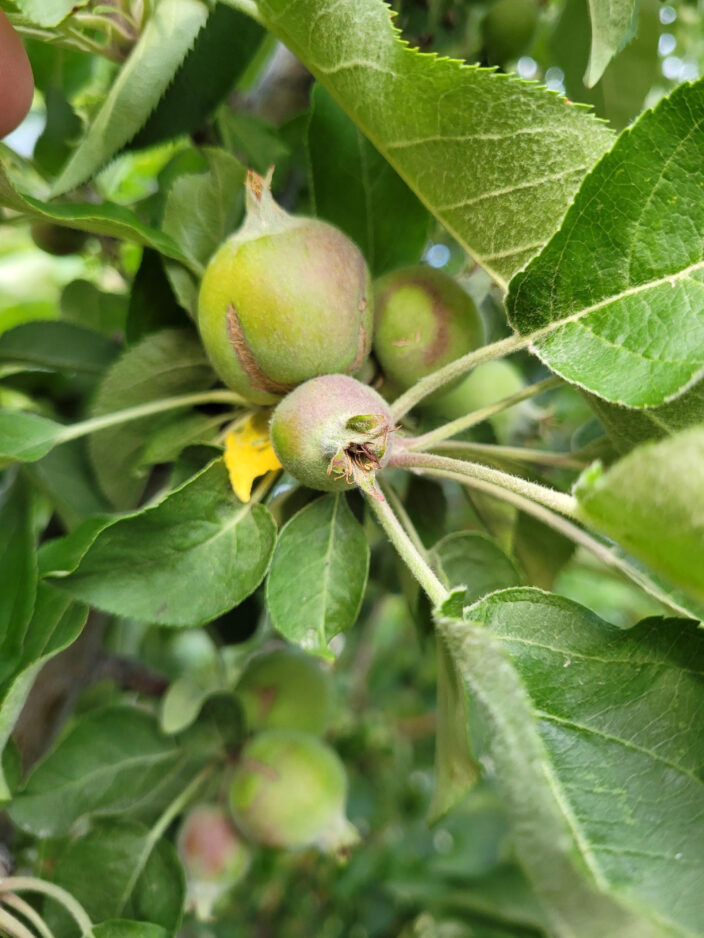
The severity of frost damage on blossoms and fruits depends on a combination of the low temperature, how long the coldest temperature lasts and other factors like the condition of the soil and whether there are clear skies or clouds.
What a spring we have had! Hopefully we can now settle down and enjoy our summer gardens after the unpredictable spring weather. From heat waves to deep frosts, drought and everything in between, our gardening skills are being put to the test. Listed below are some tasks you will want to complete this month that will benefit you for the rest of the growing season.
Plant tender annual vegetables that prefer warm soil. These include squash, melons, eggplant, tomatoes, peppers and basil.
For season-long cut flowers, direct sow zinnias, sunflowers and cosmos. Zinnias and sunflowers can be succession sown every 10 to 14 days until July 1 for a constant source of blooms until the first frost.
Scout for pests, especially squash bugs, and remove and destroy. Deny pests a foothold in the early summer months while your plants are young and hopefully you’ll have less pest pressure for the rest of the season. Squash bugs, specifically, are found at the plant base, the underside of leaves or on the stems of zucchini, pumpkins and other squash plants. Pouring a bucket of water on the base of the plant can send them scurrying out of their hiding places. Pick them off and squish them or put them in a bucket of soapy water. Don’t forget to destroy their eggs as well, which are found on the underside of leaves. The eggs are reddish brown and are laid in groups.
Prune spring-flowering shrubs such as forsythia and lilacs soon after flowering. Next year’s blooms form on this year’s growth. Pruning now will allow the shrub enough time to grow flowering buds for next year. Conversely, waiting too long to prune may mean you’ll remove all the blooms for next year. Trim back to the nearest side branch. For renewal pruning, thin out one-third of the oldest canes by cutting them to the ground
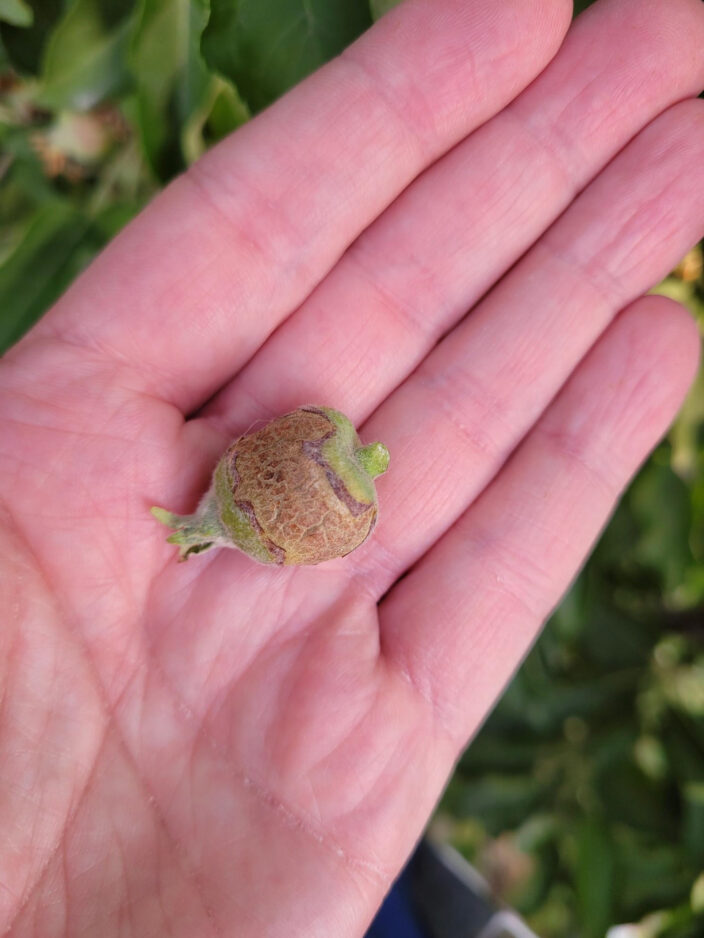
When frost damage is severe, like the damage on this apple, the fruitlet may self-thin or drop naturally.
Mulch beds heavily to conserve water and keep the soil cool.
With the late deep frosts this year, most of the apples, peaches, cherries, pears and plums along the Wasatch Front were destroyed. If you are lucky enough to still have fruit on your trees, you likely won’t have to bother thinning this year.
Treat peaches, plums and nectarine trees for the Greater Peach Tree Borer. Start in mid-June and keep the trees protected through mid-September. Apply spinosad or pyrethrin heavily every 10 days for an organic option. Alternatively, use permethrin once a month. Spray only the lower 12 inches of the trunk and any exposed roots.
I noticed that a lot of my apples have brown scars on them. Do you know what might be causing this and what I can do about it?
This looks like frost damage. Damage to the surface of the fruit can cause corky rings or small cracks that will expand as the fruit matures. The fruit will be unattractive but still edible. The apples with the worst damage will probably drop (self-thinning). If you still need to thin the tree, remove the most noticeably damaged fruits first.
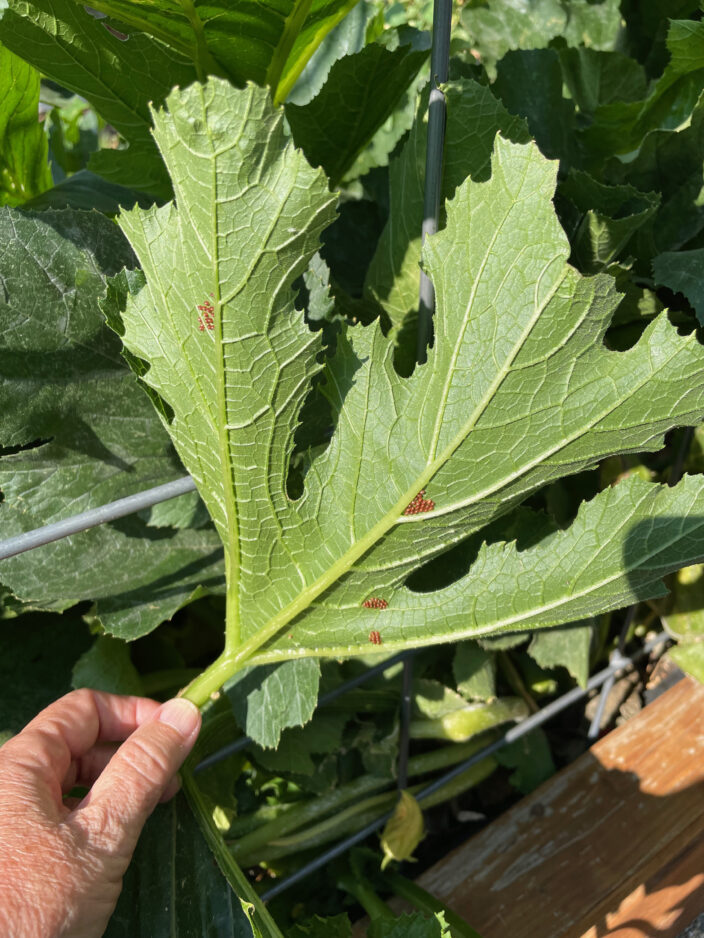
Photo by Meredith Seaver
Squash bug eggs are most often found along veins on the underside of squash leaves. Scouting frequently and early in the season, then crushing or removing eggs, will reduce the number of squash bugs you’ll have to deal with later in the year.
On some apples, the damage may not show on the surface of the apple. Interior damage can result in fruits that are misshapen or undersized.
Fruit stage, temperature, how long at that temperature: We had very low temperatures for part of the spring, but even when temps didn’t dip below 32 degrees, heat could radiate from fruitlets on nights with clear skies.
What can you do in future years when spring forecasts look frosty?
-
- Keep the soil beneath the tree bare or mow vegetation short to make it easier for the soil to absorb heat from sunlight to then be radiated back up into the canopy of your tree.
- Unless the soil is already wet, water the soil in the area with your trees a few days before the expected frost.
- Covering with an opaque cover is an option for smaller fruit trees. Leave the covering open at the bottom and remove the cover during the daytime.
Elizabeth Binks and Meredith Seaver are horticulture assistants at the USU/Utah County Extension Service.
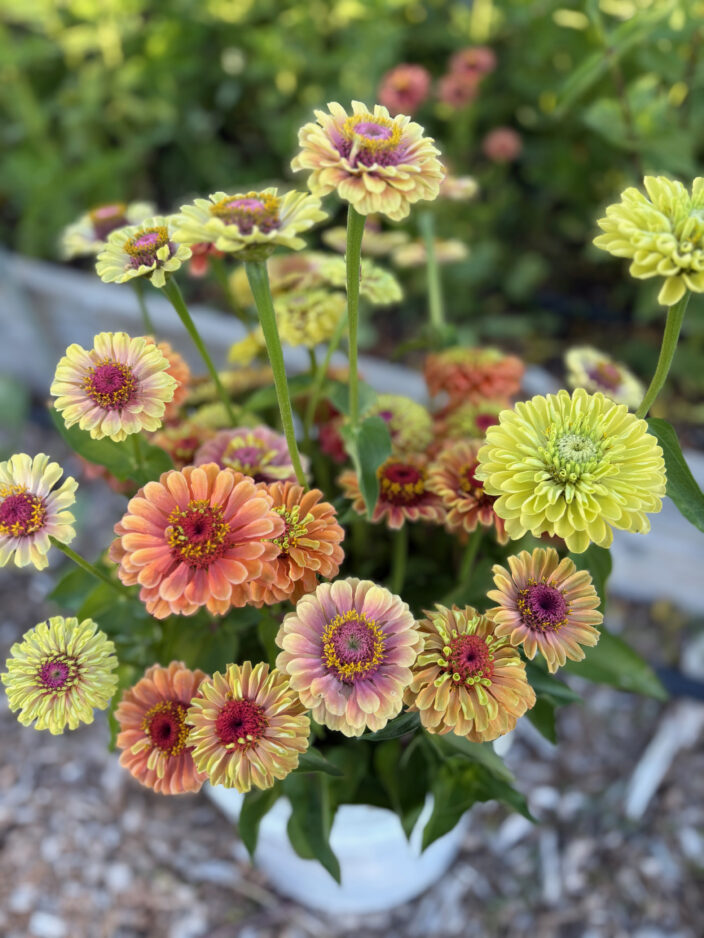
Now is the time to direct seed tender annual vegetables and flowers like these zinnias because they need warm soils for a healthy, vigorous start.