A Box Elder County group wants voters there to decide proposed data center’s fate
Annie Knox, Utah News Dispatch
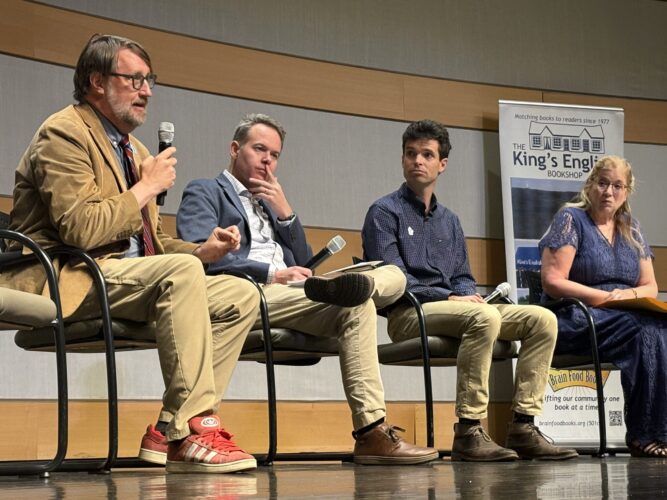
University of Utah law professor Brigham Daniels speaks on May 13, 2026, during a panel discussion organized by the King’s English Bookshop and conservation group Grow the Flow about the proposed Stratos data center in Box Elder County.Brenna Williams paused to fight emotion on a stage in Salt Lake City Wednesday as she talked about the effects she’s worried a massive data center could have on the Great Salt Lake and its Bear River Migratory Bird Refuge. And that was before she got into her concerns about her grandchildren, who have asthma, and others in her wider rural county, down to the cows and the bees.
“I have like 15 reasons why we shouldn’t do this, and I think it’s crazy that we’re even considering it,” Williams told an audience during a panel discussion on the proposed Stratos data center.
The plan to bring a 40,000-acre data center to a valley dotted with ranches in Box Elder County has met intense public outcry in northern Utah and has frustrated voters who said they didn’t get a meaningful chance to weigh in. Now Williams and fellow organizers with the Box Elder Accountability Referendum, or BEAR, are pursuing a pair of local referendums they hope could prevent the fast-moving project from coming online.
They’re citing concerns about emissions from a possible natural gas power plant for the project and, as well as the water that could be diverted away from the Great Salt Lake and toward the data center that would span 40,000 acres once fully built, among other issues.
And they’re getting support from four sets of attorneys offering them legal advice at no cost, Williams said. Several who attended Wednesday’s event also waited in line to speak with Williams and ask how they could help.
Asked in April about the public outcry, Gov. Spencer Cox expressed exasperation during a news conference, saying “I’m so tired of our country taking years to get stuff done. It’s the dumbest thing ever. We think that taking time makes things better or safer, it absolutely does not.”
He followed up on social media last week with a conciliatory tone, announcing the facility’s developer has agreed to work in stages, with a first phase not to exceed 1.5 gigawatts of energy generation. The governor said future project permits “must be contingent on meeting clear metrics and expectations during this initial phase.”
Celebrity investor Kevin O’Leary of TV’s “Shark Tank,” who is backing the project, has insisted it would not come at a detriment to the drying lake and could actually help it, but the citizen group is skeptical.
Locals looking to put the data center on the ballot have a narrow window. The Box Elder County Attorney’s Office has 20 days to review the applications and decide whether they meet requirements for a referendum. If so, the group gets 45 days to gather 5,422 signatures from registered voters and meet other thresholds in sections of the county, Williams said.
“No matter what, we need to keep fighting,” Williams told Utah News Dispatch after the discussion. An economist, she said she takes issue with tax breaks bundled into the project.
University of Utah law professor Brigham Daniels said during the panel discussion that citizens’ ability to challenge the data center via local referendum may turn on whether the decision by Box Elder County commissioners was an administrative or legislative move. He noted the county’s commission performs both functions. After the discussion on Wednesday, Daniels declined to elaborate on his legal analysis.
The discussion at the downtown Salt Lake City Public Library, organized by the King’s English Bookshop and conservation group Grow the Flow, focused on the size and scale of the project and outstanding questions about how it could affect Utah’s air quality and water.
Sheena Green of Davis County said she attended with one question top of mind: “Moving forward, how can we be proactive and smart with technology development?” Searching for answers about the project, she said she’s been frustrated to find few concrete answers.
“I’ve never seen an issue in Utah that is more uniting,” Green added.