
Beehive Archive: Driven to read: Bookmobiles bring libraries to rural Utah
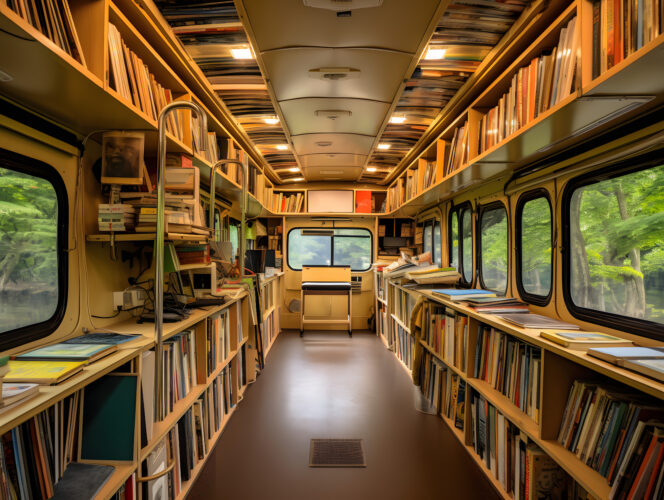
Welcome to the Beehive Archive — your weekly bite-sized look at some of the most pivotal — and peculiar — events in Utah history. With all of the history and none of the dust, the Beehive Archive is a fun way to catch up on Utah’s past.
Beehive Archive is a production of Utah Humanities, provided to local papers as a weekly feature article focusing on Utah history topics drawn from our award-winning radio series, which can be heard each week on KCPW and Utah Public Radio.
Most city dwellers live close enough to a public library to visit regularly. But for many readers in rural Utah, the library must visit them! Learn more about Utah’s history of libraries on wheels.
Utah libraries grew rapidly in the early 1900s, although it wasn’t until the Great Depression that dedicated efforts to improve libraries started gaining steam. Many of Utah’s far-flung, sparsely populated towns lacked access to regional libraries. For library advocates, one way to get books into the hands of rural readers was to send trucks packed with books out to Utah’s remote communities. In 1947, the bookmobile hit the road!
Initially a single bookmobile served only the smaller communities of Salt Lake County, but the program was a hit. At the time, Utah’s population of 820,000 was spread across 85,000 square miles. Providing quality library services to Utah’s isolated communities was a huge challenge. When the Utah State Library Commission was established in 1957, it decided to use federal funds to expand bookmobile services beyond Salt Lake County.
The State Library contracted with counties across the state to roll out bookmobiles in areas without brick-and-morta libraries. Traveling across lonely, rural roads, trucks packed with “books in motion” — as well as a librarian — brought much-needed library services to rural communities. Initially, the bookmobile service was offered for free to all counties. For many Utahns, the bookmobile provided their first experience with the public library.
Despite challenges, including a scarce selection of books and limits on how many books cardholders could check out, the program was incredibly popular. In the first year, bookmobiles circulated over 100,000 books and every participating county chose to continue the service.
Loaded with books for readers of all ages, each bookmobile traveled thousands of miles over rough and isolated terrain. But, rising costs and funding cuts impacted the growing bookmobile program. By the 1970s, the service had peaked, and counties began cutting back on the number of bookmobiles circulating throughout their communities.
However, the bookmobile program still exists to serve people in rural communities who do not have access to a regional library, including schools and senior citizen centers. Today, libraries and bookmobiles continue to provide valuable services, including research resources, internet access, cooling zones, and so much more.
News
Wales Welsh Days planned June 26-27
Moroni names Paul and Sheila Anderson as 2026 Fourth of July Grand Marshals
All invited to submit essays to contest
In celebration of America’s 250th Anniversary, Mt. Pleasant City is inviting community members of all ages to ...