EveryDay Strong: Why does my child hate school, and what can I do about it?

-

- Consider your child’s needs and concerns when attempting to reduce anxiety about attending school.
-
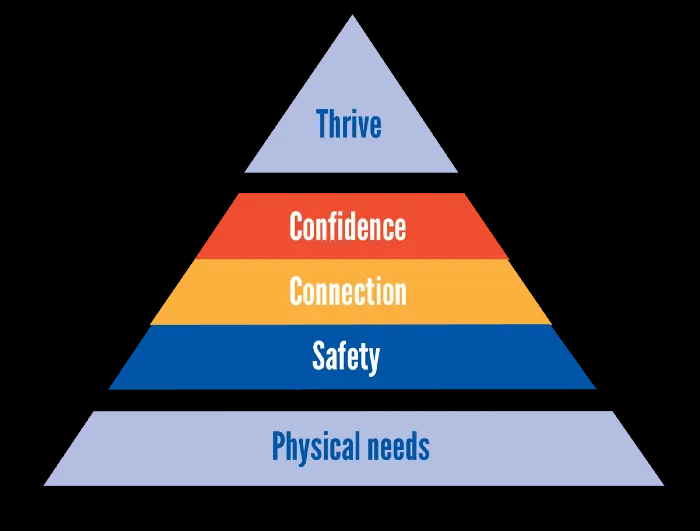
- Maslow’s pyramid is a psychological theory proposed by Abraham Maslow in 1943 that outlines the five basic levels of human motivation.
Do you know a child who has a lot of difficulty getting to school? Consider an anxious second-grader named Ella.
Ella is a second-grader who says she “hates school.” She often refuses to get ready for school in the morning, and when she does make it to school, she complains of stomachaches and tries to call home repeatedly throughout the day.
Desperate parents have tried a number of interventions for kids like Ella that range from dragging them to school kicking and screaming in their pajamas to giving up and homeschooling them. There are as many strategies as there are presumed reasons for a child’s avoidance. But before you do anything else, consider a needs assessment of your child.
Start at the bottom and consider whether your child’s physiological needs are met. Are they sick, well rested, fed? Is their body in panic (heart racing, stomach churning, throat closing, dizziness)? You may consider ways to change the sleep schedule or teach about the body, stress responses and calming and breathing skills.
How about safety? Are they genuinely afraid that something bad will happen at school or to parents when they are separated? Are they being bullied at school? You may consider a transitional object, practicing through play with separations, or cognitive-behavioral skills that teach kids to “talk back” to their worry. You can prompt them to talk back with statements such as “Looks like someone pushed the ‘yikes’ button, is this really an emergency?” “So part of you is scared, what is the other part of you thinking?” or “What is worry telling you?”
Are there connection needs? Working on parent-child connection can improve separations. You may also try to meet with the teacher outside of the regular school day to build that relationship or consider a classroom change to ensure a friend or two in your child’s class.
Lastly, perhaps there are competency concerns. You may consider working with the school to test IQ or academic achievement levels to see whether accommodations may be helpful. Express confidence in them and do things outside of school — or give special attention or assignments at school — to help build confidence.
Use your creativity and empathy — keep trying if one thing doesn’t work! This pattern is helpful whether your child is 7 or 17. You may even need outside help, but outside help should continue to collaborate on meeting a child’s needs.