BYU civil engineering students paddle Utah Lake in national concrete canoe competition

-
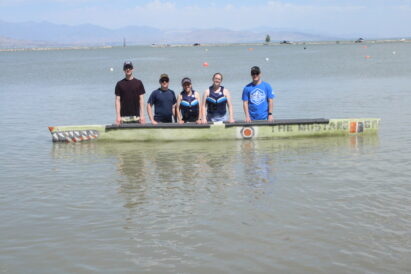
- Brigham Young University Civil Engineering Capstone Program students compete in the concrete canoe competition as part of the 2024 Civil Engineering Student Championships held at Utah Lake on Friday, June 21, 2024.
-
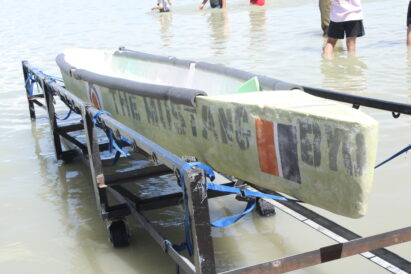
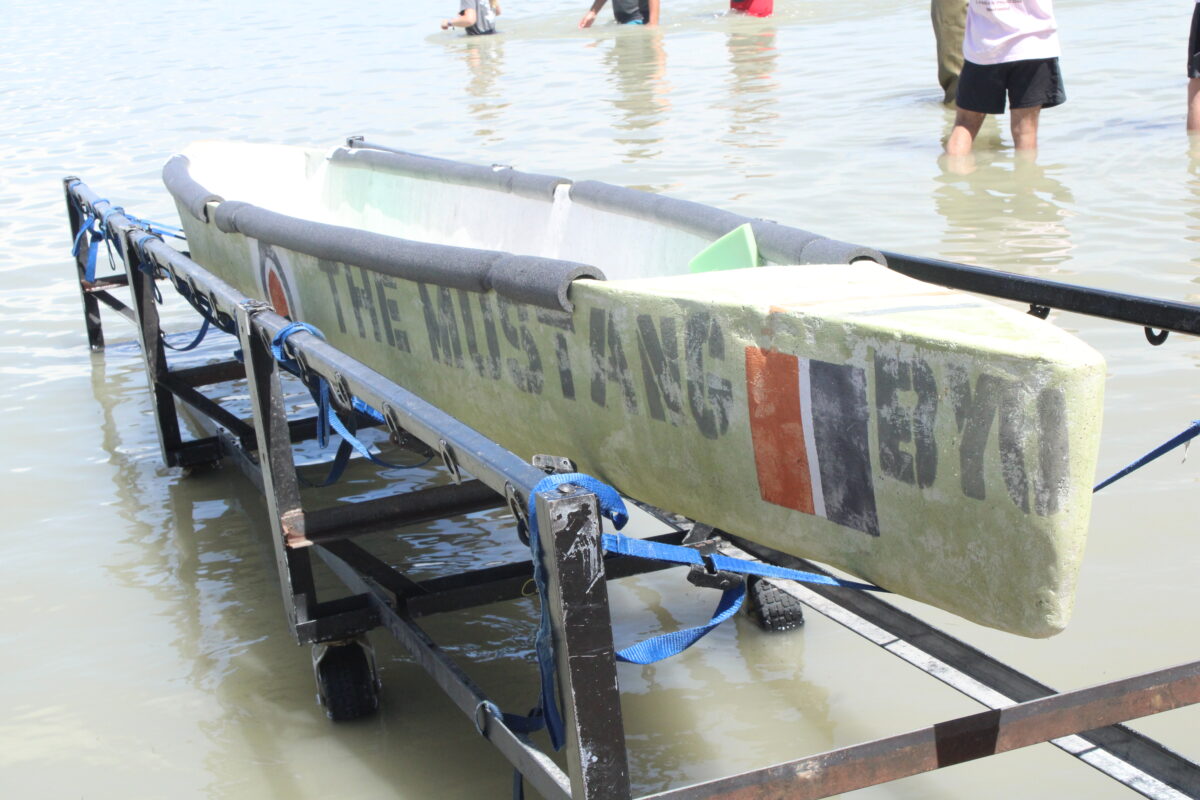
- Brigham Young University’s concrete canoe “The Mustang” sits on a trailer along the shore of Utah Lake on Friday, June 21, 2024.
-
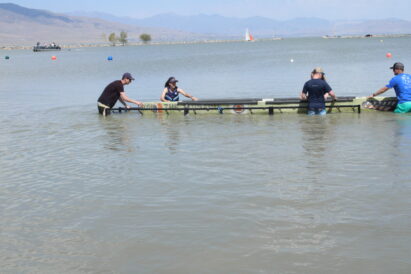
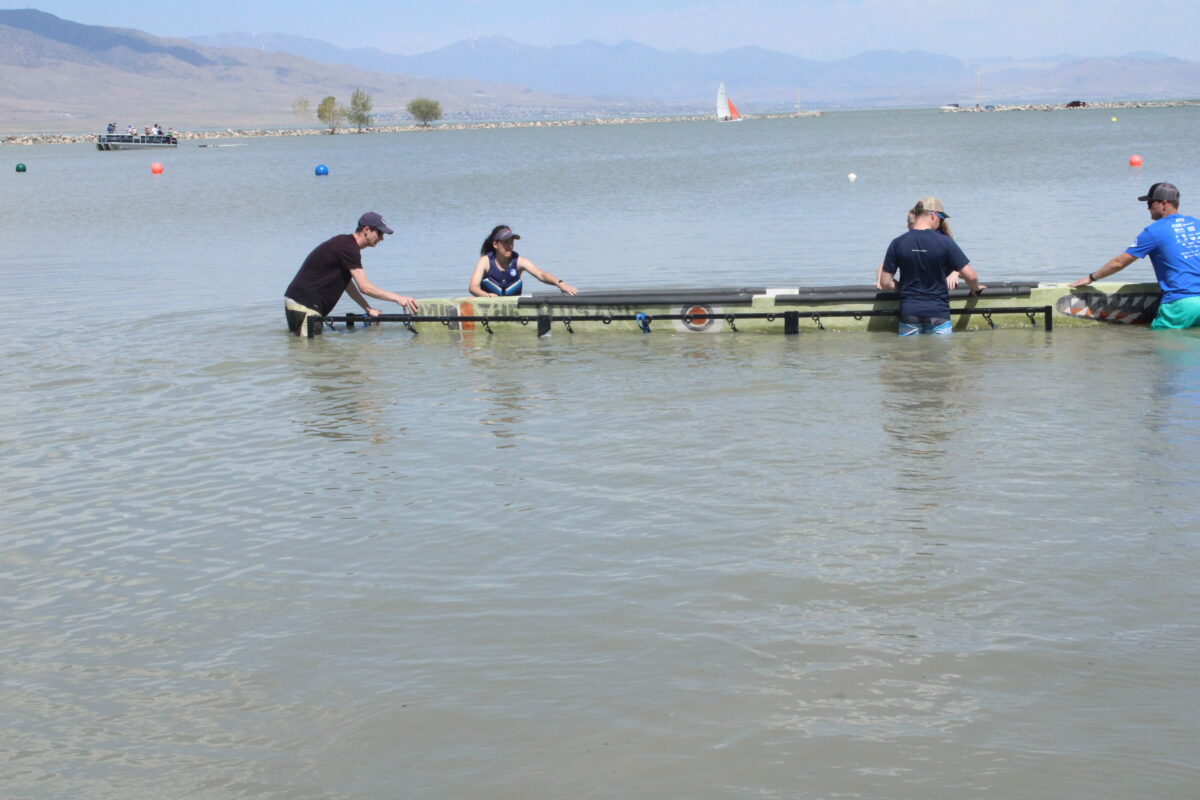
- Students from Brigham Young University’s Civil Engineering Capstone Program prepare to race in a concrete canoe competition held at Utah Lake on Friday, June 21, 2024.
-
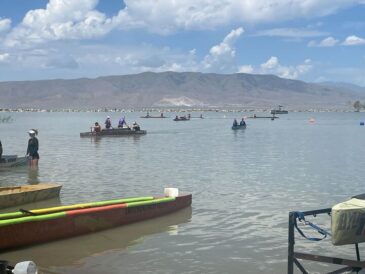
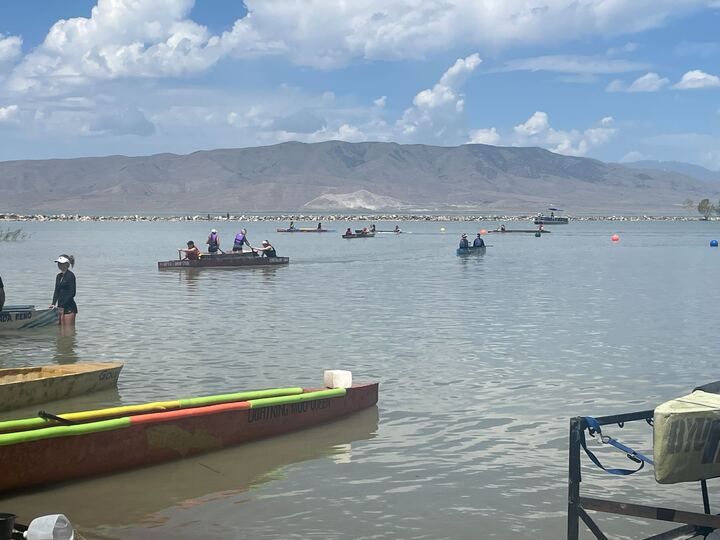
- Teams of students paddle out into Utah Lake during a concrete canoe competition Friday, June 21, 2024.
Engineering students from Brigham Young University are proving that concrete does actually float.
On Friday, teams of college students converged on Utah Lake State Park for the annual American Society of Civil Engineers Concrete Canoe Competition.
The canoe race was a part of ASCE’s Civil Engineering Student Championships, which BYU hosted this year. The three-day event ran from Thursday through Saturday and featured a variety of engineering problem-solving competitions happening mostly on the university’s campus.
The ASCE Concrete Canoe Competition gives students the opportunity to gain hands-on practical experience in a team building environment while demonstrating their skills with concrete mix designs and project management challenges.
The canoe challenge encompasses the best of the best of civil engineering students from universities around the United States and Canada, and it gives students a real-life experience in civil engineering.
“We had to create a mix design, then we had to go through the planning of our construction — what kind of reinforcement and materials would go into it — and then we actually had to pour it and keep track of all of our documents,” explained Justin Booher, one of the BYU concrete canoe team captains.
The team of five BYU civil engineering students, with the help of their captains, spent the better part of the past two semesters designing and building a 358-pound concrete canoe they call “The Mustang.”
“Our mixture has a lot of small glass beads; they have air trapped inside them. And we also have some materials that just make it so that it’s not heavy,” said Emily Cooper, another BYU concrete canoe team captain.
The lighter the canoe, she said, the better performance it gets in the water. “So we replaced cement with geofortis, something they sell here in Utah, and lots of different materials,” Cooper explained.
Maria Lehman, ASCE’s former president, explained why each team needs to ensure they have enough practice time before their canoe hits the water: “Paddling a concrete canoe is nothing like paddling a regular canoe,” she said. “The smallest amount of wind or a miscalculation takes you way out.”
She also emphasized the importance of hands-on learning, teamwork and professionalism, some of the areas students are judged on throughout the three-day championship event. “So there’s some pure competition, some … how are you presenting? How professional are you and how are you doing that? So, you know, for a bunch of 19- to maybe 23-year-olds, they’re pretty impressive kids,” Lehman said.
While spectators and students root for their home engineering teams, Cooper said interacting with the competing universities is a good way to learn a diverse range of processes. “Just seeing the dedication and also getting different techniques. Our canoe doesn’t have a keel (but) other teams do. We might consider putting one on next year. Just different things like that,” she said.
BYU’s Mustang canoe recently competed in ASCE’s regional competition and finished in third place overall.
Winners for the nationals were to be announced Saturday after the final presentations.
The first-place team wins a $5,000 scholarship, with runners-up also receiving scholarships with varying amounts.
Both team captains just wrapped up their final semester at BYU, but the remaining team members have at least another school year left. Cooper said regardless of this year’s competition outcome, she’s proud of the efforts put forth by her team in this year’s project.
“I think just seeing that commitment and hard work pay off. This was not an easy task to complete. But being here to race is so rewarding,” she said.
Local News
The ‘wild west stage:’ The Atlantic reporter counsels UVU students on the dangers of the rising betting industry

Holiday glow: Provo City Council to allow holiday lights year-round, remove nightly curfew