
Making a Difference: Building a strong foundation for self-reliance in Africa
-
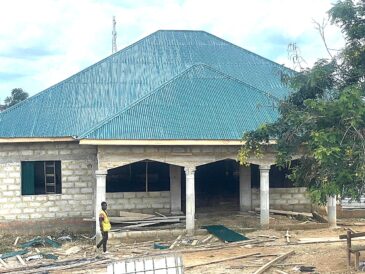
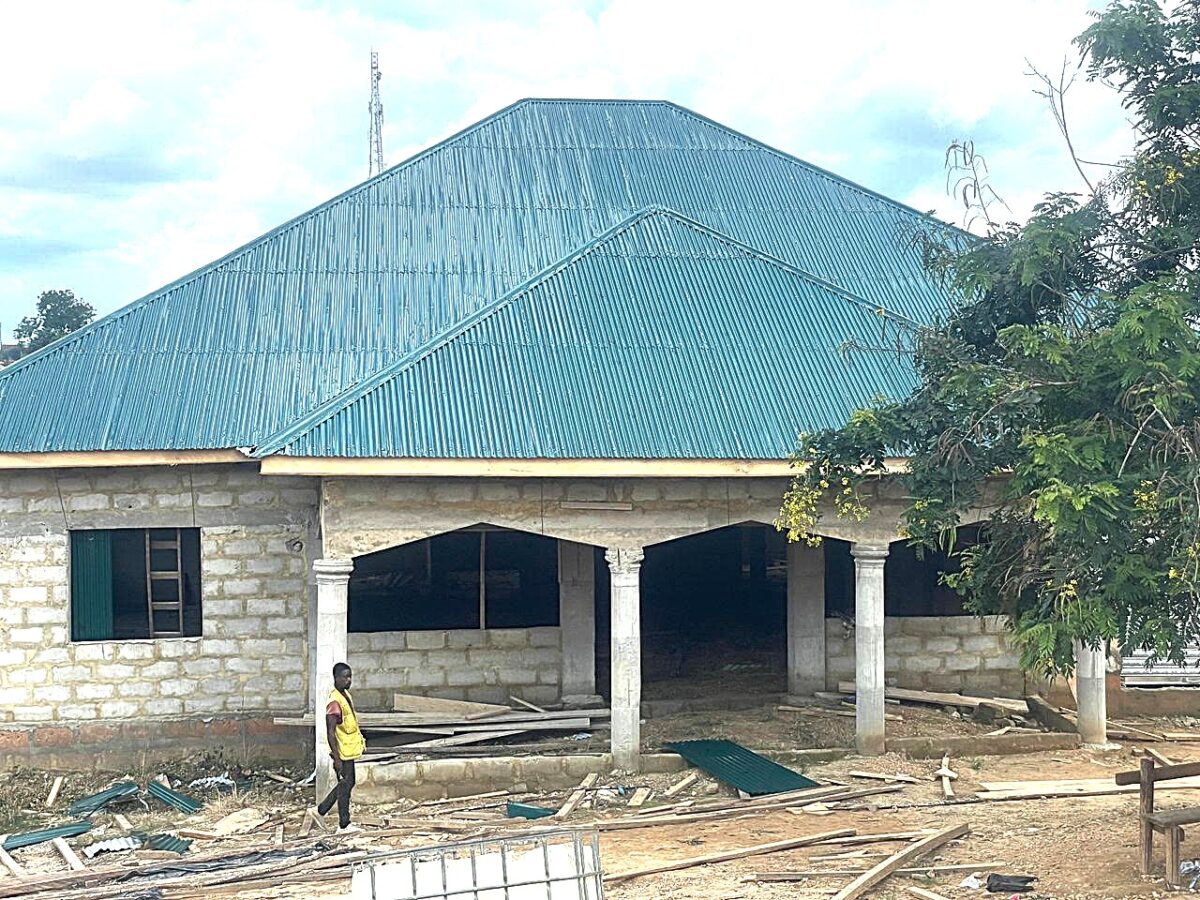
- Shown is a new school being built in Africa by Utah-based Building Blocks in Africa.
-
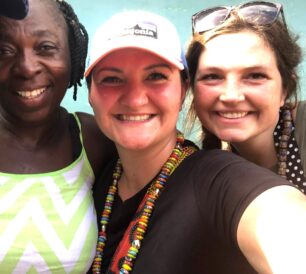
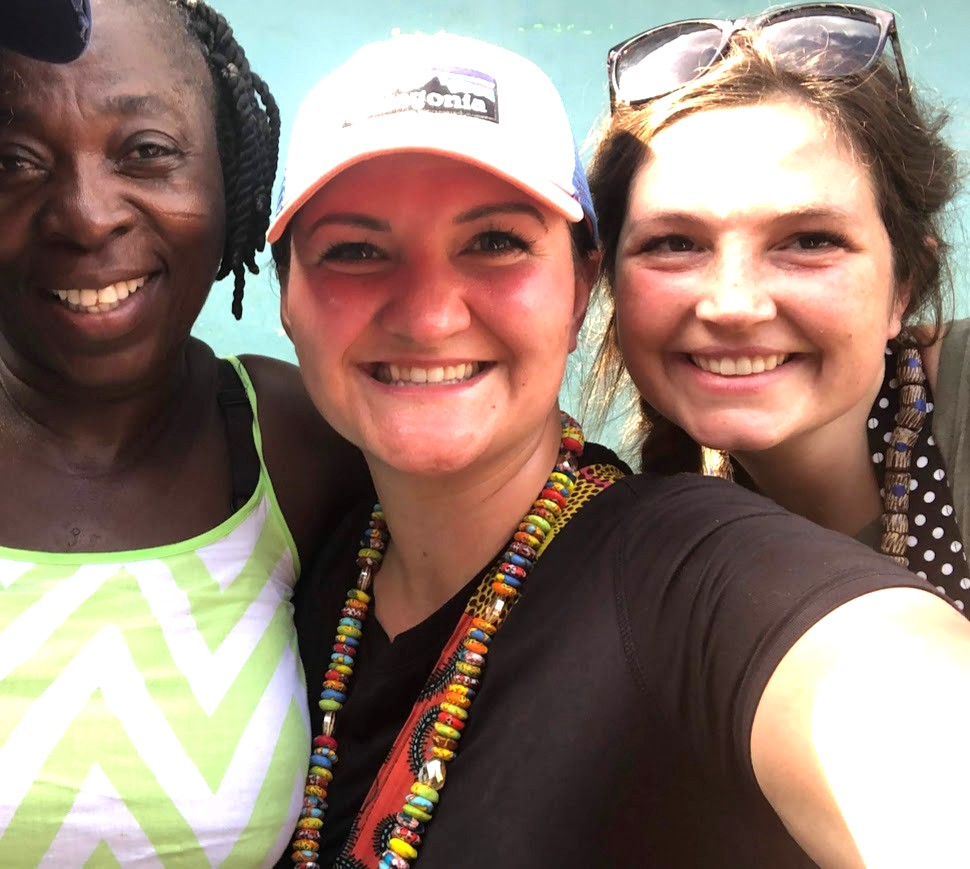
- From left are Mama Yaa, Katie Gleed and Rachel Fagergren of Building Blocks in Africa.
-
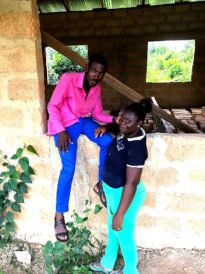
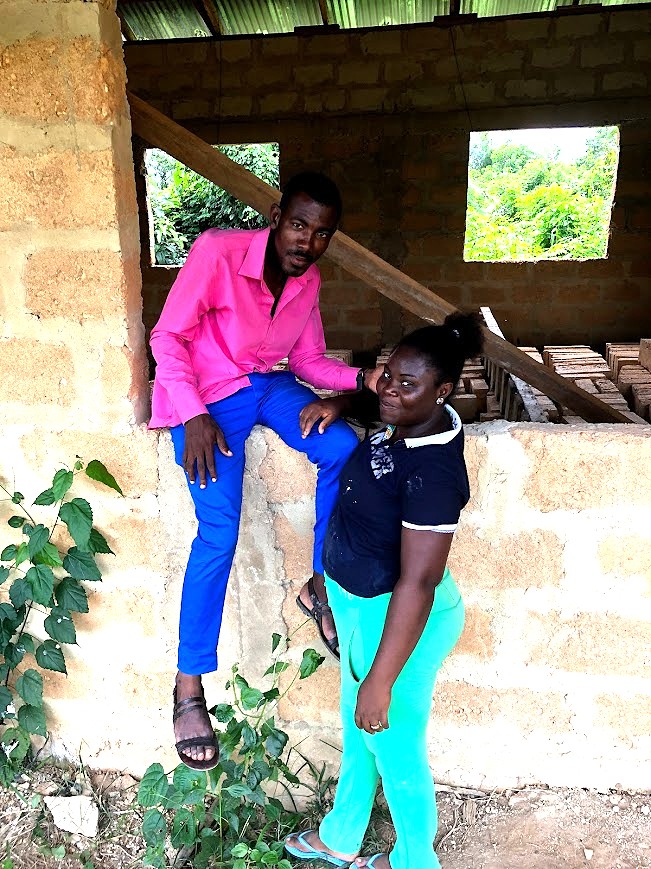
- Nana Ntow Wirenkyi II and his wife Jane are shown in the window of a schoolhouse under construction in Ghana.
-
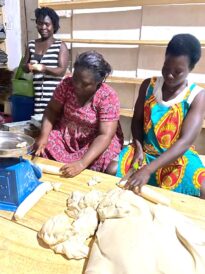
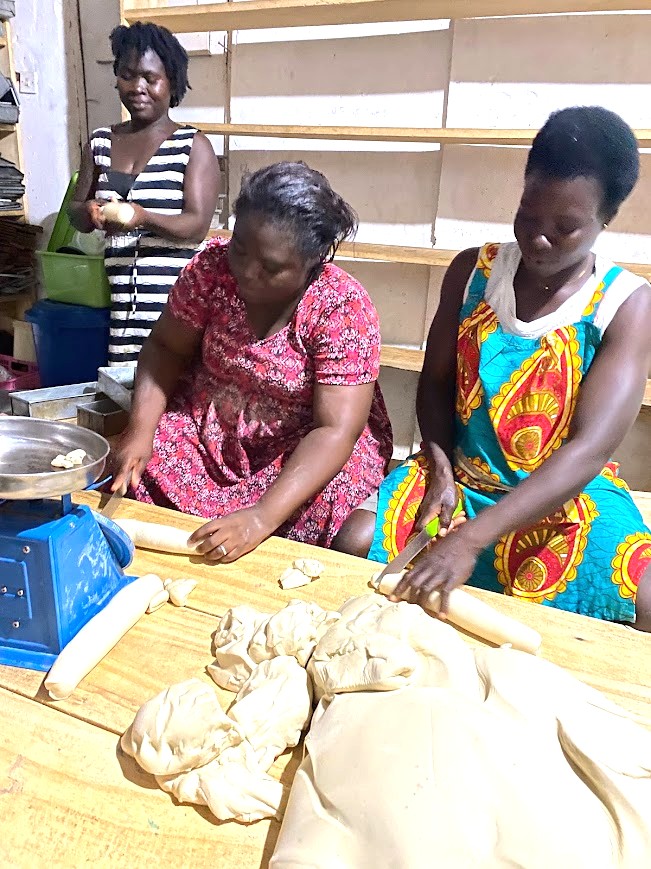
- Women make bread in a bakery created to help fund a school in Ghana.
Courtesy Building Blocks in Africa
Shown is a new school being built in Africa by Utah-based Building Blocks in Africa.
Katie Gleed and Rachel Fagergren are friends who talked about starting a nonprofit – in 20 years. But timelines change in unexpected ways.
Gleed earned a degree in organization communication/conflict management from Brigham Young University-Idaho. Along the way, she did an externship for the humanitarian department of The Church of Jesus Christ of Latter-day Saints, served a Spanish-speaking mission for the church, worked in logistics, taught at a charter school, and then pivoted into business with KSL.com in Utah where she has worked for the past eight years as the director of business success.
Fagergren was a dental hygienist for eight years before she headed off to pharmacy school. She graduated from the University of Utah College of Pharmacy earlier this year and is currently completing her residency at Intermountain Medical Center.
When Fagergren finished dental hygiene school, she traveled by herself to Ghana to volunteer in a dental clinic and fell in love with the country and its people. She returned a second time in 2015 with a nonprofit.
In 2017, Fagergren’s cousin had a son who returned from serving a Church of Jesus Christ mission to Ghana and wanted to help one of his new friends build a school there. The cousin reached out to Fagergren to see if she knew any organizations working in Ghana.
Courtesy Building Blocks in Africa
From left are Mama Yaa, Katie Gleed and Rachel Fagergren of Building Blocks in Africa.
“Katie and I were brunching at Kneader’s when I told her about this request. I asked her if we could do it,” Fagergren said. “There was no hesitation. She said, ‘Let’s do it.'”
Thus, Building Blocks in Africa (BBA) was founded “with the dream of making a difference in the world and helping to break the poverty cycle by providing the opportunity for education in remote areas of Africa and whose mission is to partner with locals who desire to bring education to their communities. Working together, we build self-sustaining schools and opportunities for brighter futures.”
Gleed and Fagergren looked at lots of names before they named their nonprofit.
“We knew we wanted to be in Africa and didn’t want to limit it to Ghana. Our purpose was building blocks to create a better tomorrow and supporting and connecting to others,” Gleed said. “We would lay the blocks, and they would lift up their own lives.”
Gleed and Fagergren went to Ghana to visit with Fagergren’s cousin’s friend Papa, now Nana Ntow Wirenkyi II, a local chief. They met with him, talked about his dream and officially decided to partner with him.
Courtesy Building Blocks in Africa
Nana Ntow Wirenkyi II and his wife Jane are shown in the window of a schoolhouse under construction in Ghana.
“My dream was to build a six-unit classroom building with an office and storeroom and provide a loving home for 20 orphans that had become our children,” Nana said, “and to engage them in literacy programs and teach them to read and write.”
Building Blocks in Africa decided to help Nana with his dream of building a school and a home for the orphans who came to him and his wife Jane from her mother, Mama Yaa, who for 32 years welcomed orphans in her Ghana community and cared for them as if they were her own. When Mama Yaa died suddenly in 2019 from cancer, she bequeathed her 26 children to Jane.
“Thankfully, Jane is just as kind and selfless as her mother, Mama Yaa,” Gleed said. “Without hesitation, Jane took over the care of the orphans. This amazing couple had two daughters of their own at the time and instantly increased the size of their family with the addition of the orphans.”
The BBA Board of Directors encouraged Jane, Nana and the children to move into the newly named Nana Wirenkyi Memorial School and use it as temporary housing until a more permanent solution could be found.
In 2020, BBA began the construction of Mama Yaa’s Home, complete with girls’ and boys’ dormitories, a kitchen and family room. The question arose of how to become self-sufficient; Jane proposed a business plan for a bakery.
Courtesy Building Blocks in Africa
Women make bread in a bakery created to help fund a school in Ghana.
“After a benefit analysis, we decided to invest in a massive oven for Jane’s bakery,” Gleed said. “Jane and the older kids began making loaves of bread each day. She hired a woman in the community to help, and soon they were making over 200 loaves of bread each day to sell in the community. The proceeds pay for maintenance of a vehicle to deliver the bread and other equipment to help the business grow and provide food for the kids at the home.”
In 2019, Fagergren received a Facebook message from Noel Mmboga Indasi from Kenya, a mother and a passionate community practitioner dedicated to empowering girls and women through literacy and education. Noel asked if BBA could help build a classroom and toilet facilities for an existing school.
At the time, Gleed and Fagergren felt they did not have the bandwidth because of their projects in Ghana. They were going to be traveling to Rwanda and decided to ask Noel to come to Rwanda to meet her and get to know her better. Noel was willing to travel 18 hours by bus to meet them.
“Katie and I talked it over and decided to take a side trip to Kenya instead of having Noel come to us,” Fagergren said. “We wanted to travel to Noel’s rural community to meet her and the school leadership before making a decision.”
When they arrived, however, the school principal had invited all the parents, and they wanted Gleed and Fagergren to give speeches.
“It was an incredible experience to meet the parents and see their devotion to their children. We felt it would be an honor to assist them,” Fagergren said. “Before we left Africa, we knew we needed to find a way to help Noel build a classroom and bathrooms.”
Impressed with Noel, they partnered with her for future projects. Early on, Noel had adopted government schools in dilapidated conditions and rehabilitated them to provide access to education to those who did not have access.
“I chose llpoori Primary School that was in dire need of classrooms,” Noel said. “Their pit latrine was on the verge of collapsing and needed to be repaired to avoid a disaster. I messaged Rachel on Facebook and asked her if she knew any organization that could help. Next thing I knew, she and Katie flew to Kenya to help us. The rest is history.”
When they initiated humanitarian work in Kenya, the board decided to implement a self-reliance and sustainability plan for all their projects.
“We felt that incorporating a self-reliance philosophy would prove to be more effective,” Gleed said. “Each project phase has to become self-sufficient and sustainable before moving to the next phase.”
Purchasing land to create self-reliance and sustainability was challenging. Noel found a man and his brother who were selling family land. The man approved the sale, but right before they purchased it, the other brother sold it out from under Noel.
The brother went to his wife and mourned the lost sale, thinking the school was never going to come to fruition. His wife had another option.
“The wife said, ‘What about my land? We will honor the original price!’ She sold us 12.3 acres in 2020,” Gleed said. “Amazingly, a hydro-geographical survey revealed an abundant water source in the underground aquifer. Plus, there are currently five primary schools within three kilometers. It was definitely a gift from God.”
The Spring of Hope Girls High School is being constructed on this land. While the school is being built, Noel has set up two green houses, cultivated two acres of garden space that produces mushrooms, zucchini and green, yellow and red peppers. They also purchased a motorcycle to transport the vegetables to the market.
“The garden has become self-sufficient!” Gleed said. “Also, Noel has planted over 200 citrus, lime, papaya and pomegranate trees around the property to help protect the boarding school and continue to give back to the community. Because of this garden, we have become a wholesale distributor of garden produce.”
Funding is always challenging. Most of the BBA’s funding comes from word-of-mouth fundraising and family and friends.
“To continue at our current rate of project development, we need about $70,000 per year,” Gleed said. “However, we are ready to make larger strides if the funding is available. Lots of people and organizations have been very generous to us. Each dollar donated truly makes a difference.”
Changes occur in the lives of people who work with BBA. For Kevin Ballard, a member of the BBA Board of Directors, his change was personal.
“It’s just nice to take a break from me-centered things (work, family, etc.) and focus on something that helps others,” Ballard said. “Plus, being part of an organization run by such strong women who are smarter than I am is both comfortable and pushes me in a good way.”
Gleed’s change allows her to see beyond herself.
“My involvement has caused me to think outside of myself. My life has changed so much. I discovered that love has no boundaries. No matter what situation you are in, you can feel joy in your life. A sameness exists in all of us, and we care about each other. I love to watch these young people grow and feel their worth, particularly as they learn to show up and do incredible things,” Gleed said.
For Fagergren, her biggest impact has been building lasting relationships with others.
“Nana, Jane and Noel are incredible people with so much passion and drive, and it is inspiring in my own life. When I think about what they do every day and how they serve others, it motivates me to do better and try to make a difference,” Fagergren said.
The future of Building Blocks in Africa has incredible potential, especially if they take the principles of self-reliance and sustainability they have learned and apply them elsewhere.
“We want to scale these principles and apply them across Africa,” Gleed said. “We want to bridge the gaps, develop sustainability projects, make differences that have an impact. It’s a privilege to be a part of it. We just keep going.”
Fagergren wants to remain a grassroots organization by working closely with the local partners.
“The hope is to finish the high school in Kenya very soon and witness the hope of the students to flourish,” Fagergren said. “There is value in working with our partners and seeing their profound impact over time. We want to continue growing the right way and empowering individuals and communities.”
For more information about Building Blocks in Africa, call 801-450-5173 or go to buildingblocksinafrica.org. If you wish to donate to Building Blocks in Africa go to givebutter.com/springofhope.