Provo’s Food & Care Coalition is more than just a homeless shelter
-

- The front entrance of the Food and Care Coalition is pictured on Friday, Dec. 20, 2024, in Provo.
-

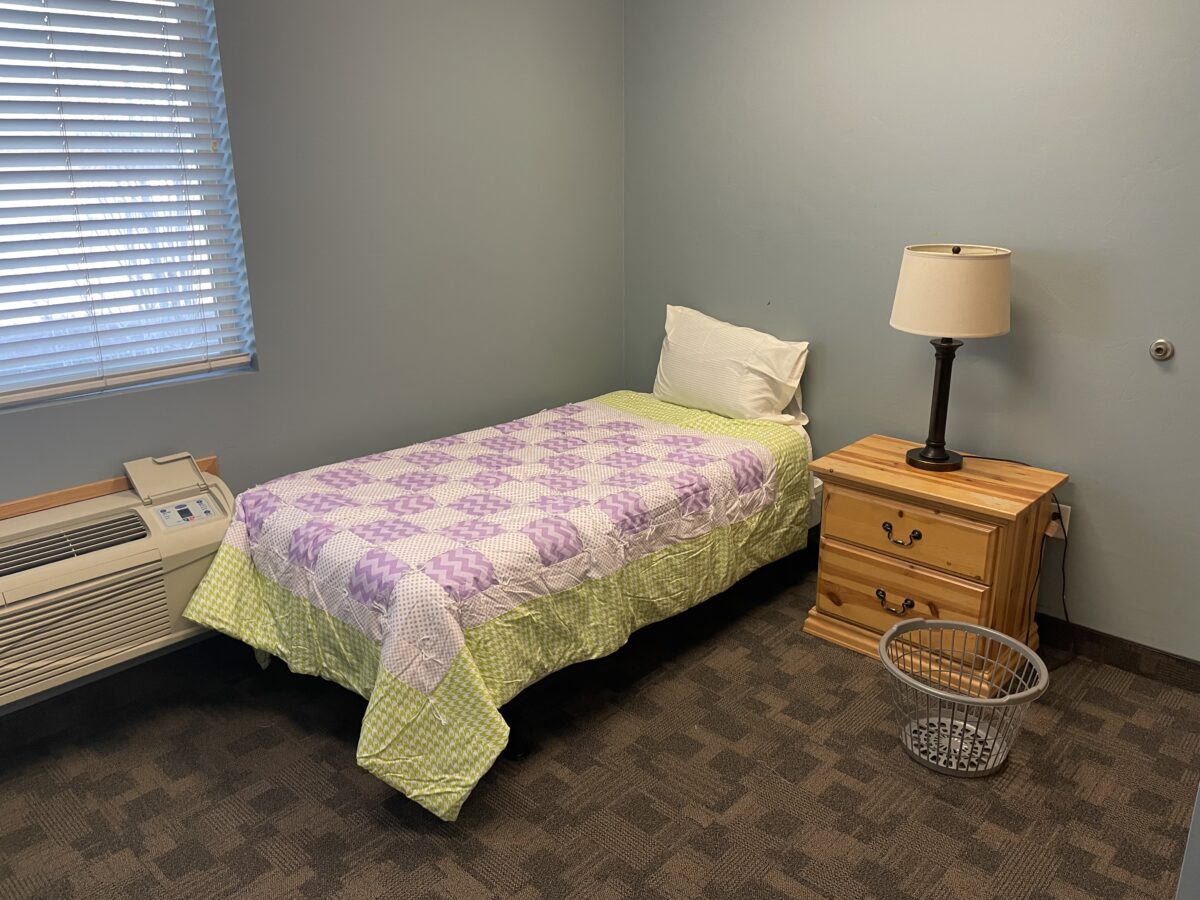
- One of 32 transitional rooms at the Food and Care Coalition is pictured on Friday, Dec. 20, 2024, in Provo.
-
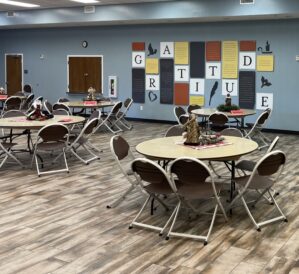
- The cafeteria at the Food and Care Coalition is pictured on Friday, Dec. 20, 2024, in Provo.

Jacob Nielson, Daily Herald
The front entrance of the Food and Care Coalition is pictured on Friday, Dec. 20, 2024, in Provo.
The Food & Care Coalition in Provo was never intended to be just a soup kitchen. Nor was it meant to only be a place where people could stay warm for a night. From its beginning in 1988, the coalition has always striven to be more.
Three decades later, the Food and Care Coalition is one of the most proactive homeless shelters in the area, providing an all-encompassing array of services designed to help struggling individuals transform themselves.
Flanked by railroad tracks to the north and 900 South to the south, the coalition’s 4.5-acre campus provides 110 housing units — 38 transitional units and 72 supportive apartments — along with a cafeteria and a number of medical and social services that are available to residents and people off the street alike.
The organization is equipped to give aid to thousands of homeless people annually.
“In the early days, in the mid-’80s, the focus was making sure we could feed people and alleviate hunger,” said Brent Crane, coalition executive director. “And then, obviously, the needs of the clients were broader than just needing a meal. And so, over time, as we were able to coalesce support from the community, and obviously our services started to evolve.”
Jacob Nielson, Daily Herald
One of 32 transitional rooms at the Food and Care Coalition is pictured on Friday, Dec. 20, 2024, in Provo.
The facility’s strategy on how to help people relates to Maslow’s hierarchy of needs, a philosophical five-tiered approach to identifing human needs.
Maslow argues that the base-level need is physiological things such as food, shelter and clothing. The second-level need is safety and belonging, and the third step is love and acceptance. These are followed by self-esteem and, finally, self-actualization, where individuals are fulfilled and doing all they’re capable of.
The Food & Care Coalition first attempts to address the baseline needs, giving individuals food and shelter. Then, additional opportunities or services are provided to help them climb higher.
“If you don’t meet the basic needs of a client coming in, they’re not housed, they’re not fed, then what kind of time and attention are they going to give to improving themselves or becoming educated on how they can escape poverty?” Crane said.
A major service is the 38 transitional rooms in the facility, which people can apply to live in. Divided into men’s and women’s quarters, these facilities include a private room and shared social quarters. Residents are given different responsibilities and opportunities to serve.
Jacob Nielson, Daily Herald
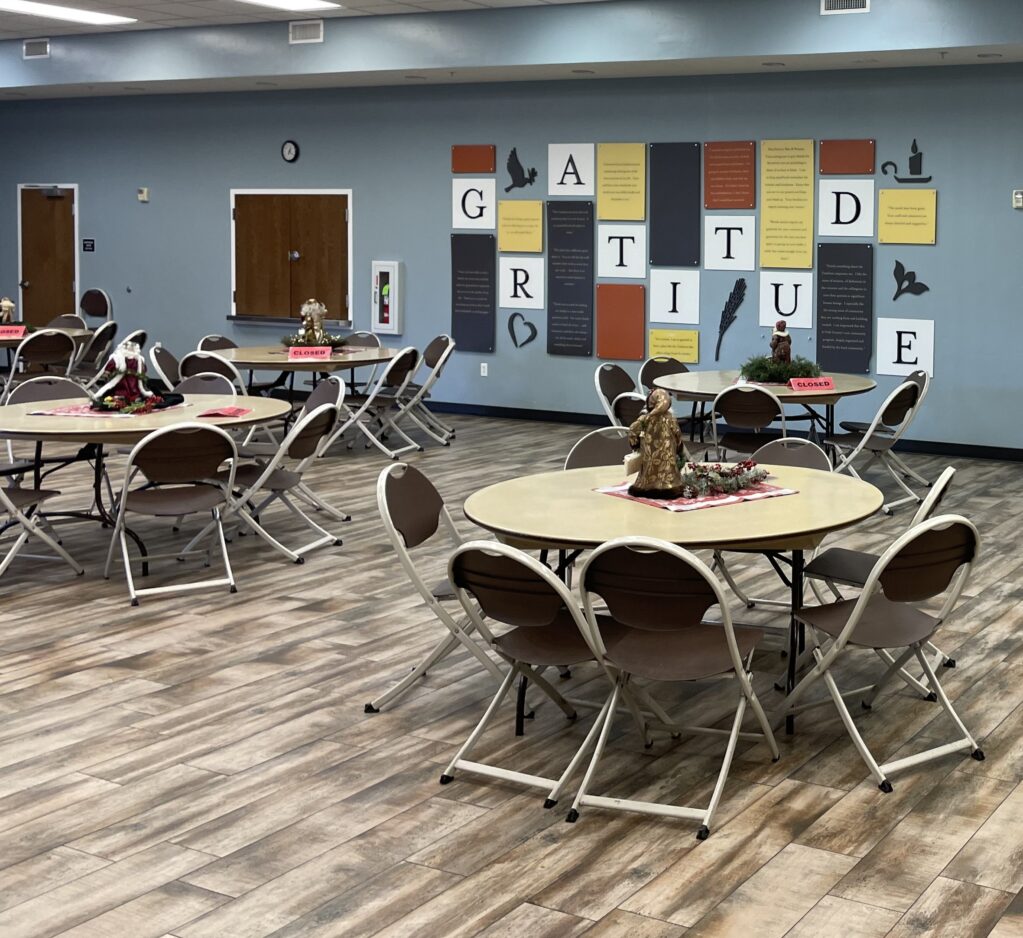
The cafeteria at the Food and Care Coalition is pictured on Friday, Dec. 20, 2024, in Provo.
“It’s kind of a probationary opportunity there, right?” Crane said. “We get to see, are they going to be kind and considerate and work with other residents?”
Recently added to the coalition is permanent supportive housing, where individuals or couples pay rent to live in a furnished apartment on the campus with provided furniture and amenities, and they work alongside a case worker to continue in their development.
Also in the facility is a computer lab and a cafeteria where free meals are served by volunteers to anyone who needs them.
The coalition has three permanent partners that help it fulfill its mission. Mountainlands Community Health Center provides medical and dental services, Wasatch Behavioral Health gives mental health aid and My Story Matters offers education, all on site.
“This is a very well-made facility,” Crane said. “It’s beautiful. It’s got tremendous resources within the facility with our agency and our collaborative partners. The spirit of how we go about our services is second to none.”
Food and Care attempts to do it all under what its public relations manager Greg Smith calls a “shoe-string” budget of $2.5 million. Roughly $1 million of that is through “in-kind” donations, Crane said, while $1.6 million is cash expenses to pay its staff of eight full-time and 20 part-time workers and keep up facility operations.
Though a portion of the budget covering administrative costs comes from a “small endowment,” Crane said, the facility is heavily reliant on donations from individuals and corporations to provide its services.
“We believe in people, and we believe that people need compassion, and sometimes they need to be shown the way,” Crane said. “And collectively, as a community, we’re providing a tremendous vehicle for the community to engage in one of society’s more persistent ills, you know, and address it proactively.”